It isn’t just military planners who seem happier refighting the last war. Politicians are too. David Cameron chooses to stay tactically quiet about defence because he was humbled by losing the Syria vote in 2013. But Ed Miliband, who won that vote, is just as cautious. Labour remains haunted by its own defence ghosts, many dating back to the unilateralist 1980s.
Few would go so far as to claim that defence is the paramount question facing Britain in the coming general election. Yet few would deny it is now genuinely one of the most important. This will be the first election since the 1980s in which defence may – and should – occupy a significant part of the political debate. But it is also in danger of being sidetracked.
The reasons why defence matters once again in 2015 are intertwined. Five years on from the coalition’s 2010 austerity-driven defence review, Britain is increasingly uncertain about its place in the world and is flirting with withdrawal from Europe. The US, which provides 70% of the Nato budget, is pivoting towards Asia, though with increasingly anxious backward glances at an unstable Europe.
At the same time, security threats have fundamentally changed and are still changing, with the long-term impact of renewed Russian assertiveness, failed states and jihadi terrorism all hard to predict, but all likely to remain concurrent sources of instability. Meanwhile, public readiness for military commitment remains low in the wake of Iraq; and pressure on public spending continues to be strong, not just here but across Europe.
The issues are complex, interconnected and difficult. But it should be obvious that Britain’s – and Europe’s and the west’s – defence needs have changed from the not so distant days when it was assumed that the cold war was over and large one-off interventions were the new normal. So it is natural that today there is a new atmosphere of uncertainty, even insecurity.
But that is no justification for keeping the defence debate on the political margins. The fact that both Labour and the Conservatives feel no interest in promoting the defence debate before 7 May is no excuse either. This is a subject for now, not for later.
Today a group of backbenchers grabbed their chance to kick up about the issue in a four-hour Commons debate. It was a poorly attended affair, and the speakers were predominantly from the Tory side. Inevitably there were some fogeyish contributions and pseudo-imperial moments. There was talk of the threats to Britain in the South China Sea and from Argentina.
Labour MPs mainly stayed away, perhaps assuming this was a debate for people who prefer to live in the past. But they should not have done so. The quality and interest value of the debate were much higher than in the days of the Bufton Tuftons.
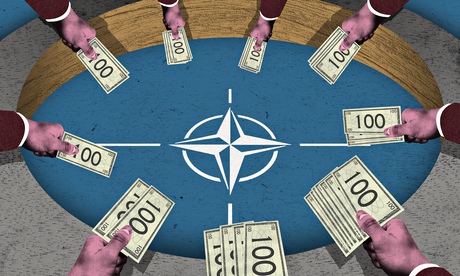
There was nevertheless an illusion at the heart of the debate. For the Tory right, the rallying issue in defence is now expenditure. We must spend more on defence, they insist. Specifically we must always spend over 2% of GDP on defence, in line with the Nato target (dating from the pre-crash year of 2006) that Cameron was still extolling at last year’s Nato summit in Wales.
For many, this 2% has now become an absurdly totemic figure, proof of old Tory soundness, proof of patriotism, proof of having the right priorities, proof of being sceptical about Cameron. Yet there are at least four things wrong with the 2% figure.
The first is that it is arbitrary. Spending targets only make sense if you are clear about your spending plans, which Britain is not.
The second is that it measures the wrong thing: money inputs – salaries in many European cases – rather than defence outputs or efficiencies.
The third is that different countries count different things in their expenditure figure, including the intelligence spending and pensions with which Cameron would like to bulk up the UK’s figure.
The fourth is that many Nato states are neither willing nor able to implement it. As such, the target simply becomes a stick with which the able can beat the unable – perhaps even a source of division that the Kremlin would try to exploit.
The 2% target can also be perverse. Greece is one of four Nato members that has been meeting the target – the others are the US, the UK and Estonia – but only because its GDP has collapsed by a quarter. Conversely, as Malcolm Rifkind pointed out in today’s debate, one of the reasons Britain is poised to fall short of the 2% target for the first time in 2015-16 is because our GDP is rising, raising the bar for what 2% actually means.
None of this is to obscure the long-term reality. UK defence spending is down by around 8% in real terms since 2010 and is likely, on present plans – in which defence is an unprotected department – to decline by another 10% in the next parliament if the Tories win in May. The Royal United Services Institute thinktank estimated this week that defence would need a further £5.9bn per year by 2019-20 in order to get up to 2% of GDP.
None of this is to deny that defence spending should be protected and increased, though the need is more urgent elsewhere in Europe. But spending levels are meaningless unless the strategy on which you are spending is right, and pursued as efficiently as possible – still a long way from the case in Nato, or in UK defence thinking. Financial wastefulness is too common, and political symbolism a too constant temptation.
It’s wrong to fetishise the 2% defence spending level. To do so is almost as irrelevant and distracting as the suggestion by the European commission president, Jean-Claude Juncker, that the need after Ukraine is to create an EU army – another wrong answer to the wrong question. Defence is about the protection of nation-states through alliances, and the EU is not a nation state. Foreign policy, not spending policy, should do most to shape defence strategy.
Defence strategy should begin and end with correct long-term threat assessment. That, and nowhere else, is where arguments about everything from Trident to army size need to be rooted. First understand the real threat; then decide how best to defend against it in coalition with allies; then spend smartly and flexibly, with the allies, on the things we need to do.
The new threats are real. They have to be faced seriously. But amid an excess of old thinking on both sides, the political response has not yet matched up.