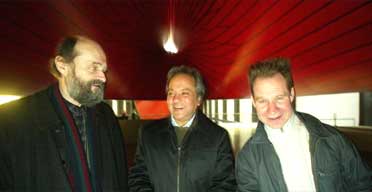
Under the gigantic red membrane of Anish Kapoor's sculpture Marsyas in the Tate's Turbine Hall, two events came together last weekend: a staging of Antonin Artaud's For an End to the Judgement of God by Peter Sellars, and the premiere of Arvo Part's LamenTate. I defer to Andrew Clements in his appraisal of the music, but the dramatic event - although fascinating - raised serious questions about the validity of a piece of sculpture as a theatrical setting.
Artaud himself, as a theoretician, envisaged moving out of theatres into "some hangar or barn", which accords with the Tate's Turbine Hall. Sellars also sees Marsyas as a modern Guernica, in which three mouths emit "a great howl of pain". But sitting under the sculpture's tent-like roof listening to Artaud's apocalyptic text virtuosically delivered by John Malpede in the guise of a manic US general was not always easy; and, although Artaud talked of "giving words the importance they have in dreams", I would have preferred a cooler, more low-key approach.
What did come across, in Sellars's staging, was the piece's political urgency. Written in 1947 and promptly banned by French radio, Artaud's text is a cry of rage against the reduction of the human animal to a collection of gross appetites and a prophetic warning against the dangers of a new American and Soviet imperialism.
Sellars underscores the point with graphic film footage of the Afghan war and by complementing Artaud's piece with an impassioned reading by Pascale Armand of a June Jordan poem about the appropriation of God to endorse racist and sexist attitudes. The overall message was clear: to attack the conjunction of religion and militarism and to fight, as Artaud said, against "human inertia". My only question is whether Kapoor's all-enveloping, sound-swallowing sculpture is the ideal medium for a piece of agitational political theatre.