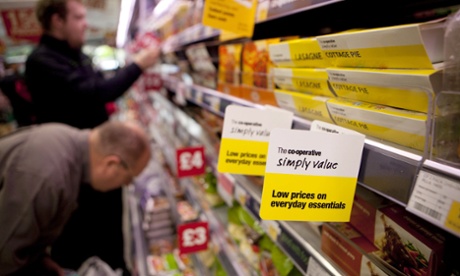
The general election may be over but campaigning is still under way for a set of polls at the end of this week. More than two million members of the Co-operative Group are eligible to vote at Saturday’s annual general meeting, which is intended to overhaul the group’s boardroom and could determine whether the Labour-aligned Co-operative party goes on receiving up to £1m a year from the supermarkets and funeral homes business.
The AGM is breaking new ground. A new one-member-one-vote system is replacing a practice under which 100 or so representatives cast votes on behalf of the seven million members and independent societies which own the group.
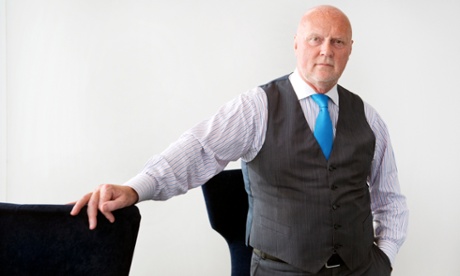
In theory up to 2.7 million members could attend the AGM in cavernous Exchange Hall at Manchester Central, a grand Victorian railway station converted into a modern conference centre. In practice, far fewer will turn up to the meeting, which will be overseen by new chairman Allan Leighton, the first to be appointed from outside the Co-operative movement.
Last year’s AGM was controversial, although members did vote through reforms proposed by Paul Myners in the wake of the scandal that took the Co-op Bank to the brink of collapse and saw the group make a record loss.
As well as the one-member-one-vote system, Myners set out a plan for a 100-strong members’ council to replace regional boards, and a new boardroom structure.
A number of contentious issues are already being fought over, and the board may need to make some concessions to avoid a full-blown revolt. Some of the issues include:
Member-nominated directors
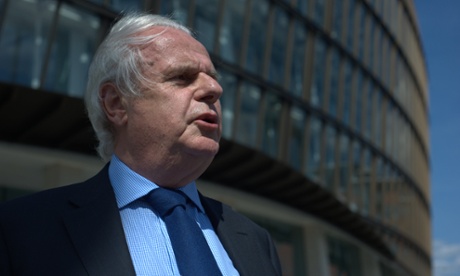
The direct representation of members on the board has been controversial. Myners did not intend to include any seats for Co-op members, but in a compromise a year ago the group agreed to three member-nominated directors. Even so, the process has provoked consternation among long-time activists: there will be no elections for these three seats, because only three candidates were put forward from a shortlist of six.
The result of the election is scheduled to be announced at the AGM, although the members’ council is arguing that the three other names from the shortlist should be included.
There is also believed to be a legal opinion that the process needs to rethought. But the group says: “The member-nominated director process has been executed in accordance with the relevant rules and regulations and there are no grounds for a legal challenge.”
Donations to political parties
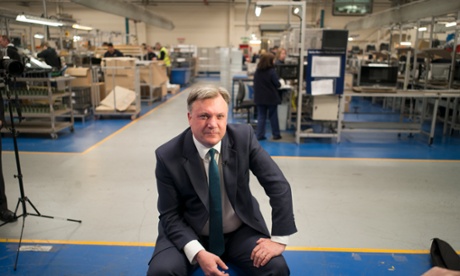
The board has broken with tradition by not recommending that its members back a resolution to make up to £1m of donations to the Co-op party (which now has 24 members sitting alongside Labour in the Commons, compared with 31 before the election – Ed Balls was the highest-profile casualty). Instead it is asking whether support should be given to political parties, whether the Co-op should engage with political parties, and whether to broaden political donations.
The members’ council has asked for this motion to be withdrawn and points out that the group technically does not make donations to the Co-op party but pays a subscription to it. It has tabled its own motion, which includes continuing the party subscription.
Karin Christiansen, general secretary of the Co-op party, urged members to keep their political voice: “The Conservative party has returned to government with enormous financial support from business and wealthy individuals. Now, more than ever, Britain needs the Co-operative party speaking up for a powerful co-operative alternative that puts people at the heart of business and for an economy where the ownership and profits are more widely shared.”
Remuneration report
Ever since the £6.6m payday for departed boss Euan Sutherland was leaked to the Observer in March 2014, pay has been high on the Co-op agenda. Sutherland walked out 48 hours later, but the latest annual report shows he received £1.8m after his departure and lists a string of other payments, including £1.5m to former HR director Rebecca Skitt. These payments – and £2.5m for Richard Pennycook, who replaced Sutherland at the helm – will all be voted on. Pennycook told the Times yesterday: “My package is bang in the middle of the median for an organisation of this size. And I think it’s not unreasonable for the team here to say that, over the last two years, we’ve saved the Co-op.”
Fairtrade
The group’s strategic objective states: “If a Co-operative product can be Fairtrade, it will be Fairtrade.” But a motion urging the board to reaffirm this commitment contains caveats about the group’s financial position and its shift to convenience shops.