A month after being released from prison, halfway through a five-year sentence for raping a young woman in 2011, Ched Evans is set to resume training with Sheffield United. While there have been no announcements about whether or not he will be re-signed by the Blades, the manager, Nigel Clough, has confirmed that his reintegration into the team has been discussed at Bramall Lane, so the prospect of Evans once again being a Sheffield United player at some stage looks likely, to say the least.
It is often said that where talented players are concerned, football is a moral-free zone, that no matter what someone has done, they will be backed by their clubs and indeed fans if they are performing on the pitch. It seems likely that Evans will play professionally again, begging the question: where is the moral line drawn in football? What will not be tolerated in the game, and what does it take for a club to dismiss a player for reasons other than sporting performance?
Being responsible for a death
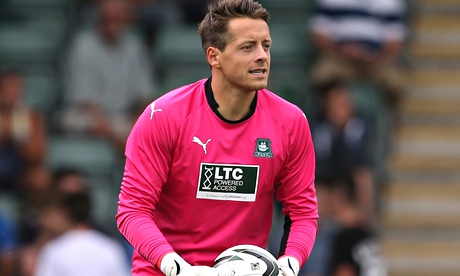
The most extreme example, and a few footballers have been dismissed by their clubs after causing the death of another. The goalkeeper Luke McCormick was sacked by Plymouth Argyle after being sentenced to seven years in jail for causing death by dangerous driving in 2008. McCormick admitted causing the deaths of two children, aged eight and 10, and leaving their father in a wheelchair after driving back from a wedding while twice the legal alcohol limit. However, while McCormick’s contract was terminated, it was by “mutual consent” according to the club, and they actually re-signed him five years later, making him their club captain in the summer. West Bromwich Albion sacked Lee Hughes after he was found guilty of causing death by dangerous driving, the striker jailed for six years after losing control of his car and crashing into another vehicle, in which the passenger, Douglas Graham, was killed and his wife Maureen and the driver Albert Frisby were both seriously injured. Hughes was released three years into his sentence and was almost immediately signed by Oldham, later moving on to Notts County and Port Vale, and he currently plays for Forest Green Rovers in the Conference Premier.
Assault
The list of Marlon King’s various transgressions is lengthy, from assorted driving offences to handling a stolen car to chasing two women through the street with a belt wrapped around his fist, but he was dismissed by Wigan Athletic in October 2009 following his conviction for sexual assault and actual bodily harm. King groped a young woman and broke her nose after she rebuffed his advances in a nightclub. “It’s really upsetting and it just sets such a bad example for any youngster coming through who wants to be a professional footballer,” said the Latics chairman Dave Whelan at the time. Also, Cardiff City sacked the French midfielder Kevin Sainte-Luce after he was found guilty, but not jailed, for assaulting two women. Sainte-Luce punched one woman unconscious and attacked another in a Cardiff nightclub, in what was called an “unprovoked attack”.
Dangerous driving
Two Manchester United youngsters were convicted of racing each other after leaving Carrington in 2005, although curiously only one of them was sacked by the club. Mads Timm and Callum Flanagan were found guilty of dangerous driving, sentenced to eight and 12 months respectively in a young offenders institute after causing a crash in which a young woman was seriously injured. “It is pure luck that no one was killed,” said the judge at the time. “That could so easily have been the consequences of your dangerous driving.” Flanagan was immediately sacked, but Timm remained at the club until he was released with a clutch of other young players just over a year later.
Drugs
Chelsea, it seems, have quite the zero-tolerance policy when it comes to narcotics, having shown the door to two players in recent times after they were found to have taken cocaine. Adrian Mutu failed a drugs test in 2004 and was dismissed for breach of contract, and the club relentlessly pursued the player for compensation, ending in the player being ordered to pay a little over €17m. A few years earlier Mark Bosnich was also sacked after failing a drugs test, but he denied taking cocaine, claiming a woman he was talking to in a nightclub had put it into her own drink, which he then took a sip from. “I’m deadly serious about this,” he told the Observer in 2004. “After all, I’ve got nothing to lose now. I’ve been banned, come clean about all the drugs I was doing and I probably won’t play football again. Why should I lie?”
Match-fixing
In 2013 two Conference South players were dismissed by their club Whitehawk FC after being charged in connection with match-fixing. Michael Boateng and Hakeem Adelakun were accused of conspiracy to defraud in a match-fixing scheme, involving a group of bookmakers from Singapore. The two players were sacked for “bringing the club into disrepute” after being charged by the Crown Prosecution Service, and at trial Boateng along with two other men were jailed, while Adelakun was acquitted.
Attacking a referee
While Paolo Di Canio was merely sold by Sheffield Wednesday, rather than sacked, after shoving the referee Paul Alcock to the floor in 1998, Independiente took a rather dimmer view of a similar incident in 2013. In a game against Marilia, the defender Johnny dos Santos took exception to the referee adding what he considered an inadequate amount of injury time at the end of the game, and expressed his displeasure by karate-kicking the official to the floor. Dos Santos was led from the pitch by police and dismissed by the club shortly afterwards.
Attacking a supporter
It is perhaps a wonder that footballers under pressure don’t snap more frequently in the face of barracking from the crowd, but it has happened a few times. The most recent example came when the Goole defender Karl Colley was asked to leave the club earlier this year, after taking exception to some robust “feedback” from the crowd during a Northern Premier game, running into the stands and attempting to attack the fan responsible. He was held back after making three attempts to reach his adversary, but was dismissed shortly afterwards.