If you want a job done properly do it yourself. So goes the mantra of those who have entrusted dirty work to others who were supposedly more qualified only to end up trying to sort out the mess themselves. We have all been there and now it seems the Football Association and Middlesbrough have joined in our chorus of disappointment.
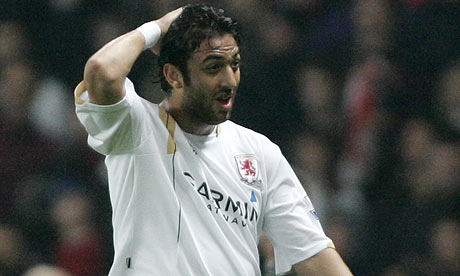
On Wednesday, Newcastle fan Barry Norman Hutchinson, aged 49, was fined £270 with £45 costs after admitting racially abusing Middlesbrough's Egyptian-born forward Mido. He did not, however, receive a banning order excluding him from every football ground in the country, much to the chagrin of the Premier League club and the English game's governing body.
"It makes it very difficult for football clubs to have a robust anti-racism policy without the support of the courts," said a club spokesman. "Despite this setback, we will continue to be vigilant and supportive of the police in tackling all discriminatory and anti-social behaviour."
Those who run the game, and who have made commendable efforts to clean it up in recent years, have every right to feel disappointed, although they are perhaps victims of their own naivety. Anyone who has spent time in our magistrates courts will know that justice is often random and occasionally batty, just as they will also know the ingenuity — or should that be brass neck? — of defendants is without limit.
In Hutchinson's case, the so-called "mitigation" constitutes a collector's item for absurdists. "Essentially he thought the song referred to Mido having a ball as opposed to a bomb," said his lawyer when asked to explain why the accused have been singing "Mido, he has a bomb you know". The court bought this explanation, along with what it described as Hutchinson's remorse, and handed down its ruling.
We could spend an age deconstructing this verdict or we could move swiftly on to the kernel of the case; are we going to tolerate racial abuse (or for that matter homophobic abuse) at football grounds or we are not? Do we take an absolutist approach to those who offend our sensibilities in this way, or do we accept there may be mitigating circumstances? The answers are so obvious that it seems unnecessary to state them, but for those still groping in the dark here is a clue — racism is illegal.
Yet if certain kinds of abuse are unacceptable in any circumstances, there is another category upon which the statute book has nothing to say, where there are no laws, only opinions.
To boo or not to boo? That has been the issue as the nation has divided over the treatment of Emmanuel Eboué by Arsenal fans at the Emirates Stadium last weekend. At this stage in the debate, the last thing the world needs is yet another opinion. Did Eboué's tears signify something greater than the disappointment of an under-performing professional footballer? Have football fans become so entitled they think the price of a match ticket buys them the right to humiliate a grown man in such a way? If this is the case, should they not be ashamed of themselves?
We could go on and on, but as the questions pile up and the arguments grow ever more fierce the temptation becomes irresistible to seek answers in what we know rather than what everyone and his Labrador thinks. And what we know is the booing aimed at Eboué, unlike the racist abuse aimed at Mido, was not illegal.
This is an important distinction because it leads us to the only logical response to this week's furore over terracing behaviour, which is this: We may not like the things people say and do when they are in football grounds but, if no laws are broken, then we have to accept their right to do it.