Food industry giants including Tesco and Danone have joined charities to call on Andy Burnham to make food security a national priority alongside energy and defence.
The letter, also signed by Sainsbury’s, Aldi, Waitrose and Co-op, charities including Barnardo’s, Amnesty International UK and WWF-UK, health campaigners, investment companies and farming organisations, warns that the next “food shock” is “not a question of if, but when”.
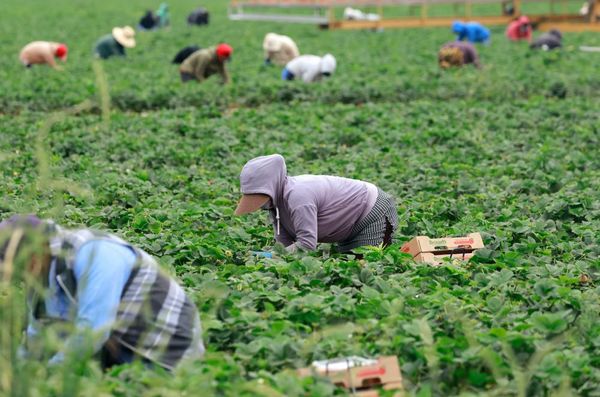
It says: “Each new shock lands on a food system with less capacity to absorb it. British production of fruit and vegetables has fallen 16% since 2015, and we now import 78% of our supply.
“The next food shock is not a question of if, but when.

“To meet it prepared, food has to stop being an afterthought for the Government: we need mechanisms to put food high on the priority list of every part of government, both national and local, so that any decisions that impact on health, farming, planning, and trade secure better access to healthy and sustainable food for everyone.”
It goes on: “The cost of doing nothing on this issue is already falling on those with the least resource, with food insecurity already affecting 15% of households with children.
“Economic pressures continue to push a healthy diet further out of reach for many, with the NHS then left to pick up the bill.”
It calls on Mr Burnham to urgently introduce a Good Food Bill to act as a legally binding framework to improve national food and nutrition security, public health and food system resilience.
International conflict has pushed fertiliser costs up by around 40% since last year, while more frequent extreme weather events, highlighted by this summer’s wildfires across Europe – are making harvests vulnerable.
Earlier this year, the Government’s own National Security Assessment concluded that global biodiversity loss poses a direct threat to the UK’s food supply.
UK food prices are on track to be 50% higher by November compared to levels at the start of the cost-of-living crisis in mid-2021, according to the Energy and Climate Intelligence Unit (ECIU) think tank said.

Campaigners have warned that struggling families will often turn to cheaper, less healthy food and cut down on fruit and vegetables to cope with rising costs.
The letter states a Good Food Bill would place food policy on a statutory long-term footing for the first time and should set legally binding targets to reduce childhood obesity, increase the consumption of fruit and vegetables and the proportion grown in Britain, and reduce household food insecurity.
Sainsbury’s chief executive Simon Roberts said: “Recent weeks have shown just how much pressure our food system is under.
“We need a more resilient food system that attracts investment, backs British farmers and helps keep affordable, nutritious food on tables across the nation.
“Food and farming should be at the heart of government policy, helping to build a stronger and more resilient future.”
Danone vice president, general secretary for North Europe Richard Hall said: “Poor diet, especially amongst children, is one of the biggest challenges facing the UK today.
“Addressing it will require Government, industry and civil society to work together on practical, evidence-based solutions.
“The Good Food Bill provides an important framework to improve public health while giving businesses the long-term certainty they need to invest and help deliver that change.”
Anna Taylor, executive director of The Food Foundation, said: “The UK food system is dangerously exposed to shocks far beyond our borders.
“Over the last few years, we have seen this play out through rising food prices and increasing diet and health inequalities, with the price gap between healthy and less healthy food at the widest it’s been for over a decade.
“At the same time farmers are struggling to make ends meet.
“What we need now is a Good Food Bill that sets out a long-term framework for building resilience in the UK food system — one that holds successive governments to account and protects businesses, citizens and farmers alike.”