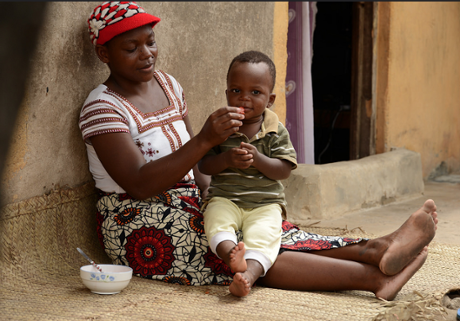
Approximately 46 million people inhabit the east African nation of Tanzania and almost one in three live in poverty. Although significant progress has been made to address malnutrition - child stunting has decreased from 44% to 35% between 2004-2011 – there is still much more to be done. Around 2.4 million children are malnourished and many Tanzanians are not getting the essential vitamins and minerals they need to lead healthy and productive lives.
About one third of children are deficient in iron and vitamin A. Vitamin A deficiency contributes to one in ten child deaths, while anaemia (in part, caused by a lack of iron in diets) will contribute to one in five deaths of mothers during pregnancy and a lack of iodine adversely affects healthy brain development. Together, micronutrient deficiencies in Tanzania may result in losses of 2.7% of GDP each year.
One of the cheapest and most effective solutions to help address hidden hunger is the fortification of staple foods and condiments like salt. Mandatory fortification and iodization can: 1) largely bypass low consumer awareness on nutrition; 2) provide a level playing field so that fortified products do not have to compete with unfortified ones, making it easier for businesses to sell these products, and 3) ensure wide distribution by fortifying foods that are already widely consumed without the high cost of establishing new distribution systems.
Tanzania inaugurated a national nutrition strategy in 2011, which started staple food fortification as a sustainable approach to improving the micronutrient status of the local population. The government passed mandatory food fortification legislation in 2011 for wheat, maize flour and vegetable oil.
Approved fortificants are iron, zinc, vitamin B 12 and folate for wheat flour and maize, and vitamin A for vegetable oil. Enforcement began in early 2013 and by March 2014, 92% of both fortifiable wheat flour and vegetable oil was being fortified.
Preliminary results from a study in Dar Es Salaam indicate that due to the consumption of fortified wheat flour, 600 women have increased levels of folic acid. This should result in less newborns being born with neural tube defects. The overall aim of the staple food fortification program is to increase essential micronutrient intake for more than 10 million Tanzanians who consume these foods.
Salt iodization has alonger history in Tanzania. It has been implemented since the 1990s after it was revealed in the 1980s that 41% of the population was iodine deficient. Through effective partnership, the government and private sector maintained households accessing iodized salt to over 80% of the population by 2010 and together helped address iodine deficiency in Tanzania. Adequately iodized salt remain at around 60%.There is still much work to be done to ensure that household coverage rates with iodized salt increase to over 90%.
There has been much success in Tanzania due to fortification but more needs to be done to improve quality, expand coverage and measure its impact. Currently, the Global Alliance for Improved Nutrition and the Africa Academy for Public Health are working closely with all stakeholders to assess the national coverage of fortified salt, wheat flour, maize flour and vegetable oil among households. The study will gauge the contribution of fortified salt, wheat flour, maize flour and vegetable oil to the intake of select nutrients in the diet of women of reproductive age, children and other target groups.
Since the introduced staple food fortification in Tanzania, there has been much momentum towards better nutrition under the leadership of President Jakaya Mrisho Kikwete. In 2013 President Kikwete launched a campaign to raise awareness of undernutrition titled “Call to Action on Nutrition” and the President has been one of the early leaders to join the SUN Movement Lead Group.
In addition, the government has recently introduced Regional and Council Nutrition Officers at the community level. Efforts are underway to recruit community health workers and equip them with comprehensive package to address health and nutrition at grass root.
Notably, President Kikwete and His Majesty the King of Lesotho will join over a dozen Ministers and 300 high-level delegates from around the world in Arusha on 9-11 September to discuss food fortification in Tanzania but also globally as part of the #FutureFortified Global Summit on Food Fortification. The Government of Tanzania is co-hosting this event with the Global Alliance for Improved Nutrition.
To read more on hidden hunger and food fortification, please visit the #FutureFortified Summit webpage.
Greg S. Garrett is the director, food fortification, GAIN. Vincent Assey, is the assistant director, nutrition services section at the ministry of health and social welfare, Tanzania.
Content on this page is paid for and provided by GAIN, a sponsor of the Guardian Global Development Professionals Network.