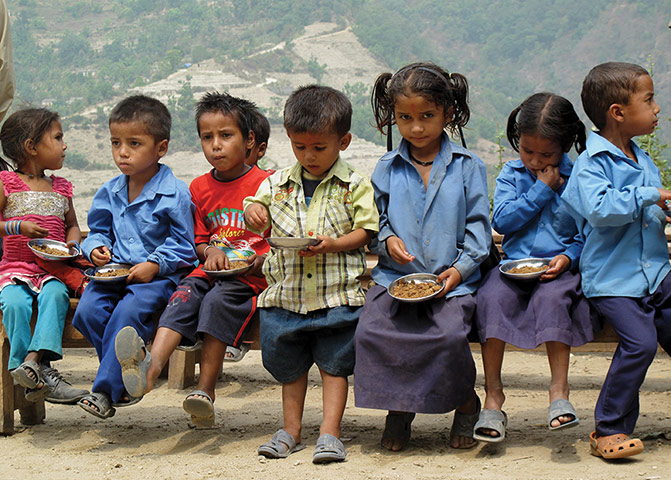
The first State of School Feeding Worldwide report, from the UN World Food Programme (WFP), analyses school feeding programmes in well-off countries as well as in developing nations, and provides data on how governments use school meals as a “safety net” in times of crisis Photograph: Deepesh Shrestha/WFP
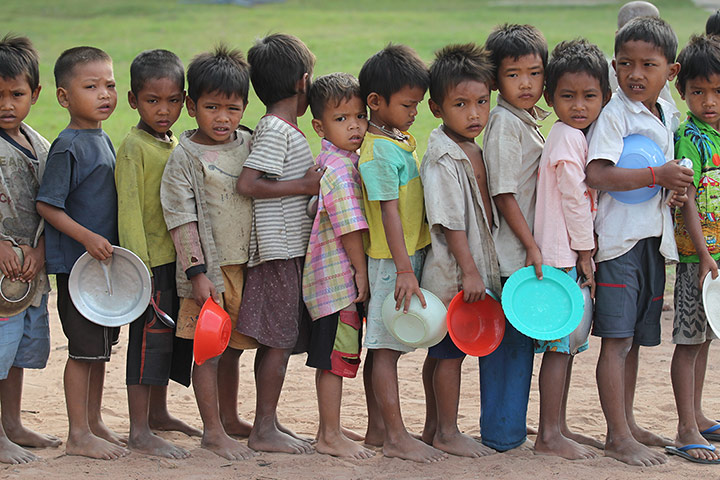
Globally, approximately 368 million children – about one in five – get a daily meal at school. In Cambodia, WFP works with the education ministry to increase primary school attendance by providing food scholarships. These take-home rations are distributed to about 20,000 students, with priority given to the most vulnerable and food-insecure Photograph: Cancan Chu/WFP
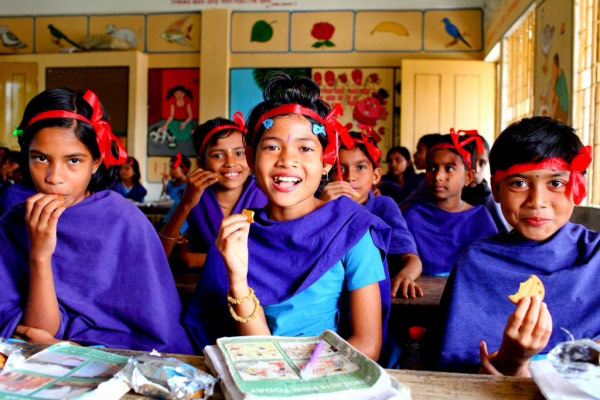
For families unable to afford enough nutritious food for their children, school feeding is a powerful incentive for educational enrolment and class attendance. Globally, almost $75bn is spent each year on school meals programmes around the world - with most coming from government budgets Photograph: GMB Akash/WFP
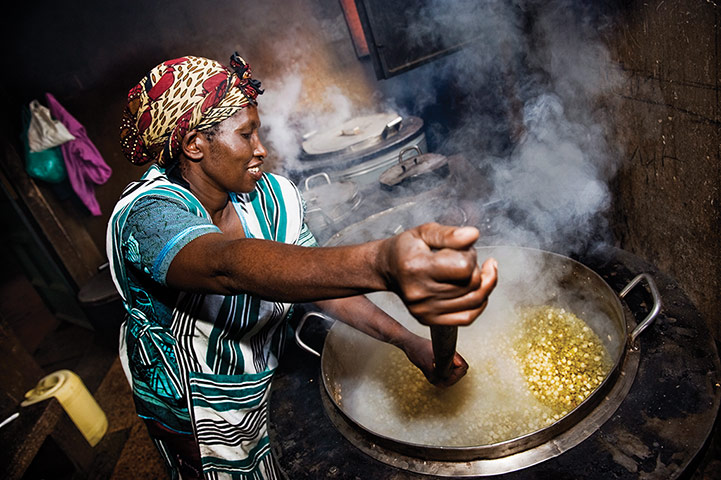
In Kenya, nearly 1.2 million of the most vulnerable children – those living in arid and semi-arid lands, and urban slums – receive at least one nutritious meal a day through WFP. “School feeding is an investment that pays off in the future with better educated, stronger and healthier adults,” said WFP’s Executive Director, Ertharin Cousin Photograph: Rein Skullerud/WFP
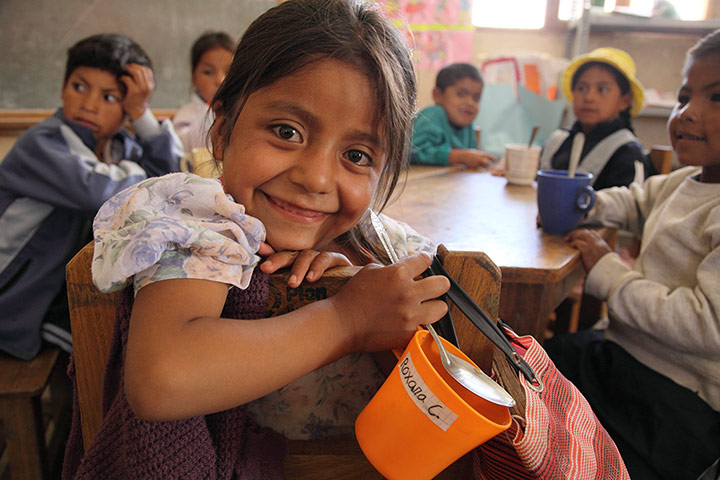
Breakfast time at a local school in the village of Thaku Pampa. The focus in Bolivia is on alleviating short-term hunger among 80,000 children, aged between six and 14 years, in the 52 most food-insecure municipalities. The number of children receiving school meals is often lowest in countries where the need is the greatest: in low-income countries, only 18% of primary schoolchildren receive school meals, while in lower-middle-income countries the figure is 49% Photograph: Boris Heger/WFP
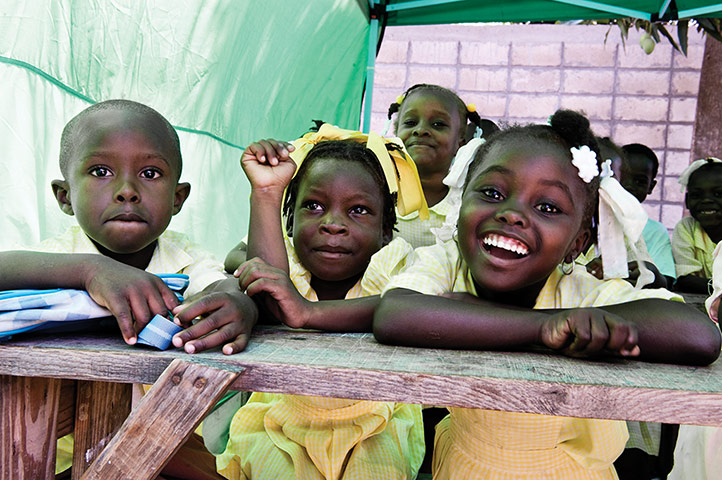
School feeding programmes can be crucial in areas afflicted by crisis, as was evident in Leogane and Darbonne following the earthquake that struck Haiti in January 2010. The food, fuel and financial crises of 2008 have left even affluent countries grappling with austerity measures. By providing school meals, local governments and NGOs have provided vital support to children whose families can no longer afford to feed them regularly Photograph: Rein Skullerud/WFP
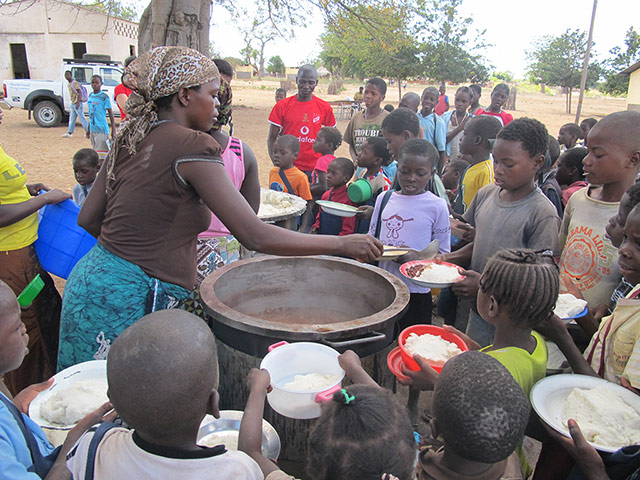
At a school in northern Mozambique, mothers volunteer to cook meals for students in two shifts, one in the morning and another at noon. Beans, oil, maize flour and salt are provided for the students’ meals, along with cooking pots and materials for a warehouse that fathers in the community helped to build Photograph: Molly Slotznick/WFP
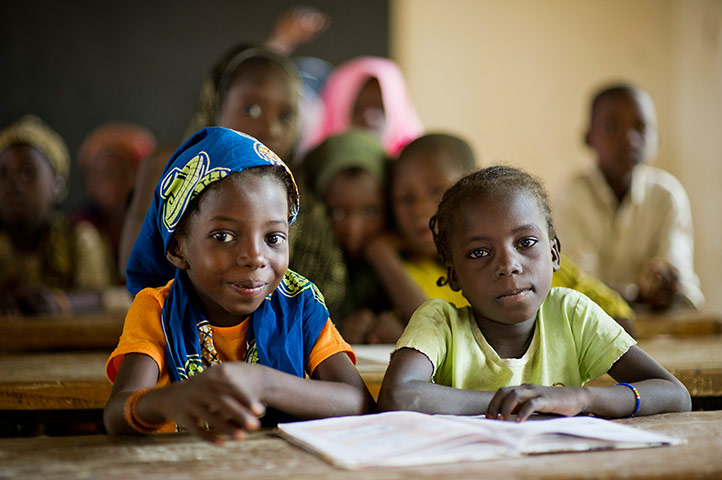
In 2011-12, Niger was left with a significant cereal deficit after erratic rains and pest infestation caused harvests to fail. The government classified up to 750,000 people as severely food insecure. Dalaweye primary was among 700 schools selected for the WFP feeding scheme in the country Photograph: Rein Skullerud/WFP
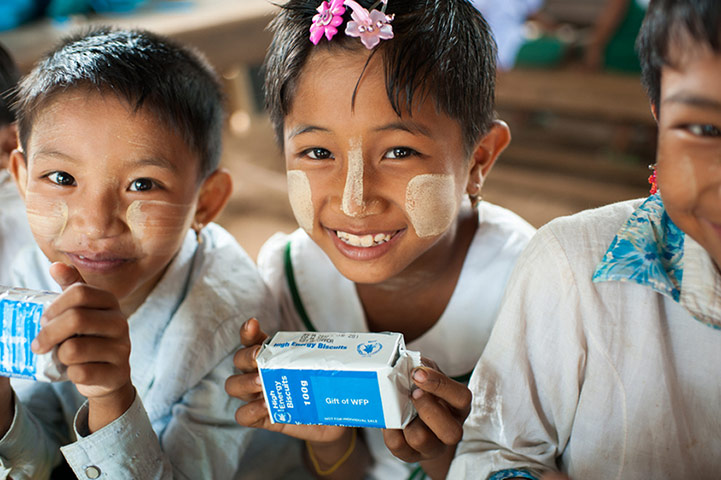
High-energy biscuits, fortified with nutrients, provide energy and other essential nutrients to help children learn better and grow healthy through improved nutrition. School feeding provides obvious benefits in terms of education and nutrition, but it can also be a way to boost local agriculture, WFP argues Photograph: Philip McKinney/WFP