Get all your news in one place.
100’s of premium titles.
One app.
Start reading
The Guardian - UK
The Guardian - UK
Lifestyle

Food and rationing in the second world war

Wartime food: 11 year old Jimmy West
11-year-old Jimmy West about to start work at an allotment created on a bomb site in Bethnal Green, 1942. The same year saw 31,000 schoolchildren, organised in 650 nationwide camps, helping to bring in the harvest
Photograph: Imperial War Museum
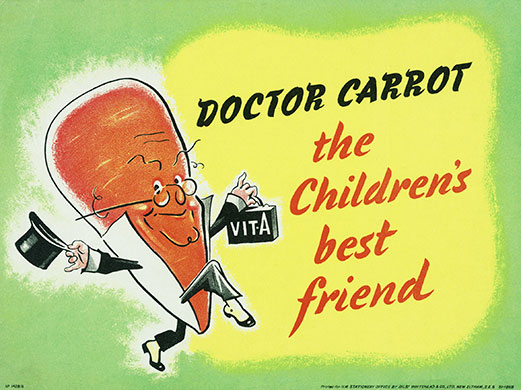
Wartime food: Doctor Carrot poster
Dr Carrot and his companion Potato Pete were two of the Ministry of Food's most popular creations. Pete even achieved the accolade of having a song about him sung by Betty Driver of Coronation Street fame
Photograph: Imperial War Museum

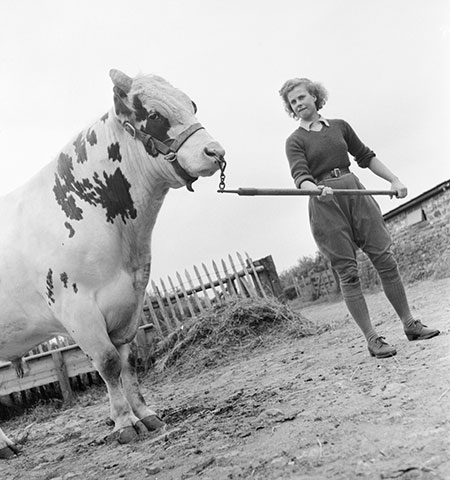
Wartime food: Land Girl
Helping the war effort, Land Girl and former typist Iris Joyce leads a bull on a farm somewhere in Britain, 1942. A Land Girl over the age of 18 was paid a minimum wage of £1 2s 6d (£1.13) for a 48 hour week
Photograph: Imperial War Museum
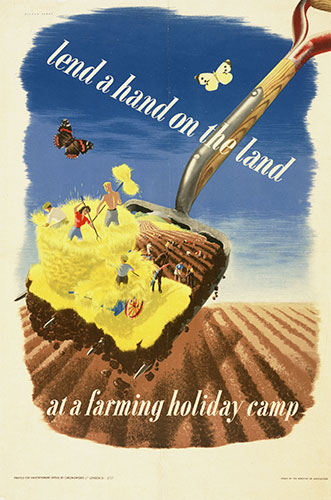
Wartime food: Lend a Hand on the Land poster
With more and more people interested in growing their own food and the costs of overseas holidays increasing, could the Lend a Hand on the Land holiday make a return? 100,000 adult volunteers and 250,000 schoolchildren responded to this campaign and turned out to help bring in the record 1942 harvest
Photograph: Imperial War Museum

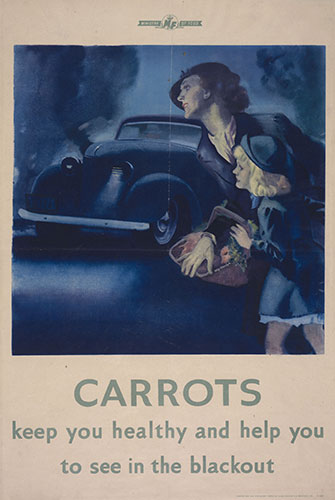
Wartime food: Carrots Keep You Healthy poster
The notion that carrots help you see in the dark was one which stuck in people's minds, but is actually pure propaganda. The idea was put about to keep the Allies' possession of radar secret from Germany by claiming eating carrots gave Allied pilots superior night vision. Almost equally heroic were the many people who cooked and ate Woolton Pie, of which carrots are a major ingredient. The pie was named after the Minister of Food, and described as steak and kidney pie without the steak and kidney
Photograph: Imperial War Museum
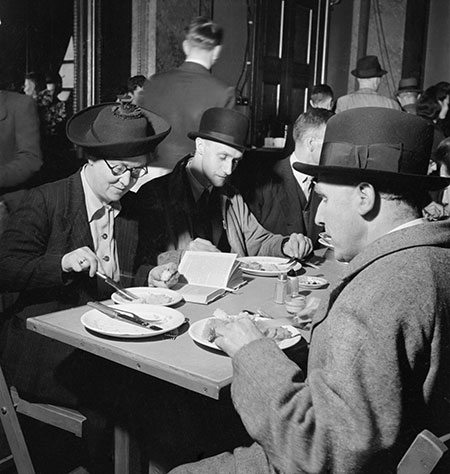
Wartime food: The Londoners  Meal Service
The Londoners' Meal Service (LMS) canteen at the Fishmongers' Hall. The LMS began providing hot meals for bombed-out Londoners in September 1940. By 1942, 1,000 lunches a day were being served in the partially- blitzed Fishmongers' Hall, and after the air raids diminished in intensity the service developed into a network of restaurants
Photograph: Imperial War Museum

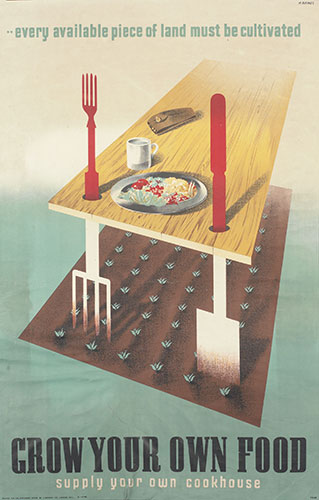
Wartime food: Grow Your Own Food poster
This grow your own food, supply your own cookhouse poster was designed by Abram Games in 1942 to appeal to women. Whether it worked or just identified a growing trend, by 1943 there were 10,000 women allotment holders in Britain
Photograph: Imperial War Museum
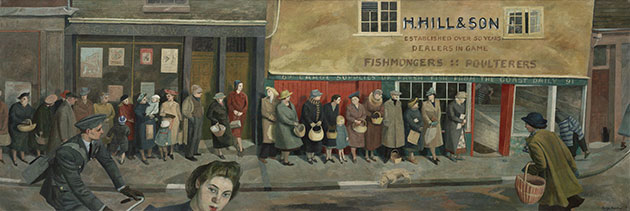
Wartime food: The Queue at the Fish-shop
The Queue at the Fish-shop, by Evelyn Mary Dunbar, 1944. Fish was not rationed during the war, but was often scarce and, by 1941 prices were 17% higher than in 1939
Photograph: Imperial War Museum
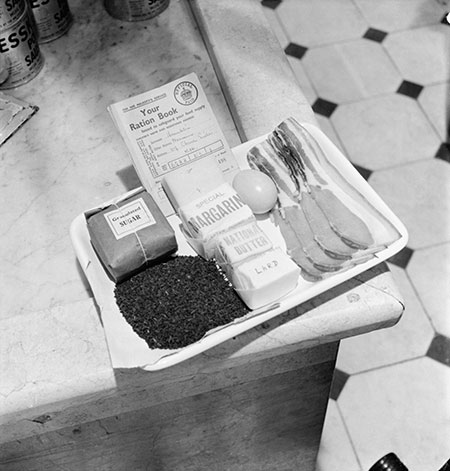
Wartime food: Ration book and an adult's weekly rations
A ration book and an adult's weekly rations of basic foodstuffs, 1942. Food rationing began on January 8 1940 and continued until June 30 1954. Clothes, sweets and soap were also rationed, and almost all other consumer goods were in short supply
Photograph: Imperial War Museum
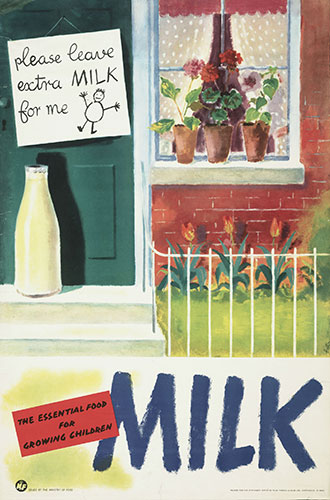
Wartime food: Milk the Essential Food poster
Over 4 million schoolchildren were receiving 'the essential food' each day at school by 1943, and the entitlement to free milk continued until Margaret Thatcher's time as education secretary in the early 1970s
Photograph: Imperial War Museum

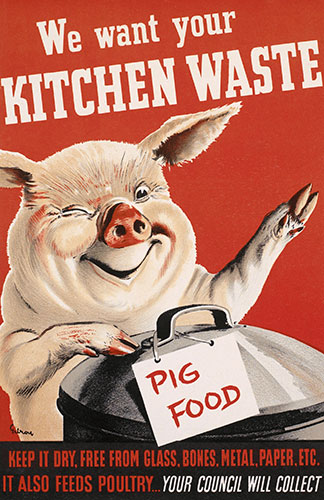
Wartime food: We Want Your Kitchen Waste poster
Over 1 million householders were feeding hens with kitchen waste to provide their own eggs in 1943, and schemes to collect food waste to feed to other livestock outstrip many of the schemes run today
Photograph: Imperial War Museum

Sign up to read this article
Read news from 100’s of titles, curated specifically for you.
Already a member? Sign in here
Related Stories
Top stories on inkl right now
One subscription that gives you access to news from hundreds of sites
Already a member? Sign in here
Our Picks
Fourteen days free
Download the app
One app. One membership.
100+ trusted global sources.