The sun has yet to emerge. I cling to the back of the rusted pick-up truck, my limbs jerking back and forth in unison with the dirt road. The call of a noisy chachalaca penetrates the air. Basilio Caviela, a local forestry technician, explains that the bird’s vocalization indicates the oncoming shift in seasons – dry to wet – that will alter the landscape around us. While rain invites life and infuses the landscape with color, it also limits forestry operations by rendering roads impassable.
Mexico’s government doesn’t pave the roads winding through this forest. Infrastructure remains the responsibility of those inhabiting the ejido, or communal land parcel. However, with such a large area and limited financial resources, simple upkeep of roads can pose a challenge.
Here in Petcacab, like other ejidos, forests remain under the legal jurisdiction of the community. Residents retain equal access to employment in the forestry sector. Profits from timber are redistributed within the village. To the members of the ejido, these trees represent health care, education and pensions all at once.
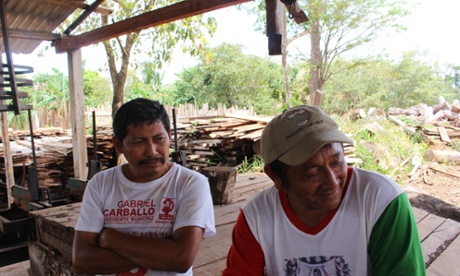
The kind of community forest management practiced in Petcacab offers a compelling alternative to the concession forestry of Mexico’s earlier years, but rural forest communities face many challenges, such as the lack of sophisticated machinery necessary to operate their mills to full capacity. Technical training in administration and formal recordkeeping also remains limited. Ecotourism ventures, an attempt at supplemental income, have largely failed to take hold.
That’s where Rainforest Alliance provides assistance. The organization serves as an important partner in local capacity building. By linking ejido members with international markets and potential buyers, community members can overcome geographic isolation and limited communication systems. The Rainforest Alliance also facilitates the maintenance of clear accounts and the creation of long-term economic plans.
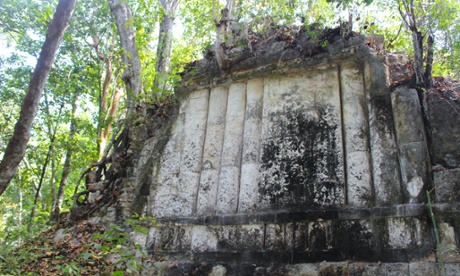
When we arrive in the ejido of Veinte de Noviembre, it’s impossible to ignore the history of forest products in the region. Embedded in the walls of the crumbling Mayan palace before us are 1,000-year-old planks of chicozapote, an evergreen tree native to Mexico, still intact. Even the stucco coating the walls of the structure contains the resin of four tree species. After describing the deforestation resulting from ambitious Mayan construction, Ezequiel Cauich, a naturalist, explains Veinte de Noviembre’s current management practices. Ejido members often harvest timber according to moon cycles to prevent rapid decomposition or pest damage, negating the need to apply a chemical treatment.
The forest borders the Calakmul Biosphere Reserve, so biodiversity conservation remains relevant. Scientists are presently engaged in studies of jaguar population density in the region, and ejido members are concerned with maintaining a healthy ecosystem. “Ramón trees produce fruit for mammals in the forest. We leave these trees in place to preserve biodiversity,” Cauich said.
Aside from the impressive Mayan structures, Mexican forests are unique in other ways. One look at the towering mahoganies in Noh Bec’s reserve proves it. The giant trees that inhabit the Huasteca reserve embody the community’s values of biodiversity preservation and sustainable harvesting – principles that are supported by a voting general assembly. “There are no longer mahogany trees of this size anywhere else in the Yucatán Peninsula,” Cauich said.
Certifications standards like that of the Forest Stewardship Council (FSC) – the one used by the Rainforest Alliance – offer recognizable sustainability documentation for global markets and provide a means to improved management. The system, through its guiding principles, strengthens small forest enterprises. Noh Bec acted as a pioneer community when it became one of the first places in the world to receive FSC certification for forest management in the early 1990s.
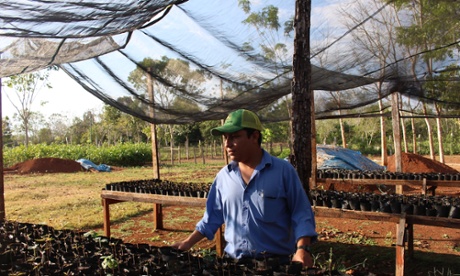
Earlier this year, Noh Bec became recertified in forest management, achieved FSC/Rainforest Alliance Chain-of-Custody certification and made its first shipment of wood to Europe since 2007 – a wise move for its long-term economic health. “They need buyers who separate out their wood and sell it to markets specifically as sustainable, certified wood,” says Ann Snook of the Rainforest Alliance. “So we are matching them with markets that recognize the value of these timber products.”
The people of Noh Bec depend on timber for nearly every aspect of life. Why, then, do they leave immensely valuable trees standing, uncut? Francisco Reyes, a forestry technician, offers this simple answer: “Future generations have the right to know them.”
Joanna Parkman is a recent graduate of Sewanee: The University of the South. She impressed the judges with her entry about Wangari Maathai, the late Nobel Peace Prize-winning activist from Kenya.
Content on this page is provided by the Rainforest Alliance, supporter of the Vital Signs platform.