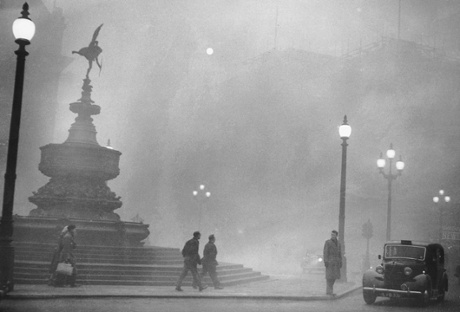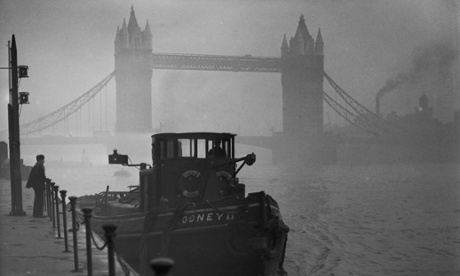
In 1952, London was hit by the Great Smog, a week-long pea-souper that brought the capital to a standstill and contributed to the deaths of at least 4,000 people.
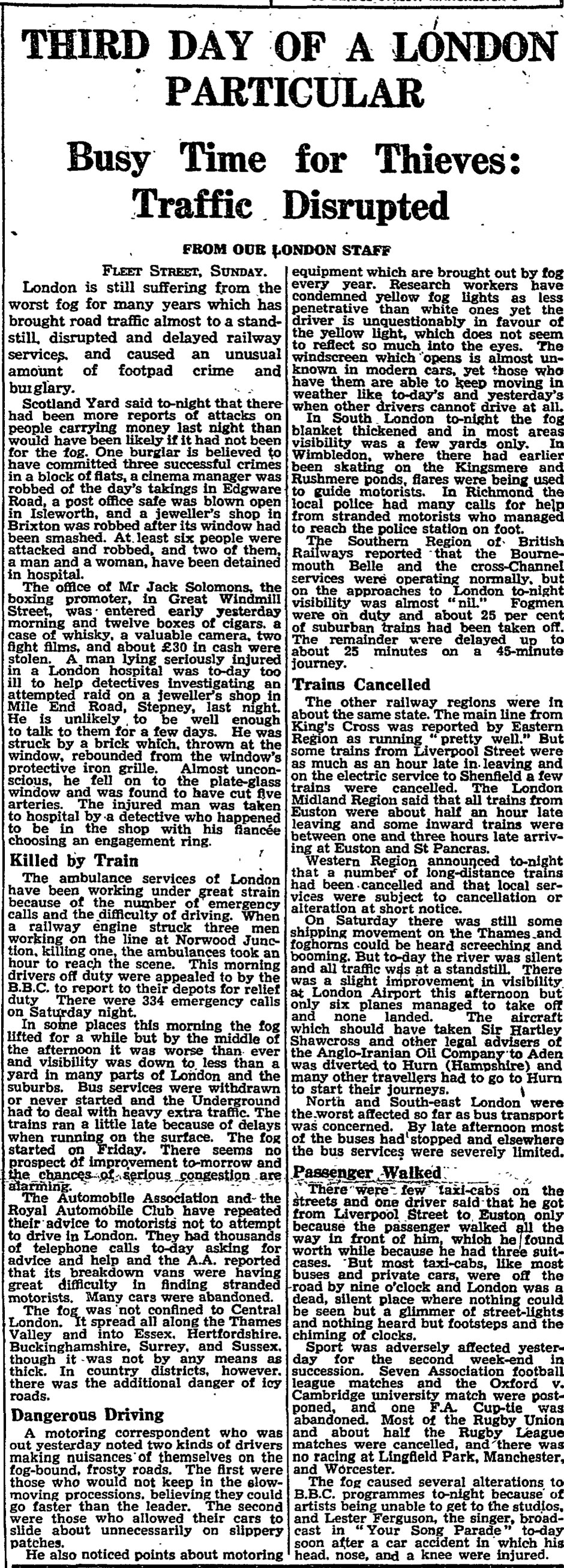
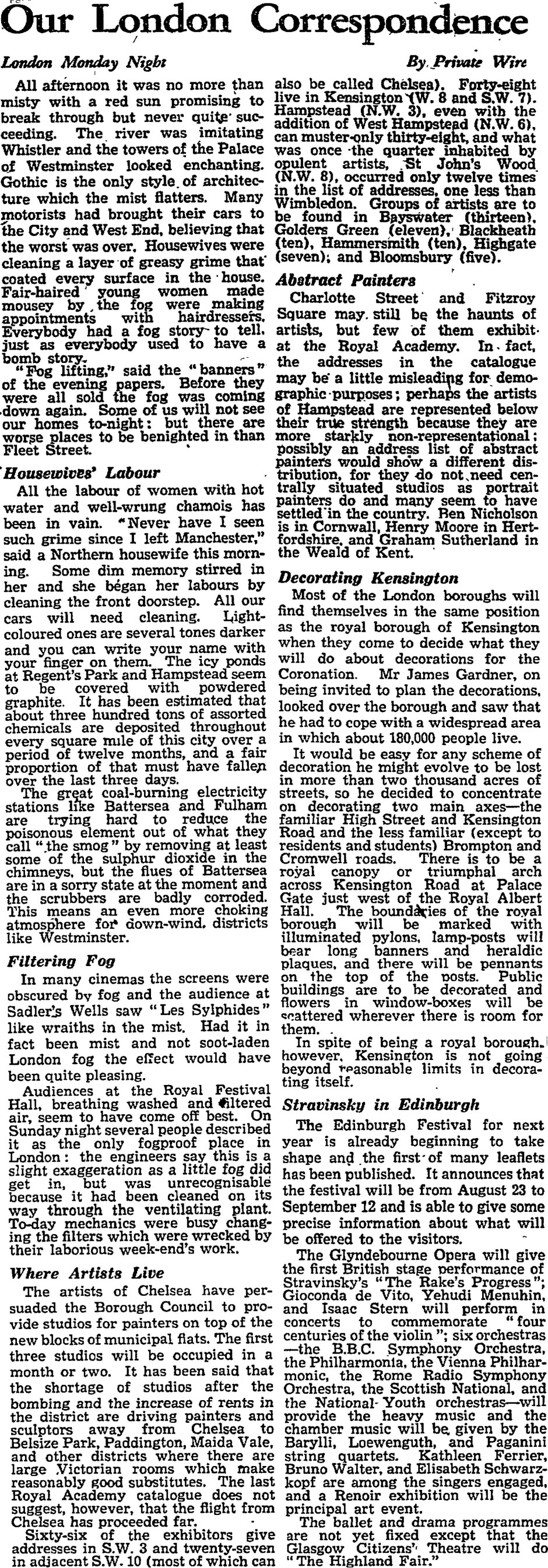
According to the Manchester Guardian, the so-called ‘London particular’ had ‘caused an unusual amount of footpad crime and burglary.’ Cars were abandoned by the roadside, trains were cancelled and rugby matches postponed, while the BBC made several programme alterations when presenters couldn’t make it to the studios.

Pollution from fireplaces and factories combined with the foggy weather to cover the city in thick clouds, which seeped into buildings, obscuring cinema screens and theatre stages.
‘Everybody had a fog story to tell,’ said the London Correspondence column, while ‘all the labour of housewives with hot water and well-wrung chamois has been in vain.’

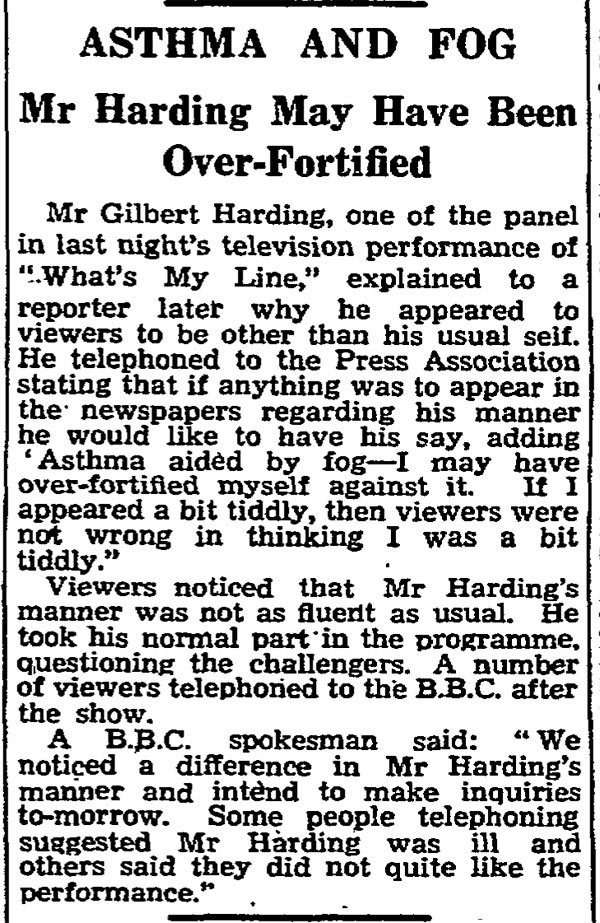
Those BBC personalities who made it to the studio were not immune from the effects of the fog either. What’s My Line panellist Gilbert Harding blamed it for his appearance on that week’s show: ‘If I appeared a bit tiddly, then viewers were not wrong in thinking I was a bit tiddly.’

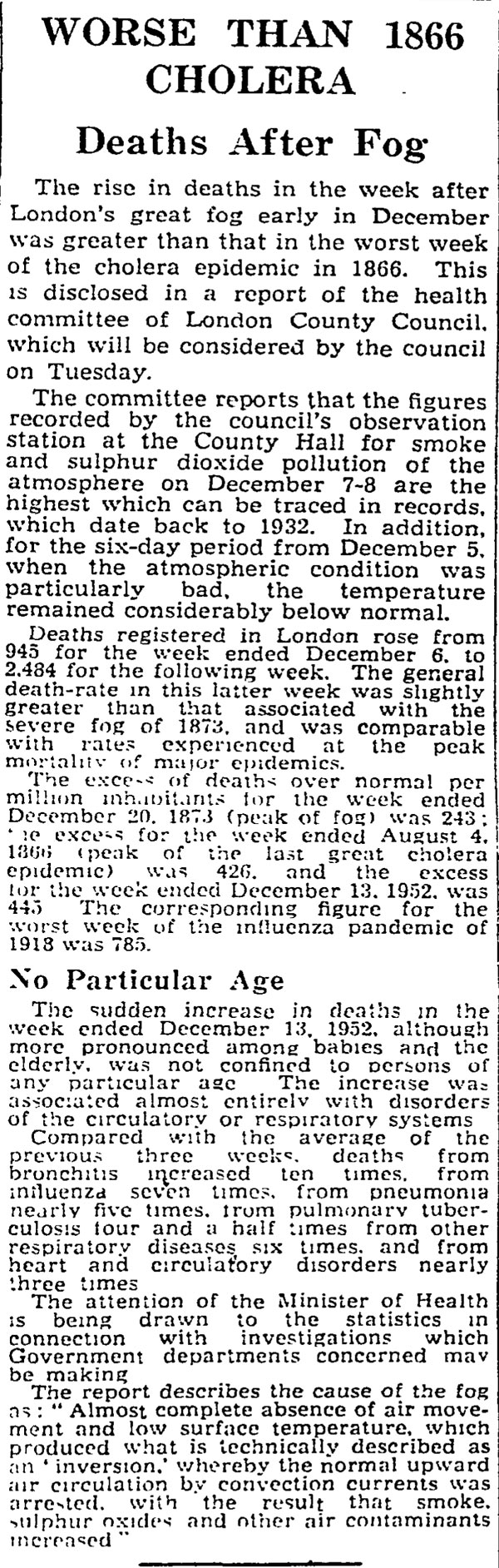
Many of the excess deaths recorded following the fog were from respiratory disease caused or aggravated by toxic sulphur dioxide and other contaminants in the air.

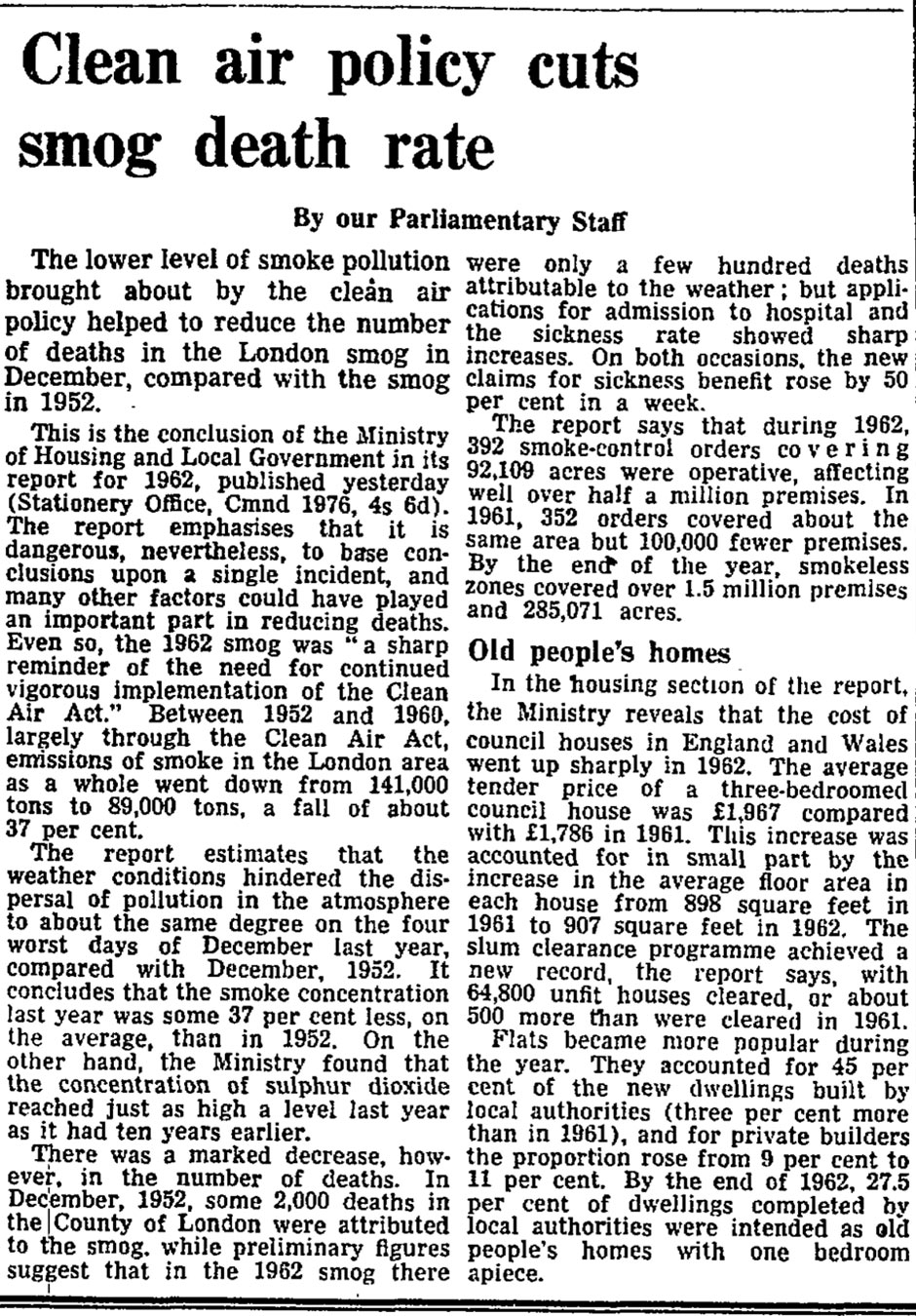
The government passed the Clean Air Act of 1956 in response to the disaster, aimed at reducing emissions. By 1962, though London was still suffering from December smog, related deaths had been cut to several hundred.