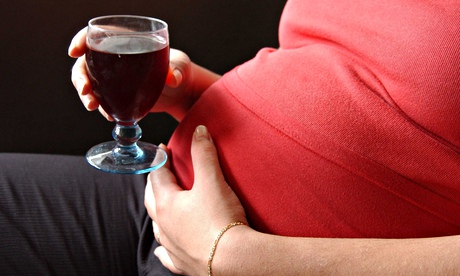
Severe damage inflicted on an unborn baby by her mother’s heavy drinking during pregnancy was equivalent to attempted manslaughter, the court of appeal has been told.
Opening a claim for compensation on behalf of the girl, now seven, lawyers argued that she was entitled to payments from the Criminal Injuries Compensation Authority.
The test case raises complex questions about whether the mother’s drinking constitutes a criminal act and whether the child was legally an individual within the law at the time she suffered injury.
Neither the child nor the local authority in the north-west of England can be identified.
The court was told that the mother ignored warnings from social workers and antenatal medical staff that her heavy alcohol consumption risked harming her unborn baby.
The claim has been filed by the local authority, which cares for the child against the Criminal Injuries Compensation Authority.
It maintains the mother’s action constituted the crime of poisoning under section 23 of the Offences Against the Person Act 1861.
John Foy QC, for the authority, told the court of appeal: “It’s not disputed that the mother administered a noxious thing, it could be described as a destructive thing, to her daughter and it inflicted grievous bodily harm on her. The child was born with foetal alcohol spectrum disorder … We say it’s on all fours with manslaughter.”
The mother is no longer in contact with the child, who has suffered developmental problems. Foetal alcohol syndrome can result in babies being born with brain damage as well as distorted facial features. The local authority won its claim in the initial hearing but lost in the upper administrative tribunal on the grounds that an unborn child is not a person in law and therefore no criminal offence could have been committed.
The case has provoked a wide-ranging debate about the rights of the foetus and calls for women who drink excessively during pregnancy to be prosecuted.
The Department of Health advises that pregnant women avoid alcohol, or, if they do opt to drink, to consume no more than two units up to twice a week. A unit is roughly equivalent to one small glass of wine.
Neil Sugarman of GLP Solicitors, who is representing the local authority, said before the hearing: “This is not about the criminalisation of women. It is about whether a foetus that is damaged in the womb but goes on to be born with life-changing injuries has been the victim of a crime within the strict definitions of the statutory Criminal Injuries Compensation Scheme.
“It is highly unlikely to lead to prosecutions and the birth mother plays no active part in the claim process. Compensation would open up new avenues to treatments and support not readily available on the NHS, and to provide at least some improvement to the quality of life of a group of very badly damaged children and young people.”
The British Pregnancy Advice Service (Bpas) and the Pro-life Research Unit have intervened in the case. Similar cases in the US have led to women being jailed.
Ann Furedi, chief executive of Bpas, and Rebecca Schiller, co-chair of Birthrights, said: “Viewing these cases as potential criminal offences will do nothing for the health of women and their babies. There is a strong public interest in promoting the good health of pregnant women and babies, but, as longstanding government policy recognises, this interest is best served by treating addiction and substance abuse in pregnancy as a public health, not criminal, issue.”
The case continues.