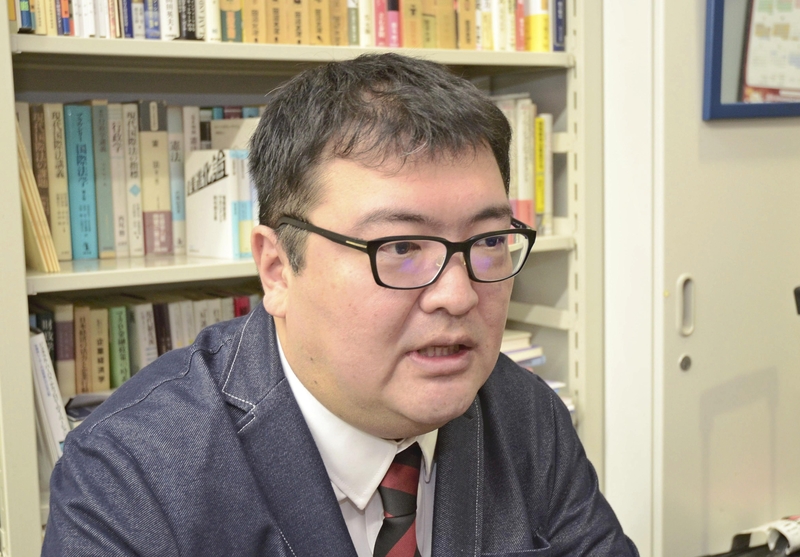
Atsushi Osanai, a professor at the Graduate School of Business and Finance at Waseda University, spoke with The Yomiuri Shimbun about the technological strength of Japanese manufacturers of consumer electronics. The following are excerpts from the interview.
Showa technology valued
The Yomiuri Shimbun: How should we evaluate the technological strength of Japanese electronics manufacturers?
Osanai: I believe the technology of Japan's electronics manufacturers remains strong. However, it's not technology that sells, it's products. Despite Japan hadn't lost the competition over technology, the thinking was that if its technology improved, it would be able to recover its former status. As a result, further investments were made in technology.That's why the industry is just spinning its wheels.
In the Showa era [1926-89], technology was directly connected to the value of a product. One example of this was how Sony Corp.'s transistor radio was popularized throughout the world during the 1950s. Other companies were unable to produce small-scale radios with transistors.
This relationship between value and technology was simple, as value was added with improvements to technologies such as semiconductors and cathode ray tube TVs. At the time, it was most advantageous for Japanese companies to devote themselves to technological development.
A: As the 21st century began, the consumer electronics industry rushed toward digitization. As long as parts are supplied, it's simple to produce products with consistent quality. They were assembled efficiently with inexpensive parts and inexpensive labor.
With swift decisions, South Korea's Samsung Electronics Co. made large-scale investments. With technology that was a step behind, they opened up markets in emerging economies, such as the TV market. With those profits, they focused their investments in semiconductors, bringing down costs.
Samsung Electronics skillfully balanced improving technology and knowing what to do with every other aspect of business. The development of an entire strategy, along with bold management decisions, were the keys to its success.
However, Japanese industry was too overconfident in technology and had no strategy to deal with digitization. Because the technology was so strong, they'd come to rely on it. This is why they were unable to come up with a multifaceted strategy.
Main problem
Q:What do you think is the underling problem?
A: The problem is management. Japanese businesses are competitive when it comes to skills in the workplace, and if they're managed properly, they're sure to be profitable.
A: There was, in fact, a problem above the factory floor, at the management level. It was proven by the dramatic turn toward profitability when Sharp accepted veteran management.
The opportunities for Japanese firms to make money are everywhere. It's not so difficult [to make money]. They're simply lacking fundamental strategy.
First, it's important to know what can be effectively utilized to do something different from other companies, given the resources we have. Second, it's important to find markets where the firms don't have to compete over prices.
For example, Sony gained profits by selling radios all over the world because there was a diminished likelihood of having to compete against other firms. It wasn't simply due to their use of cutting-edge technology. Until recently, Samsung made a profit selling cathode ray tubes TVs to emerging countries. It's a matter of skillfully discovering the domains other companies have not yet dipped their hands in.
Suzuki Motor Corp. has a competitive edge in the automobile market in India. They found success after taking advantage of their own strengths and considering an area that other Japanese manufacturers hadn't entered.
In emerging countries, it's vital to offer a product that truly meets the needs of the local market. Japanese electronic manufacturers tend to think they need to have added value unique to Japan in their products. However, what's being put to the test is how many useless functions can be removed.
Japanese manufacturers are working to have everything connect to the internet as part of the internet of things (IoT), but there's a danger of sticking to the same technology.
Across multiple fields
Q: What are the necessary strategies for future businesses?
A: Japanese companies have ideas and technology, but they can't skillfully connect those with business.
There's a clear framework that separates the liberal arts and sciences, development and sales. This is unfortunate.
Apple Inc. founder Steve Jobs was originally a tech expert, but he's seldom spoken of as such. Rather, he's highly praised for excelling at marketing, product planning and management. He spoke of products, not technologies. The way he sold the iPhone is just one example of this.
The key is to utilize ideas beyond the scope of the framework of the liberal arts and sciences. Being able to mobilize the knowledge of all employees is essential.
Rather than relying on experts in a specialized field within the company, someone who steps back and looks at it from a different perspective is more apt to have new ideas. International manufacturers aggressively absorb external knowledge. In the case of start-up manufacturers in places like China or Taiwan, if there's something they can't do, their president will simply call someone at another company during a meeting and ask, "Can you do this?" The swiftness and breadth of their operations is their strength.
I think, in general, Japan isn't greedy enough for business.
In TV dramas that focus on manufacturing, the large enterprises or banks that prioritize profits play the villains, and people making what they want are the heroes. However, is that really accurate?
After all, to establish funds to develop the next big thing, it's vital to aggressively make money. Overseas managers that can consistently make money are regarded as "cool," and are highly evaluated. That is the way Japan should be.
Atsushi Osanai
Waseda University Professor
Graduated from Kyoto University. After joining Sony Corp., Osanai was in charge of product planning and other tasks. He obtained a doctorate in economics from Kyoto University's graduate school in 2007. He was appointed to his current position in 2016. He is 45.
(This interview was conducted by Yomiuri Shimbun Staff Writer Daisuke Segawa.)
Read more from The Japan News at https://japannews.yomiuri.co.jp/