A report has estimated that more than 800 million people were affected by cybercrime during 2013, at a cost to the global economy of around £226 billion every year. The figures, released by internet security firm McAfee, also predict the financial losses could cause as many as 150,000 Europeans to lose their jobs, and it's thought 160,000 types of computer malware are developed each day.
The report has again shone a spotlight on the importance of internet security, brought into prominence by the recent eBay security breach, which saw up to 233 million people have their personal details stolen. More recently, computer hackers threatened to reveal the details of 600,000 Domino's Pizza customers in France and Belgium, if the company did not pay a ransom of £24,000.
So, IT security is a hot topic for individuals, businesses and governments, meaning that there is a growing demand for highly qualified and skilled computing professionals to work in organisations around the world.
Postgraduate computing and IT programmes and research at UCLan offer an insight into these issues and seek to support students whose career interests lie in this area.
More from Martin Bateman, programme leader, MSc IT Security at UCLan
Martin's background is in networking and security and he has worked in both academia and industry. Within industry he worked as a software developer, system administrator, IT consultant and as an IT director. Martin believes it is important that anyone working in IT has an understanding of security. This is reflected in the MSc IT Security programme, which has a strong focus on preparing students for employment.
He says: "Cyber security has become an important aspect of all IT systems. Anyone working within IT should have an understanding of IT security, be they software developers, database administrators, system administers or managers.
"We aim to develop students' knowledge and practical exposure to security concepts, techniques and tools in order to prepare them for security-related jobs. We expect students to take their existing specialist knowledge and apply it in respect to security."
Indeed, this course is geared towards ensuring students can gain employment, or if they are already working alongside their studies, to develop the skills needed to progress their careers.
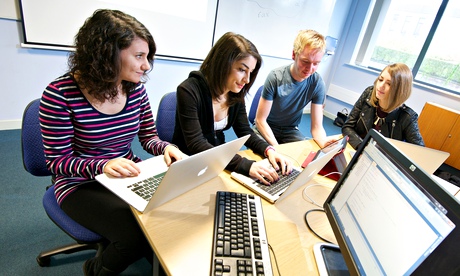
"The jobs market in IT is becoming increasingly competitive. Getting a specialist master's qualification will help students' CVs to stand out when applying for jobs. Most undergraduate computing courses do not especially equip students to understand and apply concepts and practical aspects of cyber security.
"The knowledge and skills students learn in the course help to prepare them for the jobs market. We offer students an opportunity to do a work placement, which provides them with relevant work experience to put on their CV.
"Alongside the course, we run professional skills classes which provide students with study and employability skills, and which helps them to prepare for job-hunting. As part of the MSc, students will do a significant IT security related project, which can be used when job hunting, as an example of their practical skills and specialist knowledge."