With the Trump-Kim summit in Hanoi dominating news coverage and election campaigns in key regional states such as India, Indonesia and Thailand offering daily distractions, it is difficult to generate genuine interest in the continuing humanitarian and security crisis in and around Rakhine state in Myanmar. But it would be dangerous to move the issue to the back burner.
In an opinion article in the Bangkok Post of Feb 18, veteran journalist Kavi Chongkittavorn gave a historical overview of Asean's engagement with Myanmar. That history is characterised by slow and gradual progress ever since Myanmar joined Asean in 1997.
Kavi sketches an upward trajectory culminating in Asean's recent decision to stand ready to support Myanmar in its repatriation process of Rohingya refugees and to welcome the invitation extended by Myanmar to the Asean Coordinating Centre for Humanitarian Assistance on Disaster Management (AHA Centre) to "despatch a needs assessment team to identify possible areas of cooperation in Rakhine state to facilitate the repatriation process". The decision was made at the Asean Summit in Singapore last November.
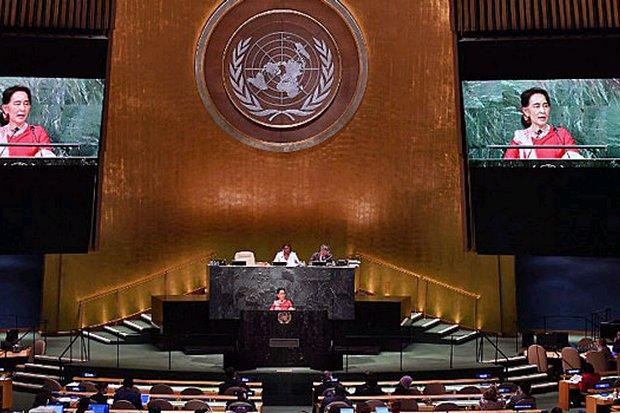
This decision is welcome. It does suggest a common Asean perspective on the situation in Rakhine state but this is not borne out by the facts. It is clear that heated exchanges continue behind Asean's closed doors. A better gauge of where individual members stand is the vote on UN General Assembly resolution 73/264 critical of Myanmar, adopted on Dec 22, 2018. While the overwhelming majority of UN members voted in favour, Asean was split: five members voted against, three in favour and two abstained.
The November summit decision is less far-reaching than regional action taken in 2015 when, at Thailand's initiative, a successful international conference -- the Special Meeting on Irregular Migration in the Indian Ocean -- took place in Bangkok in response to the large-scale Rohingya maritime exodus. Granted, this conference took place outside the official Asean framework but Thailand convinced Myanmar and other affected countries in Asean to attend. Participants recognised the regional dimension of the maritime crisis and accepted responsibility to deal with it.
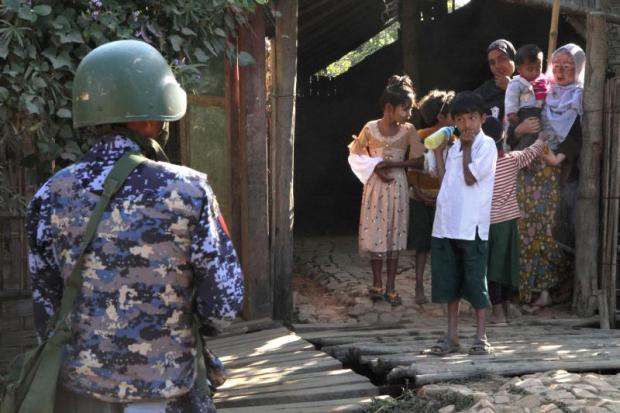
Just as in 2015, the situation in Myanmar now requires more regional attention than it is getting. The expected involvement of the AHA Centre is most welcome, but its mandate seems to be limited to a needs assessment in parts of Rakhine state that largely remain inaccessible. The situation has worsened considerably since Asean's November 2018 summit. A fully independent assessment of adequate scope is urgently required.
The Rohingya are no longer the only group targeted by the Tatmadaw, Myanmar's military. Since early 2018 tensions have grown between the authorities and the ethnic Rakhine, the largest population group, who feel that their long standing grievances are not being addressed. The Rakhines' lack of confidence in Nay Pyi Taw's politics led to growing support for the Arakan Army (AA), an insurgent group whose strength has increased considerably since 2014, when it first manifested itself along the Bangladesh border.
From the end of 2018 onwards, the tensions turned into increasingly violent clashes between the Tatmadaw and the AA. The tactics used against the AA bear great similarity to those used against the Rohingya and minorities in other parts of Myanmar.
Rather then focusing on individual responsibility, entire villages are made to pay for the crimes of a few. Also, violence is used indiscriminately and affects women and children disproportionately and humanitarian access is denied, putting the health and well-being of thousands at risk. In early January 2019, the government banned the UN and international and local NGOs from five of Rakhine's seventeen townships.
The violence has now also spread north, to Chin state. The border authorities of both India and Bangladesh are on high alert, contributing to fear of regional tensions and conflict. Refugees from both Rakhine and Chin states have sought refuge across the borders with Bangladesh and India.
Among Rakhine state politicians the sentiment against the Tatmadaw is strong. On Feb 20 the state parliament gave a telling signal when it turned down a motion of a military MP that urged the government to win public support for the Tatmadaw's operations against the AA. The rejection amounts to a direct confrontation between the state parliament and Nay Pyi Taw.
These new developments require the attention of Asean and others in the international community. As the weeks go by and violence against civilians continues, discussions about voluntary return of Rohingya refugees are stalling.
The Institute of Southeast Asian Studies' (ISEAS) survey report "State of Southeast Asia: 2019" indicates that the so-called Rohingya issue continues to reverberate throughout the region. It suggests that Asean should take a more proactive approach. Some 66.5% of all respondents selected "mediating between the Myanmar government, the international community and the Rakhine and Rohingya communities" as the best way forward. The least favoured option was "do nothing because this is Myanmar's domestic issue" at 14.6%. Is Asean out of step with public sentiment?
Now that the realisation is setting in that the Rakhine crisis is more than what the survey calls a "Rohingya issue", Asean should look again to see how it can respond more effectively. Kavi writes about Asean's "slow but sure" approach. It is tempting to console oneself with such an approach but in the light of growing tensions, the situation now demands much more. Old wounds fester, suffering gets worse and the risk of violence spilling across borders increases.
International pressure is also growing. UN Secretary-General Antonio Guterres recently criticised Myanmar's efforts to address the Rakhine crisis as "too slow" and he described the lack of progress as a source of enormous frustration.
Nine members of the UN Security Council (UNSC), including the veto-wielding powers Britain, the US and France, have been calling for a session to debate the latest developments in Myanmar. According to news reports, China has been trying to block the initiative. Indonesia has a seat on the council. The sense of urgency must be maintained and Asean would do well to underline the importance of debate at the UNSC.
Some players in the international community have started to suggest that the solution for the Rohingya might be found in the establishment of "safe zones" in northern Rakhine state. Such zones are controversial. International experience suggests that they have rarely been able to provide the promised safety. Moreover, in the case of the Rohingya such a zone would create the kind of apartheid environment that they have been trying to escape from.
The situation in Rakhine and in the refugee camps in Bangladesh is dire and becomes more intractable with every day that passes. With five of Rakhine's township regions now largely inaccessible to humanitarian agencies, the Myanmar government should change its strategy to make peaceful reconciliation its key objective. Continued violent conflict will only lead to further disenfranchisement of all Rakhine state's communities.
Serious efforts are now needed to address the root causes of conflict with the involvement and buy-in of all stakeholders, especially the ethnic and religious communities. The comprehensive recommendations of the advisory commission chaired by the late Kofi Annan remain the best available road map to long-term stability, equality and prosperity. The current emphasis on attracting foreign direct investment into Rakhine state will likely mainly benefit elite networks in Yangon, and without a comprehensive and urgent effort to address root causes, could possibly even worsen relations with communities in the state itself.
Laetitia van den Assum is an independent diplomatic expert, a former Dutch ambassador and former member of the Rakhine Advisory Commission headed by the late Kofi Annan. Kobsak Chutikul is a retired Thai ambassador and former member of parliament.