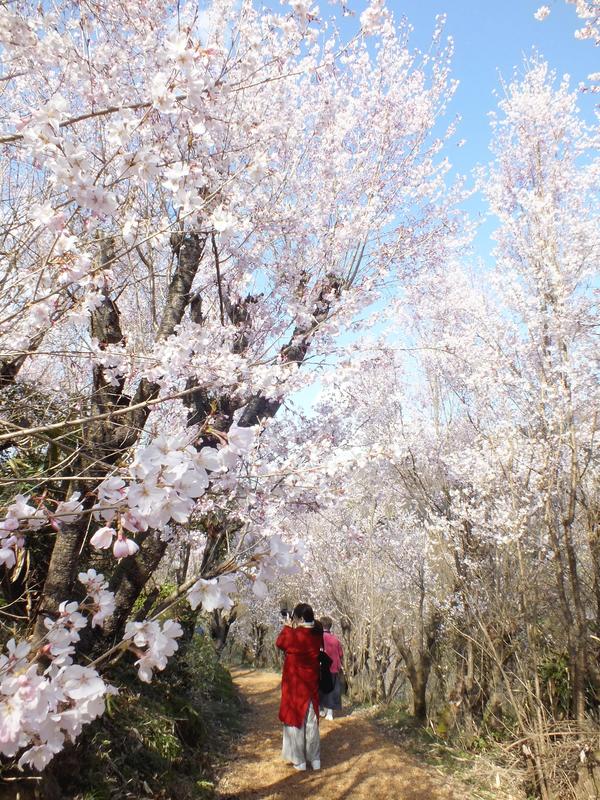
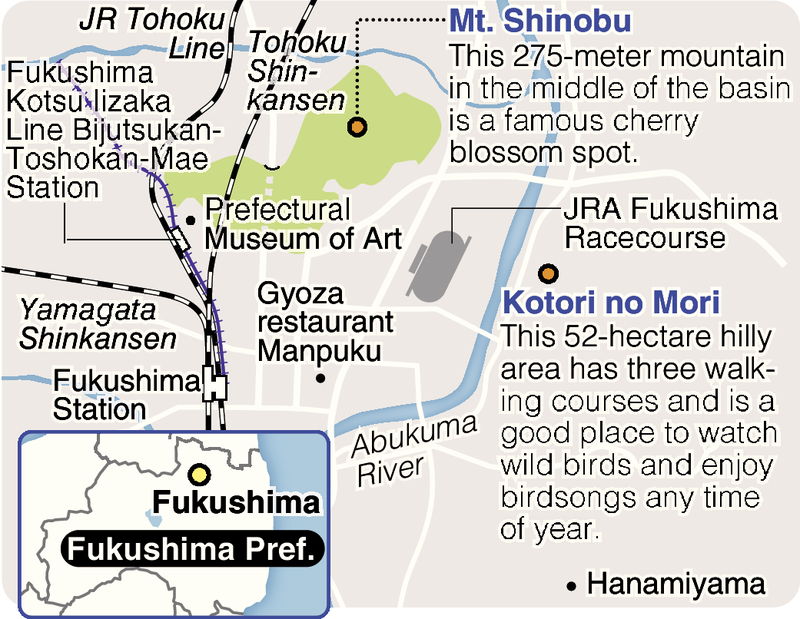
FUKUSHIMA -- In early April, I visited Hanamiyama Park in Fukushima city to enjoy one of the Tohoku region's famous cherry blossom spots.
Noriko Sato, 72, a volunteer guide with the "Fukushima Hana Annainin" program, informed me that Hanamiyama is actually private land.
"The owner, a grower of flowering plants, thought it would be a waste if only his family could enjoy all of this, and in 1959 opened the land up to the general public," she said.
That was 60 years ago. The small 180-meter mountain is home to around a dozen varieties of flowering plants, including cherry, peach, hydrangea and azalea.
The Yoshino cherry trees were not yet blooming when I visited, but the early blooming Tokai variety and others were at their peak.
There are about 110 guides, mostly people in their 60s and 70s, who will take anyone who asks around Hanamiyama. There are three walking courses of 60, 45 and 30 minutes. Guides are also stationed at important sights.
Sato began guiding visitors in 2003, the year the program launched. Hailing from southern Fukushima Prefecture, she had never visited Hanamiyama before getting married and moving to the city. But being a flower lover, she answered an ad and attended a course put on by the city.
"The cherry blossoms of Hanamiyama bloom at different times and have different colors and shapes, so they can be enjoyed over a long period. Cherry blossoms are the heart of Japan," she said.
After the Great East Japan Earthquake in 2011, it was a difficult time for Sato and the other guides. The quake struck on March 11, just when tourists were starting to arrive. The nuclear disaster on the coast led to a precipitous drop in visitors.
The following year, the main part of the park was closed so the vegetation could "recuperate." About 320,000 people had visited the park in 2010, a record high in recent years.
"It's such a pity to have so many beautiful cherry and peach trees blooming and no one to see them," she recalled thinking at the time.
Yet public perceptions of Fukushima have gradually improved and even the number of overseas visitors has increased. "Four or five years ago, we got back to around 200,000 visitors," she said.
Next, I visited the Fukushima Prefectural Museum of Art in the city. The museum is holding an exhibition titled "ITO Jakuchu: A Prayer for Recovery following the Great East Japan Earthquake" until May 6. About 100 works, mainly India-ink paintings, are on display by Ito, who lived from 1716 to 1800.
The exhibition is accessible to a wide age range, with even children able to enjoy works like the loveable puppies in "Hyakken-zu" (100 dogs image).
Ito's house burned down in the Great Tenmei Fire of 1788. Taking refuge in Osaka, he painted the desolate "Renchi-zu" (Lotus pond image), which attracted many visitors before being removed from the exhibition on April 14.
"That painting expresses Jakuchu's hope for recovery. We made the subtitle of this exhibition 'Jakuchu is our contemporary,'" said Yasuko Araki, chief of the museum's curation department.
There have been so many natural disasters in the Heisei era. I can not help but pray that the Reiwa era would be more gentle.
Beer with a sake aroma
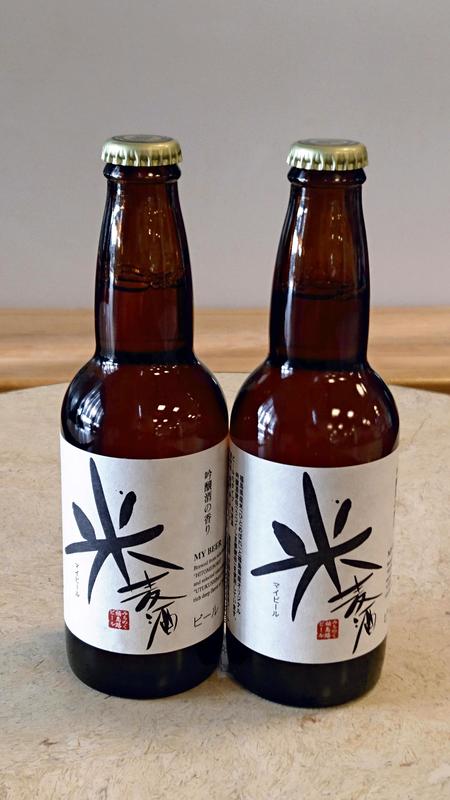
Michinoku Fukushima Ji-Beer is brewed in Fukushima.
While they offer a regular pilsner, they also make Mai Bi Ru, which is made with malt, hops and Fukushima-grown Hitomebore rice.
It is a beer, but with the aroma and gentle flavor of a ginjo sake.
With so many fruits grown in Fukushima, other local brews are made with apples and peaches. Local beers can be purchased in the city or online (http://www.f-beer.com/).
A round of dumplings
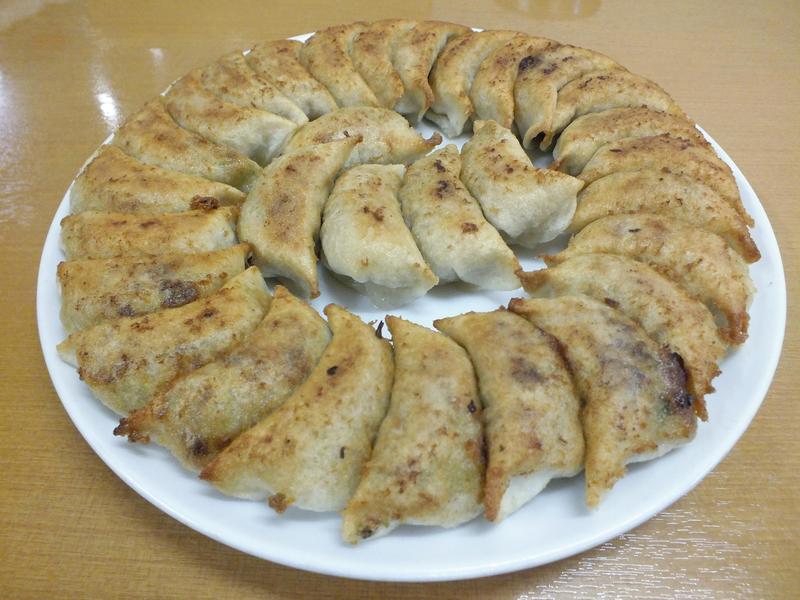
When one thinks of gyoza, usually Utsunomiya or Hamamatsu come to mind, but pan-fried dumplings are a specialty of Fukushima as well. Fukushima gyoza, which are arranged in a circle when fried, have a history going back 60 years.
The founder of Ganso Enban Gyoza Manpuku (closed Tuesdays and Wednesdays, Tel: 024-521-3787) is said to have learned how to make gyoza in Manchuria, now northeast China, and opened a shop here in 1953.
A plate of 30 of the restaurant's somewhat small gyoza goes for 1,620 yen. A filling that includes Chinese cabbage, ginger and garlic is wrapped in handmade dough. The firmness of the wrapping is well balanced with the flavor of the filling.
There are more than 10 shops in the city offering Fukushima gyoza. Each has its unique take, whether that be heavy on the meat, lots of vegetables or something else.
Access
It takes about 90 minutes from JR Tokyo Station to Fukushima Station by Shinkansen.
For more information, call the Fukushima City Tourist Information Center (JR Fukushima Station West Exit) at (024) 531-6428.
Read more from The Japan News at https://japannews.yomiuri.co.jp/