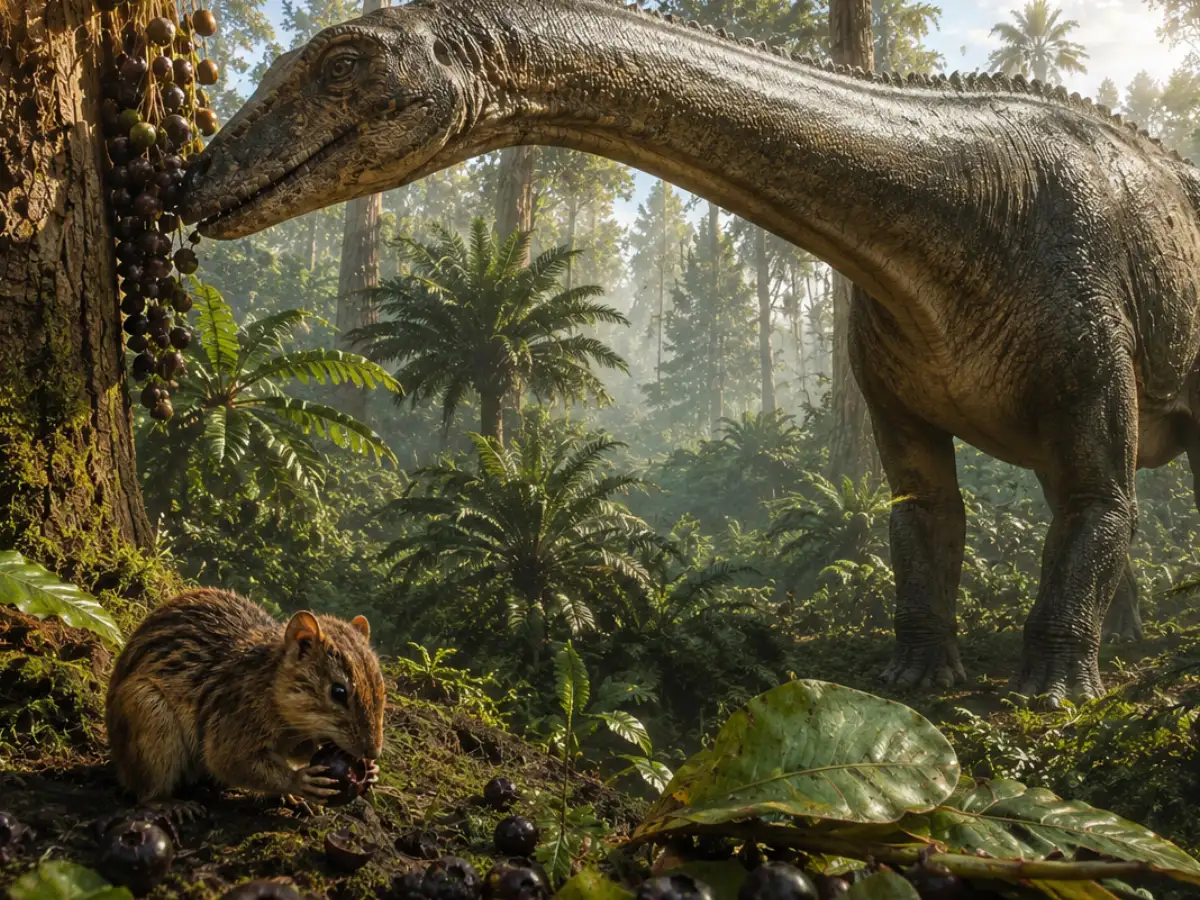
The next time you pop a blueberry in your mouth, think about this: the fleshy fruits we eat today may partly exist because of dinosaurs. A stunning trove of fossils from New Mexico suggests that flowering plants were already making big, animal-friendly fruits tens of millions of years earlier than scientists thought and that prehistoric creatures, perhaps even dinosaurs, were likely helping to spread those seeds around the ancient forests.
A new 2026 study, titled ‘Diversification of angiosperm reproductive strategies predated the end-Cretaceous extinction,’ was published in Science by paleoecologist Jaemin Lee and colleagues at the University of California, Berkeley. The team analyzed 450 fossil diaspores from volcanic ash in south-central New Mexico, findings that could challenge decades of scientific consensus. The fossils, collected from the site from 1992 to 2016, date to about 74.6 million years ago.
A snapshot frozen in ash
The New Mexico deposit, known as Dori’s Tuff, is within the Jose Creek Formation and is nearly a mile in length. The Science study reveals that a volcanic ashfall, at one moment in time, buried an entire inland forest, preserving leaves, flowers, and seeds just as they fell, giving the site the nickname “botanical Pompeii.” UC Berkeley professor Cindy Looy, a co-author, notes that most fossil plant sites are a jumble of material that drifted into rivers or lakes over time. This place is different; it offers a real snapshot.