LONDON/PARIS -- Musicals and flamenco productions in European countries have experienced difficult times because of the adverse effects of the novel coronavirus pandemic.
Reasons for the struggles include performance halls having to reduce available seating, while audience sizes have also drastically fallen off.
Facing a second wave of coronavirus infections, the industry is growing increasingly anxious about its future.
Home to about 40 such venues, the West End district in central London is known as the country's musical hub.
Its performance halls had been frequently filled with domestic and foreign tourists, but all were temporarily shut down in March in the wake of spreading infections.
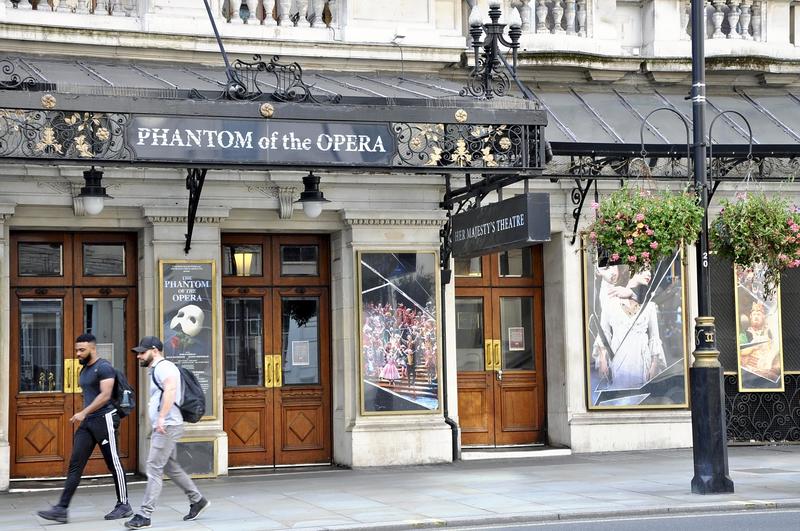
As the British government has been relaxing restrictions, venues were able to reopen in August. However, productions of many well-known musicals, including "The Phantom of the Opera," have been pushed back at least until next year or beyond.
The biggest issue that has the industry worried is the limit on audience size.
The government had ordered performance halls to keep 2 meters between members of the audience in most cases, and that means the venues can only offer about 30% of their seating.
The general understanding is that theaters cannot be profitable unless they fill 60% of seating.
As for the productions themselves, the musical version of "Back to the Future" might be able to start in May next year at the earliest.
Colin Ingram, 51, producer of a musical, said even if the coronavirus conditions change next year, he might have to push the opening back even more unless audience sizes increase.
In Europe, infections began spreading again in September. Recent daily numbers of new cases have hit about 10,000 in Spain and are close to 5,000 in Britain. Those figures largely exceed those in the peaks that were seen in the spring.
Some countries and regions have introduced new travel restrictions on people's movements. Thus, it is not in sight when such activities as going to theaters and tourism will return to normal.
In Spain, tablaos -- bars with flamenco dance shows -- are driven to a corner, largely because tourists have decreased.
According to local media, in Madrid in the past several months, six out of about 20 tablaos had to shut down.
A senior official of a local tablao association openly expressed a sense of crisis: "Though we received a certain degree of subsidies from the government, no tablaos can survive if business closures are drawn out. Closure [of tablaos] directly results in the extinction of flamenco."
Also in Italy, which is the center of opera, continues to struggle. September marked the start of the opera season at Teatro alla Scala, a venue in Milan in northern Italy.
The theater limits the audience to about one-third its capacity, and performers play their roles while social distancing as much as possible on stage.
However, theater officials said reservations are sluggish and there have been many empty seats even for the highly popular operas.
Read more from The Japan News at https://japannews.yomiuri.co.jp/