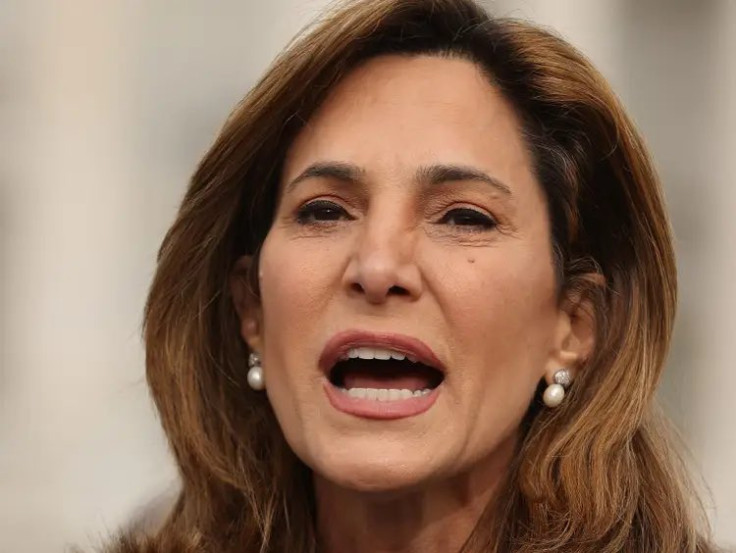
Republican congresswoman María Elvira Salazar said she is "not comfortable" with the easing of sanctions on Venezuelan official Delcy Rodríguez, calling her "a thief," but arguing that the move is part of a broader U.S. strategy to push Venezuela toward democratic elections.
In an interview with CBS News, Salazar described what she called a "new blueprint" under President Trump, in which U.S. policy temporarily engages with figures in Venezuela's ruling structure to facilitate a political transition.

"Delcy is part of the thieves and the people who destroyed Venezuela," Salazar said. "But we're going to give a little more time for her to behave and to conduct business the way that is convenient for the Americans. Until we have elections."
Salazar framed the approach as a phased process focused on stabilization, recovery and eventual transition. "We are sort of telling the bad guys... you are going to prepare the runway," she said, referring to creating conditions for opposition leaders to return and for "free and fair elections with international observers."
With the Trump administration lifting sanctions against the sitting Venezuelan president, Delcy Rodríguez, Rep. María Elvira Salazar (R-FL) says that "Rodríguez is just a short-term solution to a problem that could be bigger."
— CBS News (@CBSNews) April 2, 2026
"She is a thief, but we're going to give it a little… pic.twitter.com/sVhUsPVSJQ
Her comments align with previous statements in which she described Rodríguez as part of a group responsible for Venezuela's collapse and suggested U.S. pressure could shape the country's political outcome.
Salazar reiterated during the interview her position on immigration, urging the administration not to deport Venezuelans currently living in the United States under temporary protections. "Yes, I do [want them to stay] because they came in legally," she said, adding that many Venezuelans should remain until conditions in their home country allow for a safe return.
-
Florida Republican María Elvira Salazar Urges Trump Administration to Restart Citizenship Process for Cubans and Venezuelans

-
Laura Loomer Changes Tune on Venezuela's Machado, Urges 'Immediate Free Elections' After Rubio Meeting

-
U.S. Lifts Sanctions on Venezuela's Delcy Rodríguez: What It Means for Washington, Caracas and Oil


She has previously backed legislation to extend Temporary Protected Status (TPS) for Venezuelans, describing it as a necessary measure while the country remains unstable. "It's encouraging to see signs of progress in Venezuela, but the reality is that much remains to be done and the country is not safe to return," she said in a statement supporting a TPS bill last week.
Salazar emphasized that her position reflects both foreign policy and domestic considerations, particularly for Venezuelan communities in her district. "Let them stay for a little while," she said, referring to Venezuelans and other migrant groups, until democratic conditions are restored.
She has taken a similar position regarding Haitian migrants, supporting efforts to maintain Temporary Protected Status for Haitians amid ongoing instability in the Caribbean nation. Salazar has argued that TPS exists "to protect people who cannot safely return home," and has backed congressional efforts to extend those protections, citing security concerns and humanitarian conditions in Haiti.
© 2025 Latin Times. All rights reserved. Do not reproduce without permission.