What the Draft Rule Would Actually Do
The Florida Department of Education is writing new enrollment standards for postsecondary career and technical education, commonly called CTE. Under the draft, anyone applying to a CTE program run through a district technical college, a Florida College System institution, or a high school would first have to prove they are a U.S. citizen or are lawfully present in the country. The department's language requires "clear and convincing" documentation that is also "credible, precise, and compelling" — phrasing lifted almost word-for-word from the rule it already applied to the state's public colleges. A public workshop on the proposal is set for Aug. 18, held online, and the department has not proposed a date for the rule to take effect.
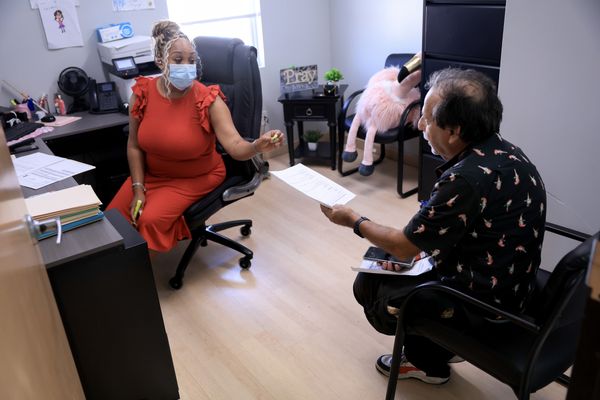
The programs at stake aren't minor. They include training tracks for nursing assistants, massage therapists, solar-panel technicians and cleanroom operators in the semiconductor industry — credentials that lead directly into jobs rather than four-year degrees.

How Many Students Could Be Affected
By the department's own count, roughly 512,000 students took postsecondary CTE courses during the 2025-26 school year, and the Florida College System hands out more than 137,000 certificates, degrees and industry credentials annually. Not all of those students are undocumented, of course — but the pool of people who could lose access is sizable. According to the Higher Ed Immigration Portal's current data, Florida has just over 60,000 undocumented students enrolled in higher education statewide.
The College Rule That Set the Template
The CTE proposal follows almost line-for-line the rule the State Board of Education approved on June 30, which requires citizenship or lawful presence for admission to any of the state's 28 public colleges, as well as the adult education classes that prepare students for the GED. The board passed it 6-1, with member Daniel Foganholi Sr. casting the lone dissent. Filed with the Department of State, that rule is on track to take effect around July 20. A parallel measure covering Florida's 12 public universities — overseen separately by the Board of Governors — cleared an earlier procedural hurdle in June and is scheduled for a final vote at the board's Sept. 2 meeting, with a target start date of the 2027-28 academic year.
Where Officials and Critics Line Up
Gov. Ron DeSantis has been unambiguous in his support, telling reporters ahead of the June vote that he considers what the board is doing "the right thing to do" for state residents. Not everyone in Tallahassee agrees on the legal footing, though. The Legislature's own Joint Administrative Procedures Committee flagged the college rule months before the vote, writing that it appeared to hand individual schools "unbridled discretion in making the citizenship determination." State Sen. Carlos Guillermo Smith, who sits on that committee, was more direct in his own remarks, calling the rule simply "unlawful." Norin Dollard of the Florida Policy Institute put the stakes in human terms rather than legal ones, telling CBS Miami that "there are human costs to these rules."
Notably, none of this is coming from the Legislature itself. State lawmakers considered comparable restrictions this year in HB 1279, but the Senate removed that language before the bill reached DeSantis's desk — meaning the department is now writing into regulation what elected lawmakers chose to leave out of law.
A Decade of Reversal on College Access
Florida's posture toward undocumented students has flipped entirely in just over a decade. In 2014, then-Gov. Rick Scott signed legislation letting undocumented students who graduated from Florida high schools pay in-state tuition rates. That protection disappeared last year, when DeSantis signed an immigration package repealing the waiver — a change that, according to WUSF's reporting, left some affected students paying nearly triple their previous tuition. Gaby Pacheco, who leads the college-access nonprofit TheDream.US, said her organization has since guided hundreds of students toward online coursework or private schools that offer scholarship support. Even Jeanette Nuñez, Florida's current lieutenant governor and the lawmaker who championed the original 2014 tuition law, reversed her own position, arguing publicly that "our country looks very different today than it did then."
Florida Falls in Line With a Handful of Other States
With the June vote, Florida became the fourth state to limit undocumented students' access to public higher education, joining Alabama, Georgia and South Carolina. Analysts have also pointed to a financial cost for the colleges themselves — Inside Higher Ed and other outlets have reported the college-level rule alone could strip more than $15 million a year in tuition and fee revenue from the Florida College System, based on projections from the Florida Policy Institute.
What's Still Unclear
Several open questions remain unanswered by the Department of Education, including whether any of these rules would apply retroactively to students already enrolled, or whether they would extend to DACA recipients, Temporary Protected Status holders, or people with pending asylum claims — all of whom are legally authorized to live in the country. For now, the Aug. 18 workshop marks the CTE proposal's first public airing, with a formal rule vote still to come.