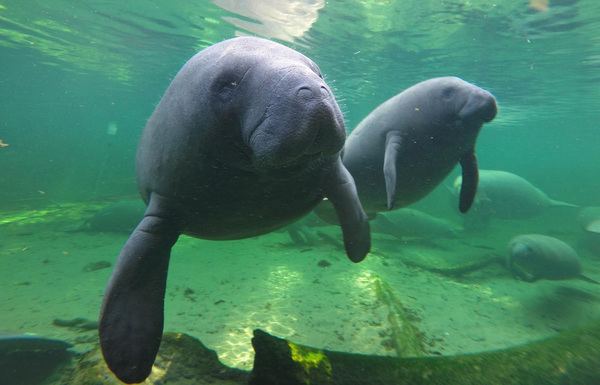
ORLANDO, Fla. _ Florida manatees may continue to die from toxic algae, freezing weather, ecosystem collapse and boat collisions, but the species appears on track to survive through the coming century, according to federal experts.
The U.S. Geological Survey has released a highly technical study that relied on computer analysis of threats and protections for manatees, which recently were moved from the nation's endangered list to the less dire status of threatened.
"Today the Florida manatees' numbers are high. Adult manatees' longevity is good, and the state has available habitat to support a population that is continuing to grow," said ecologist Michael C. Runge, the report's lead writer.
Often controversial, the outlook for "sea cows" has been evaluated by state biologists, environmental advocates, fishing enthusiasts and electric utilities discharging warm water that protects the mammals during cold snaps.
Katie Tripp, science director at the Save the Manatee Club in Maitland, said political, environmental and other factors are too dynamic for computer forecasting.
"That model doesn't know whether warm-water, power-plant discharges are going to go away in five years or 50 years," said Tripp, who added that the threat from boaters, loss of habitat and other stresses also are unpredictable. "I'm tired of agencies using models to get out of doing the hard work that needs to be done."
There were about 1,000 Florida manatees when they were declared endangered nearly 40 years ago. With protections that included boating limits, the population has rebounded to more than 6,000, according to a recent count.
Geological Survey scientists plugged a wide range of scenarios into their computer programs.
They determined there is a less than 1 percent chance the population would decline disastrously. Instead, according to the agency, manatee numbers are likely to double and then stabilize.
"New threats could emerge or existing threats could interact in unexpected ways," Runge said. "Managers need to remain vigilant to keep manatee populations viable over the long haul."