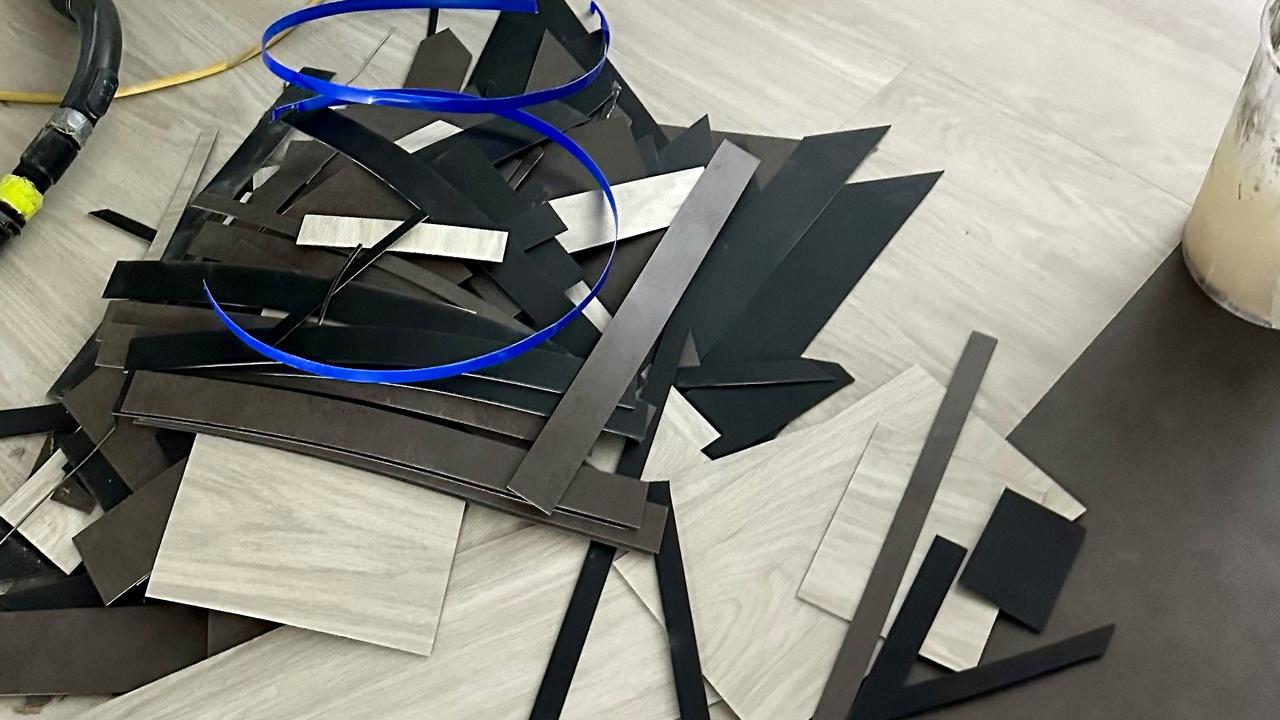
Every year, about an aircraft carrier's worth of vinyl, lino and rubber flooring is ripped out of buildings and dumped in the ground.
It's a long-lived burden for the environment given so-called resilient flooring is designed to be tough and last 30 years or more.
But by 2025, Australia could have the beginnings of a solution.
Using government funding and corporate sponsorship, the Australian Resilient Flooring Association (ARFA) has started looking at how the 60,000-tonne a year waste stream can be recycled.
The recycling scheme, ResiLoop, will be implemented in late 2024 to early 2025.
ResiLoop has support from 15 leading suppliers of resilient flooring, some of which are already experimenting with using recycled materials in manufacturing.
According to project director Sophi MacMillan, the main challenge Resiloop aims to address is identifying end products that can be made with recycled flooring.
In addition, the age of some of the discarded flooring, the variety of different materials used for different purposes and the adhesives used to attach the material to floor spaces, also present challenges.
"We know the most common resilient flooring materials can be recovered," Ms MacMillan said.
"Recycled flooring materials could be made into new floor coverings, if suitable manufacturing facilities exist."
Ms MacMillan said ARFA aims to involve manufacturers, retailers and the construction industry.
Homeowners won't be able to recycle their floors directly, and will have to check their flooring suppliers and installers are participating if they want their floors to be recycled.
Ms MacMillan said the diversion of flooring waste from landfill and the productive use of the industry's resources will significantly reduce the industry's carbon footprint, and is just one way Australia can work towards a circular economy.