The death toll from the devastating flooding in Asia has surpassed 1,200, with storms and cyclones battering Indonesia, Malaysia, Thailand, and Sri Lanka and bringing their heaviest rainfall in decades.
Hundreds of people have been reported missing since floods and landslides first struck last week, affecting millions across Southeast Asia, killing at least 659 in Indonesia, 390 in Sri Lanka and 181 in Thailand, authorities said on Tuesday.
The flooding was triggered by the exceptionally rare Cyclone Senyar sweeping through Indonesia, Malaysia and Thailand and the powerful Cyclone Ditwah pounding Sri Lanka and India.
In Indonesia, the hardest hit by the disaster, the death toll jumped to 659 on Tuesday, up from 440 over the weekend, the head of the disaster mitigation agency said. Some 475 people remained missing.
Rescuers were struggling to reach villages on the island of Sumatra, where thousands of people were still stranded after the floods washed out roads and collapsed bridges.
Helicopters and boats had been deployed, but officials said worsening weather and damaged infrastructure were slowing operations.
President Prabowo Subianto pledged to rebuild the infrastructure while visiting the affected areas on Sumatra.
"We need to confront climate change effectively," he added. "Local governments must take a significant role in safeguarding the environment and preparing for the extreme weather conditions that will arise from future climate change."
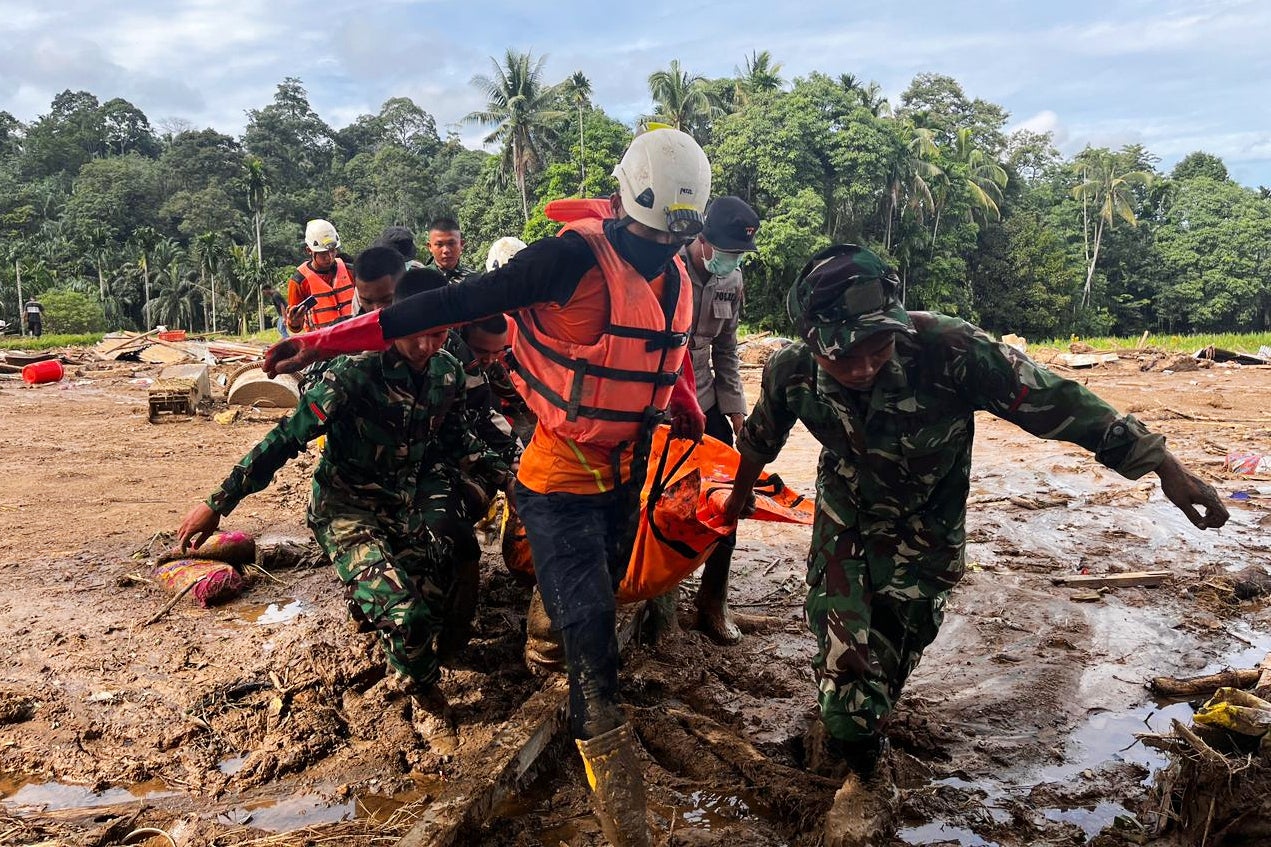
Flooding had displaced 290,700 people across the provinces of North Sumatra, West Sumatra and Aceh, the disaster management Agency said.
“The water just rose up into the house and we were afraid, so we fled. Then we came back on Friday, and the house was gone, destroyed,” Afrianti, 41, who only goes by one name, told Reuters in West Sumatra’s capital, Padang, where she was sheltering.
Many people in Sumatra were forced to steal food and water to survive, said police spokesperson Ferry Walintukan, adding that regional police had been deployed to restore order.

"The looting happened before logistical aid arrived," he said, adding that “residents didn't know that aid would come and were worried they would starve”.
Videos on social media showed people running past barricades, flooded roads and broken glass to get their hands on food, medicine and gas. Some were seen wading through waist-deep floodwaters to reach the convenience stores.
Relentless downpours began hammering Sumatra on Wednesday, triggering extensive flooding that submerged towns and swept away roads.
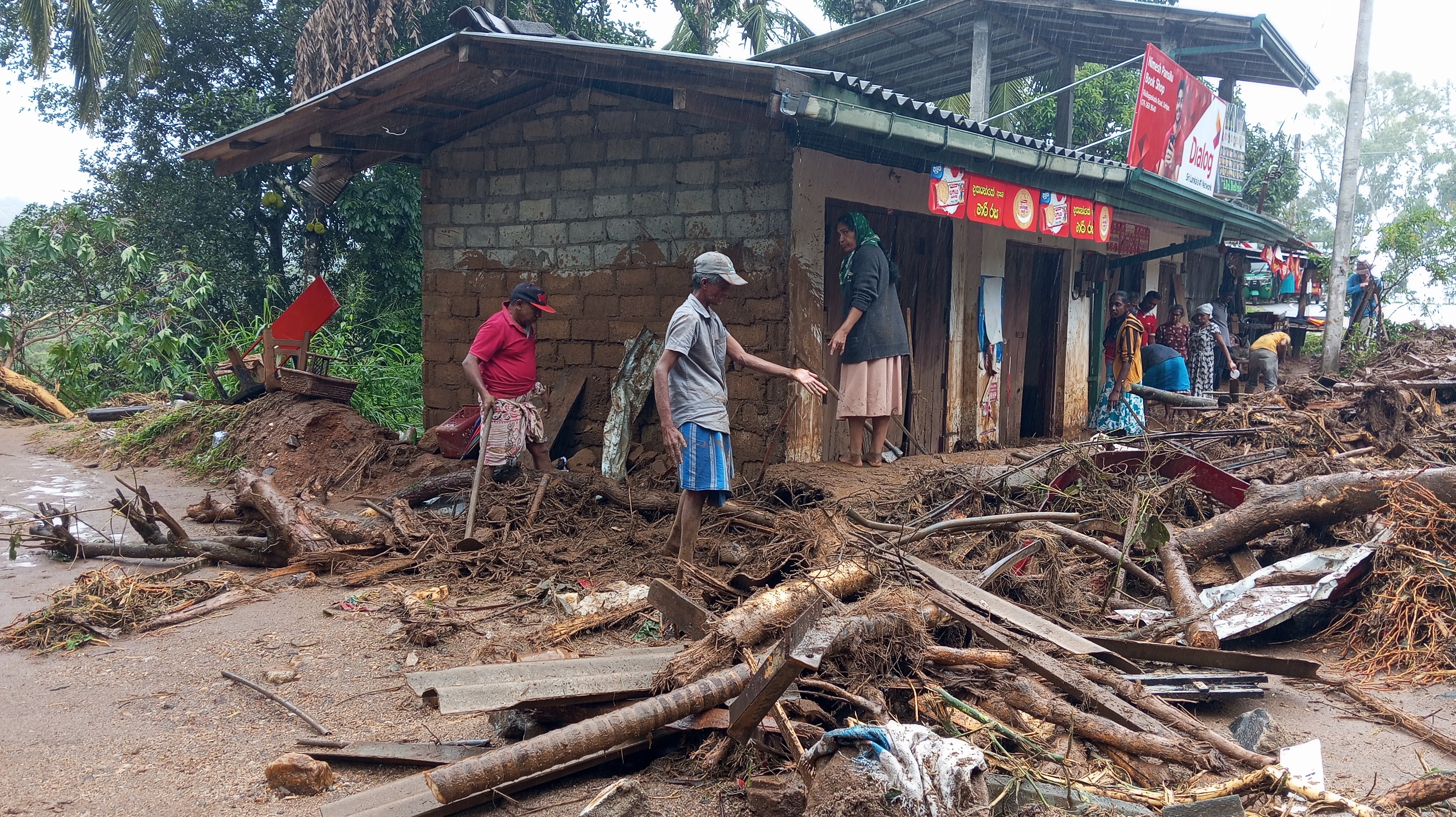
In Thailand, the floods have affected roughly 3.8 million people and killed at least 181. Heavy rains have inundated parts of 12 southern provinces, with deaths confirmed in at least eight, a government spokesperson said in Bangkok.
The first batch of compensation payments were set to be distributed on Monday, the spokesman announced.
Authorities were working to clean up streets and restore infrastructure, including water and electricity.
The interior ministry said it was setting up public kitchens to provide freshly cooked food to the affected residents.

The extreme weather, meteorologists said, was driven in part by Cyclone Senyar, an unusually rare system that formed in the Strait of Malacca. As the storm approached Thailand, Hat Yai, a major city near the Malaysian border, received 335mm of rainfall last Friday, the highest for a single day in 300 years.
In neighbouring Malaysia, the toll was lower, but the scale of damage remained severe.
Flooding swamped large parts of northern Perlis, leaving two people dead and forcing tens of thousands into temporary shelters.
Further west, Sri Lanka was left reeling after Cyclone Ditwah hit the island nation. The death toll rose sharply on Sunday to 390.
The Disaster Management Centre said 370 people remained missing and warned that more heavy rains brought by the cyclone were expected in the coming days.
Among those missing were five navy personnel who were last seen trying to cut off overflowing water at a naval sub-station in Chalai Lagoon, northeast of the country.
Some 80,000 people were displaced and almost 120,000 sent to state-run temporary shelters, according to the agency.
Authorities expect the toll to rise as rescue operations continue.
About a third of the country is feared to be without essential services like electricity or running water due to collapsed power lines and inundated water purification facilities. Internet connections are also disrupted.
Troops from the army, navy, and air force are assisting civilian workers and volunteers with the relief effort.
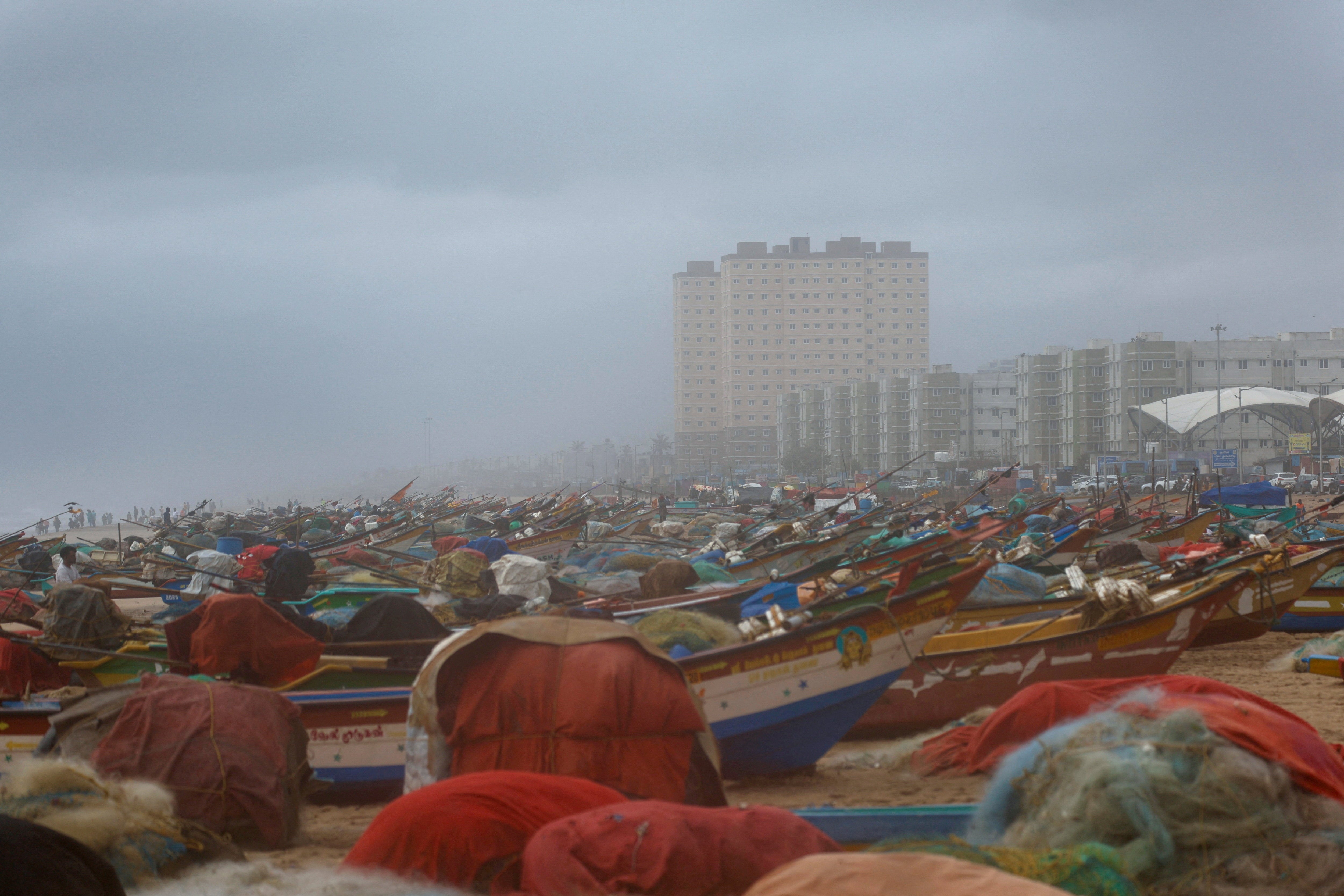
In the central city of Kandy, people were struggling without water, and authorities warned that conditions could worsen as more rain was forecast in the coming days.
Footage showed homes, roads and farmland engulfed by floodwaters.
“My sister and I were trapped on the upper floor of our home with our four children for two days. We slowly ran out of food," Sunethra Priyadarshani, 37, told Reuters.
“We only had biscuits and water to give them last night.”
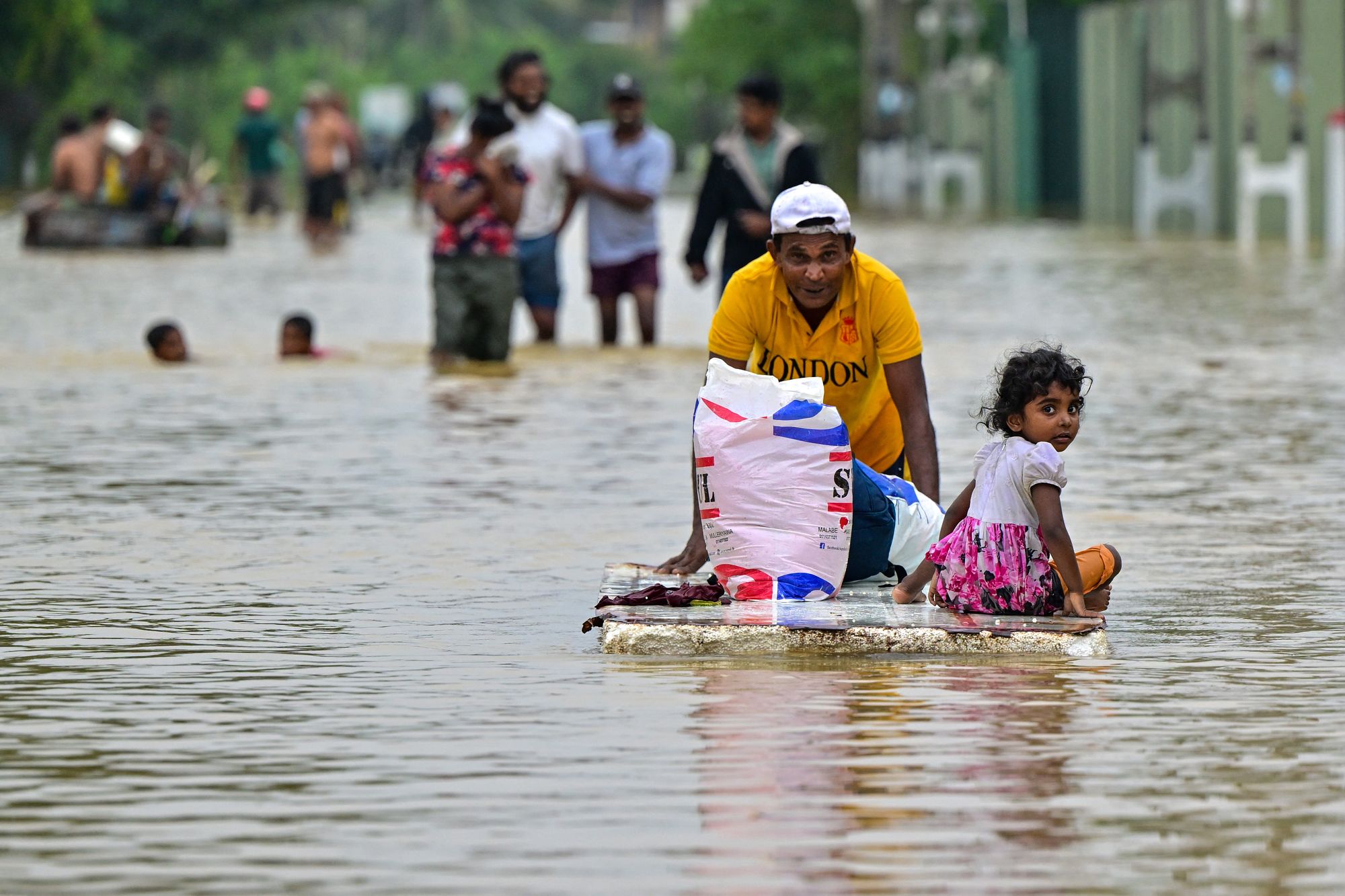
President Anura Kumara Dissanayake declared a state of emergency on Saturday to deal with the aftermath of the cyclone and appealed for international aid.
“We’re facing the largest and most challenging natural disaster in our history,” he said in an address to the nation. “Certainly, we will build a better nation than what existed before.”
Neighbouring India, which is facing heavy rainfall due to the cyclone, was the first to send relief supplies and two helicopters with crew to carry out rescue missions.
Under Operation Sagar Bandhu, India Extends Immediate Humanitarian Relief to Sri Lanka amid Cyclone Ditwah. Relief provided so far, includes 4.5 tons of dry rations and 2 tons of fresh rations, consisting of staple foods, packaged and ready-to-eat items. pic.twitter.com/1vLxRz2z3S
— Sidhant Sibal (@sidhant) November 28, 2025
The cyclone weakened into a deep depression over the Bay of Bengal and inched towards India’s eastern coast as heavy rains and strong winds continued to lash parts of Tamil Nadu and Puducherry in the south.
Three persons were killed in rain-related incidents, the Tamil Nadu government said.
The cyclone is Sri Lanka’s deadliest natural disaster since 2017, when flooding and landslides killed more than 200 people and displaced hundreds of thousands.
Weather experts say the extreme conditions across the region may have been intensified due to various cyclonic activities at the same time, like Typhoon Koto in the Philippines and Cyclone Senyar in the Malacca Strait.
Satellite images reveal scale of flood devastation in Sri Lanka as 366 killed
Indonesia raises death toll to 631 after cyclone brings flooding to Sumatra
Hong Kong mourns 146 dead in deadliest fire in 70 years as hundreds remain missing
Imran Khan supporters set for standoff with police as concerns for former PM grow
Labour MP Tulip Siddiq says Bangladesh prison sentence is ‘flawed and farcical’
Pakistan dismisses UN criticism of constitutional changes as concern for Khan grows