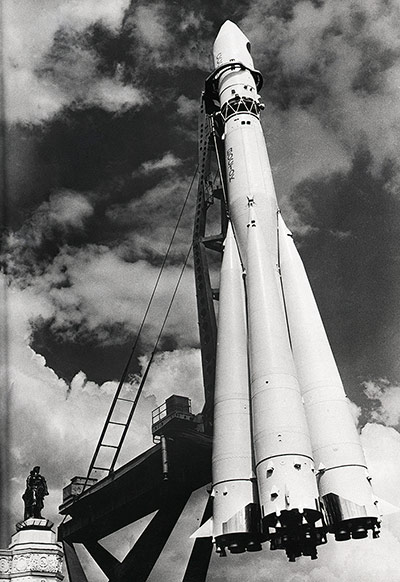
It was in February 2000 that I saw a vodka bottle in the shape of a Vostok rocket in the duty free at St. Petersburg airport and found myself suddenly convinced that I had a novel to write about Russia and space Photograph: Bettmann / Corbis
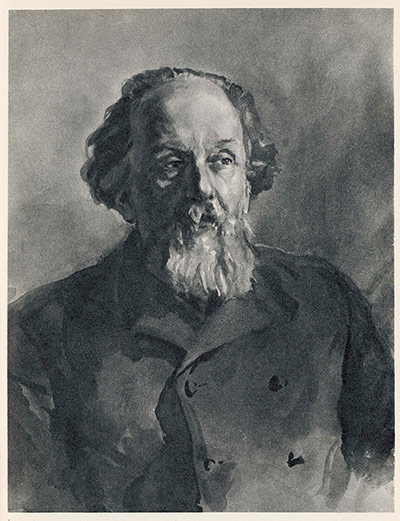
Two days later, I learnt about Konstantin Tsiolkovsky: the deaf, provincial Russian school teacher who first showed that it was possible for man to 'break the shackles' of the earth Photograph: Mary Evans Picture Library
Even during the earliest drafts of Konstantin, almost 10 years ago, I was fascinated by Tsiolkovsky’s conviction that it was man’s purpose to replace 'the natural by what is artificial' – both literally and metaphorically, to rise above the natural world Photograph: INTERFOTO / Sammlung Rauch / Mary Evans
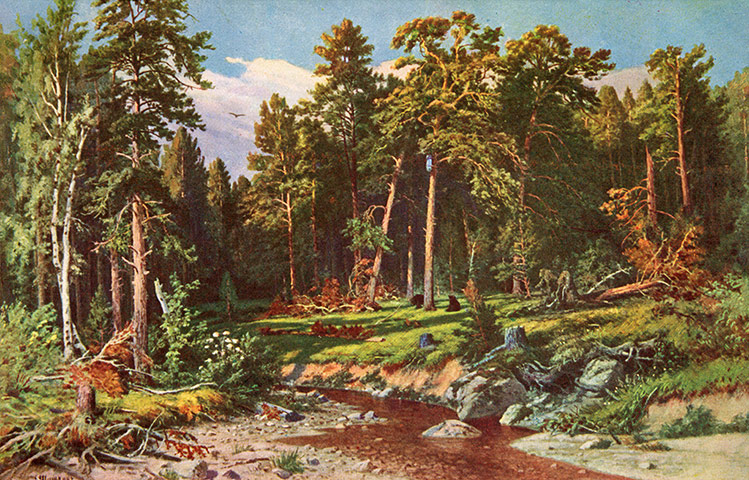
Tsiolkovsky was born in 1857 into a country little changed since the middle ages. The wolf-infested forest, where Konstantin begins, was still a reality for Russians of the 19th century. In the forest, with the extremity of the winters, with the precariousness of the short farming year, nature remained the great adversary Photograph: Mary Evans/John Massey Stewart
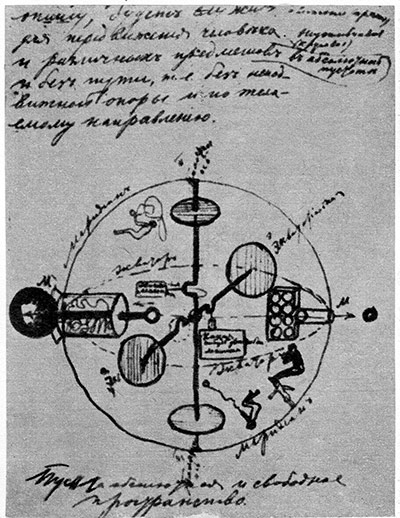
And yet, the railway and the telegraph were on the advance. For me at least, it is the collision of technology with a near-medieval culture that makes nineteenth-century Russia so compelling to write about, and Tsiolkovsky – scientist and mystical philosopher, inventor of reaction-propelled, gyroscope-orientated spacecraft as early as 1883 – is that collision embodied Photograph: INTERFOTO / Sammlung Rauch / Mary Evans
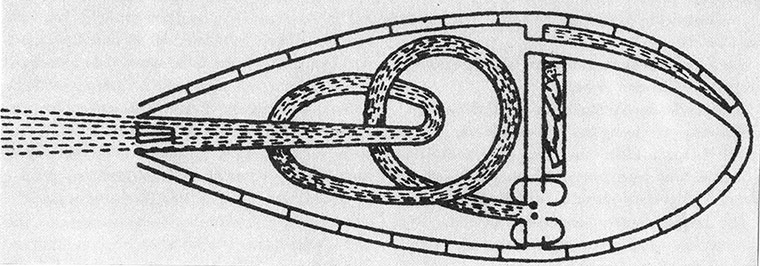
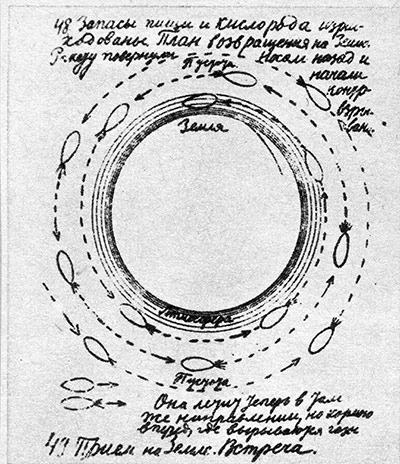
In 1903, Tsiolkovsky published his paper, ‘The Investigation of World Spaces by Reactive Vehicles’, which describes a viable space rocket – fuelled by liquid hydrogen and liquid oxygen. For Tsiolkovsky it was a first step towards his dream of a cosmic future in which, ultimately, mankind would colonise the entire universe Photograph: INTERFOTO / Sammlung Rauch / Mary Evans
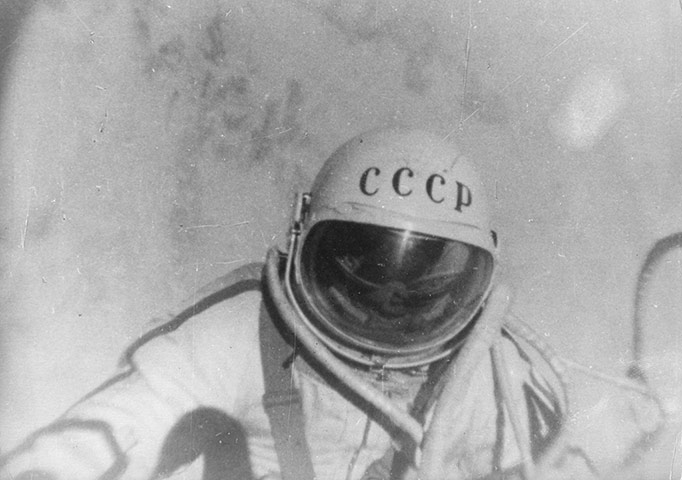
And ultimately, at the end of its long development, Konstantin is less about space than the dream of space – that is, man’s compulsion to transcend his limits, and all the wonder and the hubris that goes with it Photograph: Central Press / Getty Images