Fleet operators have plenty on their plate, and employee welfare can easily be neglected. Not only are there legal obligations you have to comply with, looking after your employees is good for business as well. After all, road collisions can be costly, and high staff turnover is not good for the bottom line.
So what makes up a good fleet safety policy? The first consideration is the vehicles themselves. Not only does a badly-maintained vehicle run more risk of having an accident, but if the public and employees do not feel adequate care is being taken of them, it can also impact brand reputation and staff retention.
Heavy goods vehicles (HGVs) require the most attention. Not only are they subject to the statutory annual MOT, but they also need an operating license. This normally means they will need to be inspected by a mechanic every six to eight weeks, although the guidelines vary depending on the vehicle. It is also expected that HGVs are checked every day by the driver, who should carry out a defect report covering the likes of lights, tires and windscreen wipers.
Different vehicles; different rules
Cars and vans are less onerous; beyond the standard MOT, the law stipulates nothing more than a general obligation to have fit and serviceable vehicles. Satisfying this in practice will, however, mean considering some similar measures to those for HGVs, although it is important to be realistic about what can be achieved.
Vikki Woodfine, head of road haulage and logistics at the legal practice DWF, says: “If you’ve got a [fleet safety] policy that isn’t followed and you have an accident, then that’s the noose that a health and safety executive or the police can hang around your neck. So you need to be realistic, but you should certainly look to do more than just annual servicing.”
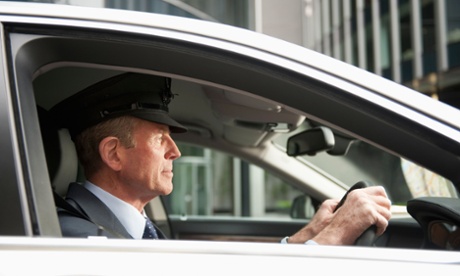
One leader in this area is Tristar Worldwide Chauffeur Services, which was commended in the driver safety category at this year’s Fleet Safety Awards. Alongside six-weekly technician appraisals and checks every 15,000-18,000 miles based on manufacturer specifications, the company uses an app to help enforce daily driver checks. “All work is allocated via a PDA [personal digital assistant],” explains fleet manager, Jan Kozlowski. “The app takes the driver through several pre-journey checks such as tires, windscreen and dashboard indicator levels. Only when the vehicle is fit for the journey are they able to receive the first job.”
Building a team
Of course, a vehicle will only perform as well as the person driving it, and so the employee at the wheel will also need to be tested.
Again, drivers of large vehicles are required to demonstrate more skills than those of smaller ones. HGV drivers need a Certificate of Professional Competence (CPC), which stipulates they must receive a minimum of 37.5 hours training per year - this training can either be class-based, practical or a mix, and there is no requirement as to what it should cover as long as it is accredited.
This doesn’t mean car and van drivers escape any form of review. In addition to the regular driver’s license being checked properly, Woodfine recommends conducting regular assessments, which can be supplemented with specific training if any issues are highlighted. You may also want to ensure that drivers undergo regular optician checks.
One company that has made great strides in this area is the power and automation technologies specialist ABB Ltd Ireland. It won at the 2013 Fleet Safety Awards having worked with DriverFocus to survey all its drivers and assess their risk of collision. Those deemed a medium-to-high risk were given a one-to-one session with a professional advanced driver, followed by guidance on key areas where they could improve.
Mark Sage, country HSE manager at ABB Ltd, says: “The Safe Driving for Work Programme is tied into an online platform where managers can see how their drivers have performed, their licensing credentials, and what online courses they’ve completed. “Since its inception in 2009, the programme has seen a reduction in motor claim costs of over 50%.”
Stop, revive, revive
Studies have shown that drowsiness makes drivers less attentive, slows reaction times and affects their ability to make decisions, so sensible shift scheduling is a must. According to Woodfine, fatigue isn’t just caused by driving too much or not taking enough breaks, but by driving at the wrong times. “Some industries do need to drive at night, but where possible we encourage companies to avoid between 2am and 6am, because evidence shows that that’s the highest risk time. We also encourage people to avoid congested routes, because you can get fatigue simply by driving on a very slow and busy journey.”
Many organisations are now going further and offering free health assessments and advice for healthy living, adds Woodfine. The reason for this is in order to tackle sleep apnoea, where people’s sleep is disrupted by their airways closing up and restricting their breathing during the night. This means they don’t get sufficient rest and become fatigued during the day. “Bodyweight, age and smoking can all increase the risk, and if a driver is saying ‘I slept for seven hours last night and I’m still absolutely shattered’, that’s a warning sign,” she says.
Calls on the road
Drivers that take telephone calls while driving are four times more likely to be involved in a crash that causes injury, even when using hands-free kits. Therefore, best practice these days it to avoid any sort of call.
However, there are other gadgets at hand. Tristar uses a special PDA that provides large icons for key messages. “If there is a delay or an emergency, drivers can tap on the screen. That alerts our team that something is going on and we will then notify the customer or get help on behalf of the driver,” says Kolowski.
Following a duty of care isn’t just a legal obligation, it can be good for business too, leading to more efficient driving, improved staff retention and cost savings. The benefits are proven - it’s now up to fleet managers to make it happen.
Content on this page is paid for and produced to a brief agreed with Kia Fleet, sponsor of the Guardian Small Business Network Accessing Expertise hub.