It is the end of the road for the rice-pledging scheme.
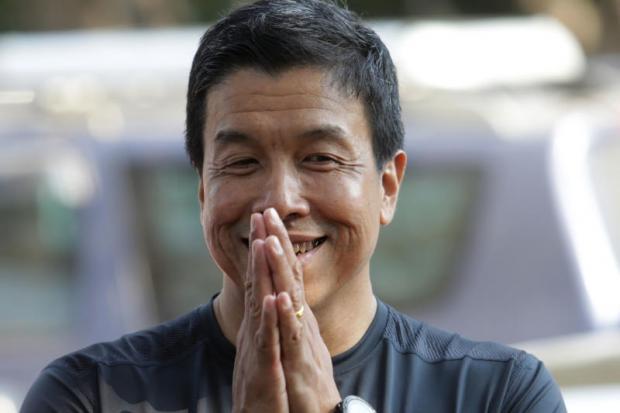
The Pheu Thai Party's flagship policy will not return if the party wins a mandate to run the country after the March 24 general election, according to Chadchart Sittipunt, head of the party's economic policy campaign team and one of its prime ministerial candidates.
The rice-pledging scheme was initiated by the administration of Yingluck Shinawatra to fulfil Pheu Thai's 2011 election campaign promises.
It is believed the policy helped Yingluck, a political novice when she entered politics prior to the 2011 election, win the hearts of the country's largest group of voters.
Under the scheme, the government bought every grain of rice at a pledged price of 15,000-20,000 baht per tonne of paddy -- 40-50% above the market rate. The programme allegedly caused hundreds of billions of baht in state losses and did little to ease the poverty of farmers.
It has become a sore point for the party after it was criticised for being inefficient, fraught with loopholes, and benefiting only intermediaries.
While several politicians, including Yingluck and her former commerce minister Boonsong Teriyapirom, have seen their political careers go down the drain when the scheme backfired, Mr Chadchart emerged unscathed.
Since he was in charge of a transport and infrastructure-related scheme, he did not have an active role in the flagship policy.
But Mr Chadchart, an "economic professional" whose name has been put forward as one of the party's prime ministerial candidates, may struggle to avoid questions about crop prices as he takes the party campaign to vegetable and fruit markets.
During an event at Mahanak market in Bangkok's Constituency 1 last Saturday, he rejected the idea of bringing back the rice-pledging scheme, saying it was plagued with problems.
Political pundits say this is probably the first time a key Pheu Thai figure has admitted the scheme was badly flawed. Mr Chadchart seemed to make no effort to defend it.
"We have to face the truth and use it as a lesson. We have to live with reality," he was quoted as saying when questioned on the subject while helping party candidate Leelavadee Vajropala campaign in Bangkok.
The actress-turned politician is running against Democrat Party candidate Jermmas Juenglertsiri, a former councillor for Pomprap Sattruphai district. According to the Pheu Thai bigwig, the party has some policies up its sleeve to improve the livelihoods of farmers.
Following Mr Chadchart's remarks, Pheu Thai deputy leader Kittirat Na-Ranong confirmed the rice-pledging scheme would not be resurrected as it has already received so much flak. He floated an idea of extending more credit to rice farmers to help them hold their stockpiles during times of oversupply and falling prices.
Different sides of the same coin
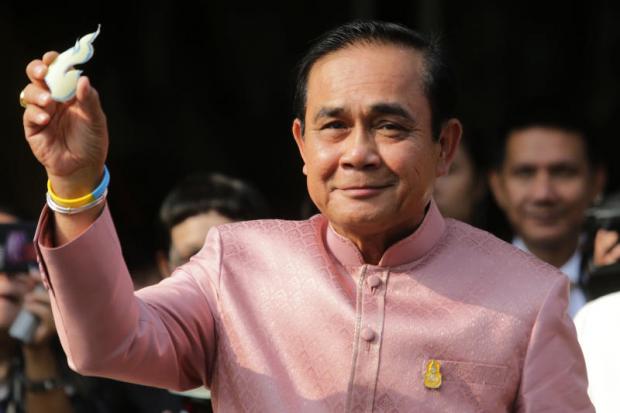
Critics are having a field day taking swipes at Prime Minister Prayut Chan-o-cha over his inclination for one-way communication.
The premier is being dogged by criticism after he refused to accept invitations to participate in poll debates organised by television stations to showcase his vision as the Palang Pracharath Party's prime ministerial candidate.
However, some critics -- especially Pheu Thai supporters -- seem to have forgotten recent history when it comes to leaders ducking election debates, political observers say.
One of the first to slam Gen Prayut for refusing to take part in debates was Korkaew Pikulthong -- a core, red-shirt member. According to news reports, he said that anyone who aspires to become prime minister, but refuses to take on the challenge on a public platform, either has "nothing in his head", or has no vision to speak of.
Also, skipping such sessions lends weight to suspicions that the person may be timid or afraid, Mr Korkaew said.
His remarks, however, were instantly met with a reminder that Gen Prayut is not the only prime ministerial candidate to have refused to participate in an election debate.
In the build-up to the 2011 general election, Pheu Thai emerged as the clear favourite -- with the now-fugitive former premier Yingluck Shinawatra having just made her debut on the political scene with solid backing from her elder brother, Thaksin Shinawatra.
A source, who is an expert on political history, said Yingluck was firmly positioned to be nominated by Pheu Thai as its prime ministerial candidate, if it won enough seats in the poll to lead a coalition government.
Pheu Thai swept to power -- thanks largely to the support of red-shirt voters -- and Yingluck made history as the country's first female prime minister. However, she did not manage to escape barbs from opponents, who criticised the fact that she managed to take assume the nation's top political post after only having entered politics 50 days previously.
Much like Gen Prayut, Yingluck was at the receiving end of fierce criticism for not participating in election debates, the source said. Yingluck's close aides -- many of whom were then appointed as cabinet ministers in her administration -- leapt to her defence, insisting the debates were "useless expressions of political bravado" which stoked quarrels and bickering.
One of her aides said the debates were redundant, as every political party had been given a fair chance to broadcast their campaign policies. "Provoking a quarrel on live TV runs counter to the spirit of national reconciliation," said the aide.
Like Yingluck, Gen Prayut last week insisted that debates are the least of his concerns. The premier went on to say that most debates are weak on substance, as they are set up purely to encourage politicians to trade barbs with one another.
"Crafting eloquent speeches for debates would be a headache and a waste of time," Gen Prayut said.
Hanging in the balance
The fate of the Thai Raksa Chart (TRC) Party now hangs in the balance as the Constitutional Court is due to rule on Thursday whether to dissolve it over its nomination of Princess Ubolratana as its candidate for prime minister.
Similarly, the Pheu Thai Party and the Future Forward Party (FFP) also find themselves in hot water as they face cases that could deal heavy blows to their political future.
In the case of Pheu Thai, Election Commission (EC) secretary-general Pol Col Jarungvith Phumma has set up a committee to investigate its alleged violation of the constitution's organic law on political parties, which prohibits a party from consenting to influence from an outsider, an offence that could lead to party dissolution.
The probe is aimed at finding out if fugitive former prime minister Thaksin Shinawatra's video call in June last year to a number of former Pheu Thai MPs at the Alpine Golf Club in Pathum Thani fits the definition of direct or indirect influence by an outsider on a party. If found guilty, the party is certain to be dissolved.
A video clip of Thaksin, reportedly made from London and later leaked to the public, shows he told the former Pheu Thai MPs he was confident an election would see the party win in all constituencies in the Northeast.
Thaksin was also quoted as saying he would next tweet to thank those former MPs defecting from Pheu Thai, because they had sacrificed their chances of getting elected in favour of new faces the party was recruiting to replace them. He also said anyone else contemplating leaving the party should leave immediately for any money they might be offered by rival parties, adding they should really quit politics for good as he believed only a fool would pay them a lot of money.
Those confident enough to believe they will win a House seats as a result of their own popularity should think again, Thaksin said in the call. He added that candidates should realise that it was actually the popularity of the party that helps them win.
Depending on the outcome, the EC could forward the findings of its probe to the Constitutional Court along with a request to have the party dissolved before or after the election.
Meanwhile, activist Srisuwan Janya also urged the EC to take action against FFP leader Thanathorn Juangroongruangkit for allegedly posting false information regarding his profile on the party's website in possible violation of Section 73 (5) of the law on the election of MPs.
The FFP is also thought to be on the side of the "pro-democracy" camp, which includes the TRC and Pheu Thai. Mr Srisuwan accused Mr Thanathorn of deceiving the public by stating on the FFP's website that he served as president of the Federation of Thai Industries for two terms, when in fact he had never held such a position.
According to Mr Srisuwan, the fact that the information had been displayed uncorrected on the website for five months after the party was endorsed by the EC on Oct 3 last year indicated an intent to mislead people.
Still, key figures of Pheu Thai and FFP are determined to concentrate on canvassing for votes despite the bleak outlook for them.