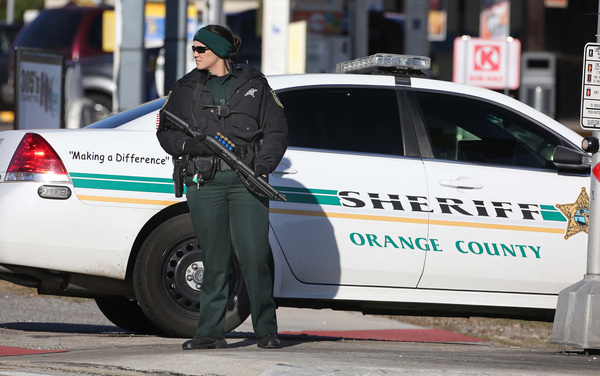
ORLANDO, Fla. _ Florida Gov. Rick Scott on Thursday removed Orange-Osceola State Attorney Aramis Ayala from the case of accused cop killer Markeith Loyd after she announced that she would not pursue the death penalty in his or any other case during her tenure.
In an executive order, Scott gave the case to Lake County State Attorney Brad King.
"Earlier today, I called on State Attorney Ayala to immediately recuse herself from this case," Scott said in a statement. "She informed me this afternoon that she refuses to do that. She has made it clear that she will not fight for justice, and that is why I am using my executive authority to immediately reassign the case."
Scott cited a state law allowing Florida's governor to appoint a different prosecutor if he finds a "good and sufficient reason" to take it away from the original prosecutor.
Ayala issued a statement late Thursday, implying that her office would abide by Scott's order.
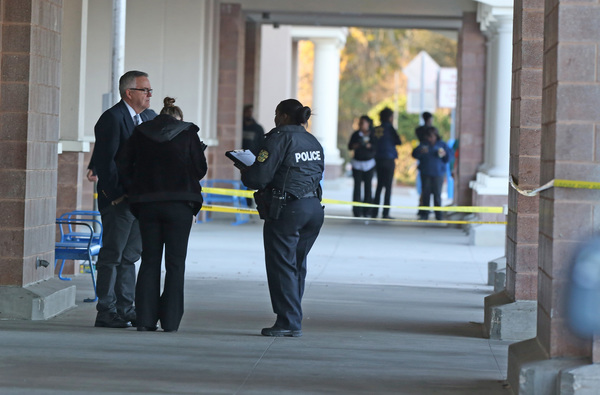
"Upon receipt of any lawful order, my office will follow that order and fully cooperate to ensure the successful prosecution of Markeith Loyd," she said.
Ayala created a firestorm of criticism Thursday morning when she announced she would not seek the death penalty against Loyd or anyone else.
"I have determined that doing so is not in the best interest of the community or the best interest of justice," she said.
During a Thursday afternoon press conference, law enforcement leaders and families of victims expressed disappointment in Ayala's intentions.
Orlando Deputy Police Chief Robert Anzueto stood in front of Police Lt. Debra Clayton's widower, Seth Clayton, and spoke on his behalf.

"My closure will be when Markeith Loyd is 6 feet under," Clayton told Anzueto.
Orange County Sheriff Jerry Demings recounted a conversation he had with Stephanie Dixon-Daniels, the mother of Loyd's slain ex-girlfriend Sade Dixon, in which she told him she was angered by Ayala's decision but understood the reasons behind it.
Ric Ridgway, chief assistant state attorney for the 5th Circuit, said the governor's legal counsel called Thursday afternoon and asked King's office to take up the case.
"We are ready; we are willing and able to try the case. We wouldn't have taken it otherwise," Ridgway said.
Ayala's announcement was a surprise and a position she had not made public before, despite a five-month campaign for public office, during which she was repeatedly asked about her stance.

It also ran counter to information her employees had provided the Orlando Sentinel as recently as Tuesday.
Reaction came swiftly from state and local law enforcement officials, who were sharply critical.
Attorney General Pam Bondi called the announcement "dangerous" and "a neglect of duty."
But Ayala's decision was heralded by death penalty opponents.
"Ending use of the death penalty in Orange County is a step toward restoring a measure of trust and integrity in our criminal justice system," said Adora Obi Nweze, president of the NAACP Florida State Conference.
Orlando pastor Gabriel Salguero said, "By naming a broken program, Ms. Ayala creates hope in the community for working together to find better alternatives."
Salguero leads the Calvario City Church and is president of the National Latino Evangelical Coalition.
A coalition that includes Orlando-area civil rights activists and religious leaders scheduled a news conference for Friday outside the Orange County Courthouse to voice support for her.
Law enforcement officials, meanwhile, expressed their anger with the decision.
Demings said he supported Scott's decision to take the case away from Ayala.
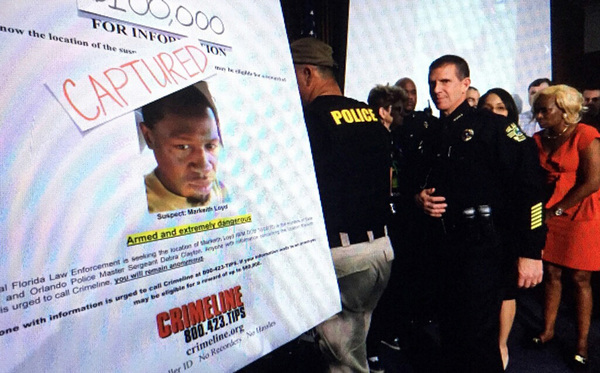
"To put it bluntly, the law enforcement officers of Central Florida are outraged," Demings said.
Anzueto said he believes Ayala should leave Loyd's fate in the hands of a jury.
"The decision for someone to live or die in a case like this should be in the hands of a jury and not for one person to decide," Anzueto said. " ... Would we be having this discussion if Omar Mateen, the Pulse terrorist, was captured alive?" he asked, referring to the attack that left 49 people dead in an Orlando club last June.
A letter sent to Ayala on Thursday night from the Orange/Osceola Police Chief's Association, made up of 14 local departments, said they "do not believe that it is in the best interest of the safety of the citizens and visitors of our community."
State attorneys have wide discretion in who to charge with a crime, what charge to file and what penalty to seek. State law does not require them to seek the death penalty.
Ayala, 42, has been state attorney for Orange and Osceola counties since Jan. 3. She upset incumbent Jeff Ashton in a primary election in August with the help of $1.4 million in donations from a political action committee with ties to billionaire George Soros, a liberal activist.
That primary decided the race because no Republican entered the contest.
Ashton said Thursday that when Ayala worked for him, she did not oppose the death penalty.
He called her newly declared position "ridiculous."
When he was her boss, she was assigned the capital murder case of David Lewis Payne, who's accused of abducting his ex-girlfriend, putting her in the trunk of her car then killing her in 2015.

"She came to me. She was really excited because she got her first death penalty case," he said of Ayala.
During her news conference, Ayala cited several reasons she will not pursue the death penalty.
Studies have shown, she said, that it provides no public safety benefits, that it is not a deterrent and that it winds up costing the state more than cases in which a defendant is sentenced to life in prison.
It also gives victims' families false hope, she said.
"Some victims will support and some will surely oppose my decision, but I have learned that death penalty traps many victims' families in decades' long cycle of uncertainty," she said. " ... I cannot in good faith look a victim's family in the face and promise that a death sentence handed down in our courts will ever result in execution."
It's not clear when Ayala made her decision. On Feb. 28, spokeswoman Eryka Washington identified six cases in which Ayala's office was seeking the death penalty.
Ayala made the announcement the same week the governor signed into law a new death penalty statute, one that requires all 12 jurors to vote for the death penalty.