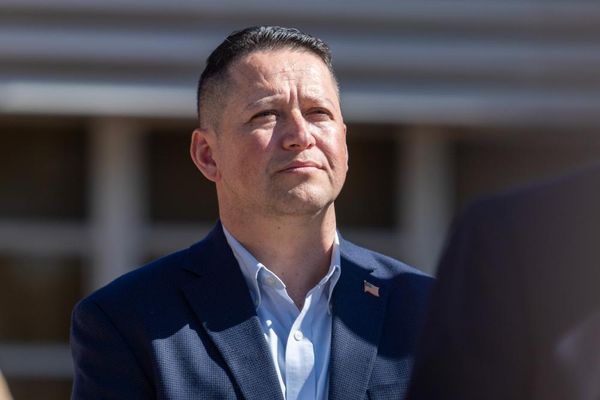
Last week, Donna Strickland (above) was awarded the 2018 Nobel prize for physics jointly with Arthur Ashkin and Gérard Mourou for their work on high-intensity lasers. It’s the first time in 55 years that a woman has won this prestigious prize, but why has it taken so long? We look at five other pioneering female physicists - past and present - who had a genuine claim to the prize.
Jocelyn Bell Burnell

Perhaps the most famous snub: then-student Jocelyn Bell discovered the first radio pulsars in 1967, when she was a PhD student at Cambridge. The Nobel prize that recognised this landmark discovery in 1974, however, went to her male supervisor, Antony Hewish. Recently awarded a £2.3m Breakthrough prize, which she gave away to help under-represented students, she joked to the Guardian: “I feel I’ve done very well out of not getting a Nobel prize.”
Lene Hau

Hau is best known for leading the research team at Harvard University in 1999 that managed to slow a beam of light, before managing to stop it completely in 2001. Often topping Nobel prize prediction lists, could 2019 be Hau’s year?
Vera Rubin

Rubin discovered dark matter in the 1980s, opening up a new field of astronomy. She died in 2016, without recognition from the committee.
Chien-Shiung Wu

Chien-Shiung Wu’s “Wu experiment” helped disprove the “law of conservation of parity”, a fundamental particle physics law. Her experimental work was instrumental but never honoured, and instead, her male colleagues won the 1957 Nobel prize for their theoretical work behind the study.
Lise Meitner

Physicist Lise Meitner led groundbreaking work on the discovery of nuclear fission, the splitting of an atomic nucleus into smaller nuclei. However, the discovery was acknowledged by the 1944 Nobel prize for chemistry, which was won by her male co-lead, Otto Hahn.