If you think a career in construction is about unskilled manual labour, tea breaks and builders’ bums then it’s time to take a closer look. The industry is booming, with record investment predicted to create 220,000 jobs in the sector over the next five years. Many of those opportunities are far from the common stereotypes and the sector offers much more than meets the eye.
Here are five unusual roles which you might not expect to see in construction:
Marine surveyor
Although oceans cover 70% of the Earth’s surface, just 5% of them have been explored. These underwater realms influence our blue planet in many ways – affecting weather, regulating temperature and sustaining life.
Marine or hydrographic surveyors are the Indiana Joneses of the world’s oceans. They help to uncover the secrets of the deep by mapping underwater surfaces and studying the construction (morphology) of the seabed. They also measure currents and waves, and explore for minerals.
They work with planners, ecologists, and civil engineers to monitor and protect the environment from large-scale projects, ranging from laying telephone cables and bridge construction to underwater farming. Marine surveyors are usually employed by government organisations, oil companies and private research groups.
Stonemason
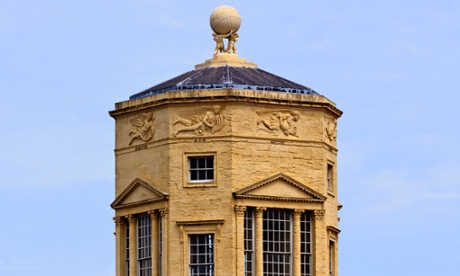
If you want to make your mark on history, then a career in stonemasonry is a good place to start. There are two types of stonemason: a banker stonemason, who creates stonework in a workshop, and a fixer mason who works on site, putting the stone items in place.
It may be one of the oldest trades in construction, but it is far from stuffy and boring. Stonemasons create some of the world’s most beautiful stone buildings and their work can last for centuries.
Banker masons, such as Kyle Makowski of Wells Cathedral Stonemasons, use traditional tools to carve blocks of stone, shaping everything from cladding for a new office block to intricate carvings for historic buildings.
He recently worked on the restoration of the Radcliffe Observatory in Oxford and says the job requires a lot of patience, but is incredibly rewarding.
The 23-year-old explains: “It is the satisfaction of seeing the before and after. If you are doing a conservation job on a building, you see a lot of old stones that need to be replaced and it’s your job to do that. When the scaffolding comes down it looks smarter and new. It is about knowing your work is going to be around a lot longer than you are.”
Joiner in a high-care environment
Construction sites are not known for their pristine cleanliness, but for a joiner working in a high-care environment, such as a laboratory, dust and dirt isn’t an option.
A busy hospital or pharmaceutical company often cannot afford to close its doors for essential work to take place. Specialist joiners – who build wooden components such as stairs, doors, and window frames – must carry out their job without adversely affecting health and safety.
Adam Bell, executive director of Building Projects UK – a company specialising in construction in high-care environments – explains that they use temporary screens and dust extraction devices to minimise disruption. Joiners are required to wear full protective gowns, hair nets and face masks.
Bell says: “All construction is great when you can see the finished job, but the difference with the high-care industry is that it is always challenging and very difficult.
“One of the rewards is that it is always different and varied. No two jobs are the same.”
Sustainability engineer
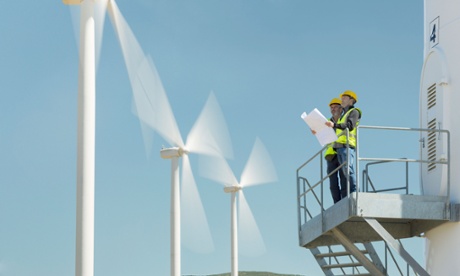
Sustainability and care for the environment is top of the agenda when designing and planning new projects. Long gone are the days of build first, think green later and many roles have sprung up to ensure projects are not undertaken at the expense of the natural environment.
Sustainability engineers work closely with architects, planning consultants, and mechanical and electrical engineers to ensure the design of a building is profitable and in line with local and national planning policy in terms of energy production and carbon emissions.
Laura Nolan is a sustainability engineer at Cudd Bentley Consulting in Ascot. She says that while she is mostly office based, there is the opportunity to work in exciting locations such as wind farms and hydroelectric plants.
She says the most important skills for the job are team work, resilience and initiative.
“There is a lot of change,” Nolan says. “We could submit our designs and the architect could change it. Then we have to go back and do it again. So you have to be quite tough.”
She adds that the growing enthusiasm and investment in green, renewable energy means it is a sector which has a promising future.
CSR coordinator
Many companies are now incredibly keen to make sure that their practices, processes, products and procedures are ethical, sustainable and environmentally friendly. They do this through corporate social responsibility (CSR).
A CSR coordinator’s job requires them to develop and implement a strategy that achieves a company’s ethical aims. The role involves conducting research, building relationships with partner organisations, and coming up with a range of activities and initiatives that will have a positive impact on the environment and local community. That could include organising events for staff, as well as building links between the company and educational or charitable groups.
There’s also some publicity and marketing involved. While the job is generally office-based, a CSR coordinator will spend lots of time in the community, visiting schools and local organisations to spread the news about the company’s good work.