Mmm, vanilla: what’s not to like about this comforting, sweet-smelling spice? Most of us associate vanilla with pleasant childhood memories, sweet treats and ice cream on vacation – hence vanilla’s ongoing popularity, according to The Smell Report, published in 2009 by the Social Issues Research Centre, a UK-based research firm focused on social and cultural trends.
A 2013 survey by the International Ice Cream Association, a trade group, found vanilla was America’s most-favored flavor, followed by chocolate and butter pecan. The nonprofit Fair Trade Vanilla Cooperative reports that the US consumes the most vanilla globally, using it as flavoring in sodas, baked goods, ice cream, syrups and perfumes.
Where does vanilla come from?
Madagascar is the world’s top vanilla producer (59%) followed by Indonesia (23%), China (10%) and 12 other small producers including Mexico, French Polynesia and Malawi, reports the Food and Agriculture Organization of the United Nations (UNFAO). Tonga farmers also successfully produce vanilla exported to Australia and New Zealand, to grow their incomes and supplement their food supply, the UNFAO reports.
Why is vanilla so expensive?
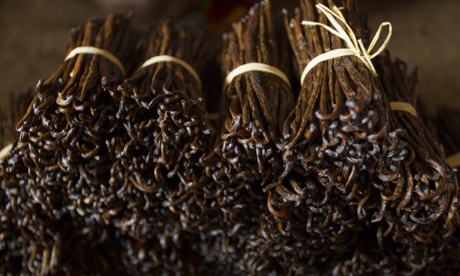
Producing vanilla is a laborious process. Farmers must hand-pollinate and nurture the flat-leafed vanilla orchid, a vine-like plant that grows up trees. Then they pick the vanilla pod, also called the bean, before it is ripe. It is then soaked in hot water and set to dry for two to six months. This extensive process makes it a prized ingredient.
How is vanilla extract made?
Extract, much cheaper than vanilla beans, is made by macerating vanilla pods and mixing them with water and alcohol.
But more than 99% of vanilla flavoring comes from synthetic sources. According to a 2003 study, less than 1% of artifical flavoring vanillin sold each year is derived from vanilla seed pods. Most of what we consider “vanilla,” such as vanilla flavoring we find on store shelves, is chemically synthesized from lignin or fossil hydrocarbons.
How did we come to use the scent of vanilla in our homes and perfumes?
Perfume makers have used vanillin since the 1880s when they stopped relying exclusively on plant-derived molecules. Nineteenth-century chemists made vanillin from eugenol, found naturally in cloves, nutmeg and cinnamon, and from gualacol guaiacol, derived from pine tar. In 1889, Guerlain introduced Jicky, which has synthetic vanillin in its base note. Later in 1925, Guerlain used the stronger-smelling ethyl vanillin to create famed perfume Shalimar.
Copy on this page is brought to you by SC Johnson, sponsor of An apple a day series and the values-led business hub.