25 years ago, the most widely ratified human rights treaty in history was adopted by United Nations Member States: the Convention on the Rights of the Child. In 54 articles, the Convention offers a vision of a world where all children survive and develop to their full potential without discrimination, and are protected, respected and encouraged to participate in decisions that affect their lives.
The accountability to realise these rights lies with governments, but to make the vision of the Convention a reality for every child, it needs to guide the actions of all actors in society.
Unilever is one of the world’s leading consumer goods companies with products available in 190 countries. With over 400 brands including food, beverages, personal care products and cleaning agents, it reaches 2 billion consumers every day.
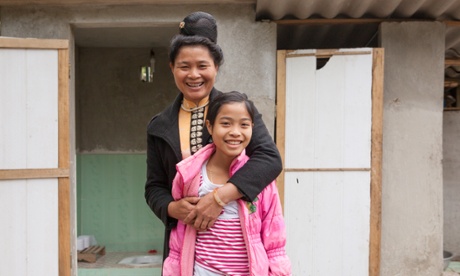
In 2012, Unilever joined forces with Unicef to improve access to basic sanitation. The partnership supported by the Unilever Foundation and Domestos, the company’s leading toilet hygiene brand, focuses on a sanitation programme called Community Approaches to Total Sanitation (Cats). Cats promotes behaviour change for good hygiene and helps create awareness and demand for safe sanitation facilities, a crisis area highlighted in the Millennium Development Goals. Now in its third year, the behaviour-change interventions supported through this partnership have reached over 1 million people in 12 countries.
A number of corporate leaders (partners with Unicef) in promoting the children’s rights agenda, were asked what motivates them and their companies to engage. Among them was the chief marketing and communications officer at Unilever, Keith Weed who gave us his thoughts.
Why is it important for private sector companies to engage in society beyond their core business?
Today, the world is facing unprecedented development challenges and it is up to business to be part of the solution. 2.5 billion people lack access to a toilet, nearly 750 million people do not have safe drinking water, and many more lack the facilities to practice simple hygiene behaviours like hand washing with soap.
Access to water and sanitation are basic human rights. Yet, children across the world are all too often denied what many of us take for granted, and as a result, millions will not live to see their fifth birthday. It is unimaginable but true – and what’s worse – much of it is preventable. While progress has been made thanks to the Millennium Development Goals – which have focused the work of the international community on meeting the needs of the world’s poorest people – there is still much unfinished business that needs to be addressed.
We believe that business cannot close its eyes to the world’s challenges. At Unilever, we reach 2 billion consumers a day, and with that reach comes responsibility. Business brings a wealth of experience and technical expertise to address complex social and development challenges. Additionally, it has the human capital, resources and reach to deliver progress at scale. However, we cannot solve the development challenges of our day alone. To drive the type of transformational change that is needed to give the world’s children the opportunity for a better future, we need to create solutions at scale and work in multi-sector partnerships with like-minded stakeholders.
The Unilever Sustainable Living Plan is our roadmap to double the size of our business while decoupling growth from our environmental footprint and delivering increased positive social impact. So, the desire to drive positive changes in the world around us is embedded in our business model.
Of course, there is a moral case. But there is also a strong business case. We know that consumers want brands with purpose, sustainability, transparency, trust and provenance as these are increasingly drivers for their purchasing decisions, and you cannot have a healthy business in an unhealthy world. So, we embed sustainability and social development within our whole business to do the right thing by the communities we serve and gain their loyalty. And of course, it is practical, too – through securing sustainable supply chains and innovating to find alternative approaches in a world of finite resources, we can continue to meet their everyday needs in decades to come.
Why did you choose to partner with Unicef in support of children’s rights?
Our partnership with Unicef has been focused on supporting water, sanitation and hygiene (Wash) programmes that drive meaningful results through changing people’s behaviours when it comes to going to the toilet or washing their hands.
In 2013, 6.3 million children died from preventable causes such as diarrhoea, pneumonia and malaria, as well as a lack of access to quality health care. This translates to over 17,000 children’s lives being lost each and every day. Lives we know how to save. Changing behaviours as it relates to good Wash practices is critical, as it is the linchpin to impacting so many other areas of development such as nutrition, education, gender equality and inclusive economic development.
What has this engagement meant for your company? Has it in any way influenced your way of doing business?
Yes – as it is hardwired into what we do day to day. For example, over the past three years, Domestos, our leading toilet hygiene brand, and the Unilever Foundation have partnered with Unicef to support the Cats initiative. Since the beginning of our partnership, over 1 million people have been reached with sanitation behaviour change interventions, which will result in these individuals living in open-defecation-free communities.
As part of the Unilever Sustainable Living Plan, we have committed to help more than 1 billion people – many of whom are children – improve their hygiene habits. Our targets initially focused on those areas where we believe we have a role to play based on our business and product portfolio: hand washing with soap; providing safe, affordable drinking water; improving oral health; and improving self-esteem.
In September, we announced our latest commitment to help 25 million people gain improved access to toilets by 2020. So yes, it has influenced the way we do business and our targets.
It has also influenced our innovations. For example, these goals led us to develop our unique Lifebuoy hand wash, which changes colour from white to green in 10 seconds – the time it takes for the formulation to deliver 99.9% germ protection. The colour change means kids love to use it. Launched in India, Indonesia and other markets in Asia and Africa, it was a direct response to what our consumers need and a way of saving lives, reassuring parents and keeping their children safe.
Lastly, these principles have influenced, and are reflected in, our Unilever Sustainable Living Plan’s Enhancing Livelihoods goal. In 2014, we created a pillar on fairness in the workplace to ensure we embed and promote human rights throughout our own operations and our extended value chain. This includes the revision of existing polices including our Code of Business Principles (pdf), and our Respect, Dignity & Fair Treatment Code Policy, which sets out how to treat our employees and business partners with dignity, integrity and fairness.
The development of our new Human Rights Policy Statement (pdf), which articulates our commitment to respect in alignment with the United Nations Guiding Principles on Business and Human Rights; and our Responsible Sourcing Policy, which addresses fundamental principles and provides a framework move from “do no harm” to “do good”. We made these changes to ensure we have a positive social impact throughout our whole value chain.
How do you see your engagement in support of children’s rights developing, and what could it look like in five years’ time?
Unilever has been advocating for the inclusion of a standalone goal on water and sanitation in the post-2015 Development Agenda. We believe such a goal should be supported by measurable targets for universal access to safe drinking water, sanitation and hygiene. This proposed goal, combined with our strategic partnerships, will be essential to scaling up activities to drive the societal transformations needed to create a brighter future for the world’s children.
What is the thinking behind Unilever’s focus on children and sanitation?
Support for Wash is an obvious area for us to partner with Unicef on, given our portfolio of health and hygiene products combined with Unicef’s extensive Wash experience and national/local networks.
Investments in sanitation have clear benefits. They not only result in ensuring that children are healthier, but they also contribute to girls’ rights to education by helping ensure they attend and remain in school. Additionally, investments in this arena afford much needed dignity and privacy, particularly for women.
In partnering with Unicef, we have been able to drive the type of transformational change that can help lay a foundation for children to reach their full potential and live a healthier life.
Keith Weed is chief marketing and communications officer, a role that also includes leading Unilever’s Sustainable Living Plan. He has worked for Unilever in the UK, France and the US, and globally and regionally in a variety of general management and marketing roles. He is also chair of the World Economic Forum Consumer Industry Board and chair of Business in the Community International. You can follow him @keithweed
Content on this page is provided by UNICEF, supporter of the children: the next business agenda hub