Everybody knows the feeling—you wake up one morning and just feel off. That shaky start can throw an entire day out of balance. Eventually, a bad day can turn into a bad week, and no matter what you try, nothing seems to get things back on track.
Even for some of baseball’s best players, that downward spiral can swallow up an entire season.
The 2025 campaign saw dozens of household names look overwhelmed for long stretches of time. But a new year presents a new opportunity. With just three weeks (!!) until the start of spring training games, here are five players coming off subpar seasons that look poised to bounce back in a big way.
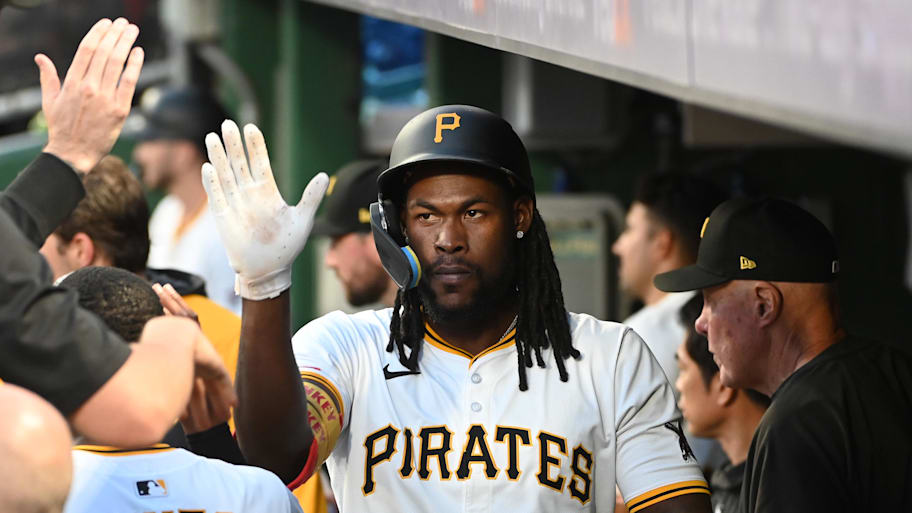
Oneil Cruz, CF, Pittsburgh Pirates
2025 stats: .200/.298/.378, 20 HR, 38 SB, 1.6 fWAR
Cruz put up 20 homers and 38 stolen bases in 2025, but did so with a .200 batting average, the lowest of any player in the 20–38 club (which I just made up) by 56 points. His OPS+ nosedived to 87, down from a career mark of 112 prior to last season. Cruz earned his low batting average the old fashioned way: by striking out at a 32% clip, the fourth-highest among qualified hitters.
That strikeout rate is right in line with Cruz’s career average, so at this point, it’s safe to assume those swing-and-miss issues are here to stay. But Cruz doesn’t need to improve much in that department to get back to being an impact hitter. Despite the awful slash line, his quality of contact remained elite in 2025: a 17.9% barrel rate, 56.6% hard-hit rate and a 95.8 mph average exit velocity are all products of the fastest average bat speed (a ludicrous 78.8 mph) in baseball. All that loud contact producing a meager .262 BABIP—far below his previous career average of .336—seems to be a statistical anomaly.
Beyond improved luck there, Cruz can make the most out of his tools by lifting the ball more: he had a 48% ground ball rate, well above the league average of 41.8%. Now a year removed from a full-time transition from shortstop to center field, it’s not difficult to envision a more comfortable Cruz squeezing out more production from his immense potential and putting together an All-Star campaign in 2026.
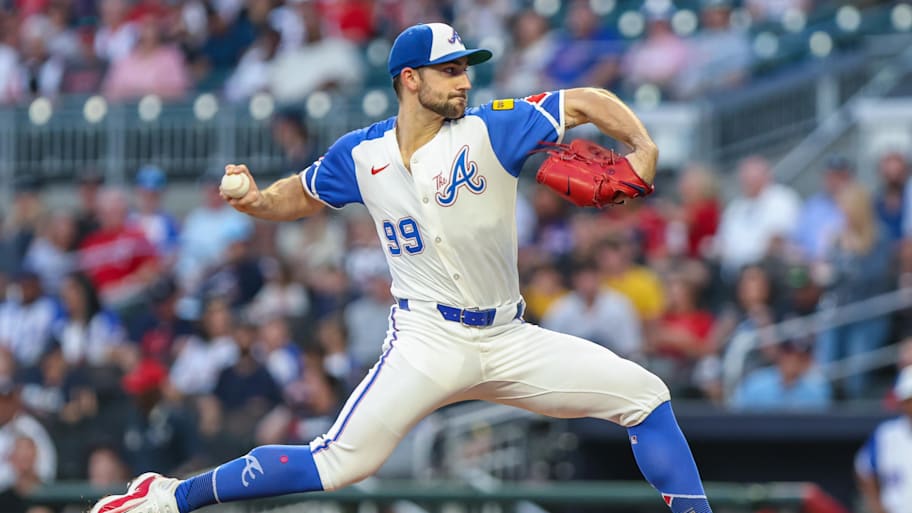
Spencer Strider, SP, Atlanta Braves
2025 stats: 7–14, 4.45 ERA, 1.40 WHIP, 0.9 fWAR
Strider returned to the mound in 2025 after missing nearly all of ‘24 recovering from elbow surgery, and struggled to replicate the success he had pre-injury. The fastball velocity dropped a couple ticks, down to an average of 95.5 mph on the four-seamer compared to 97.2 in ‘23. The strikeouts took a big hit as a result, with Strider’s K-rate plummeting to 24.3% compared to a league-best 37.4% from ‘22 to ‘23.
The lack of an overpowering fastball led to fewer strikeouts and a lot more hard contact, with Strider allowing a career-worst 1.44 home runs per nine innings. At his peak, the righthander was essentially a two-pitch pitcher, pairing his heater with a wipeout slider that generated whiffs at a rate over 50%, while occasionally mixing in a changeup. He began incorporating a curveball in the 2024 campaign (which only lasted nine innings before the injury), and brought it back in ‘25 with encouraging results: opposing hitters put up a 53.7% whiff rate and .156 batting average against it.
Assuming that lost velocity isn’t coming back (at least back to peak levels), it looks like it’s time for Strider to lean into this sort of tinkering and embrace a more diverse pitch mix. If he does, he should be able to recover at least a good bit of the form that made him a Cy Young Award contender.
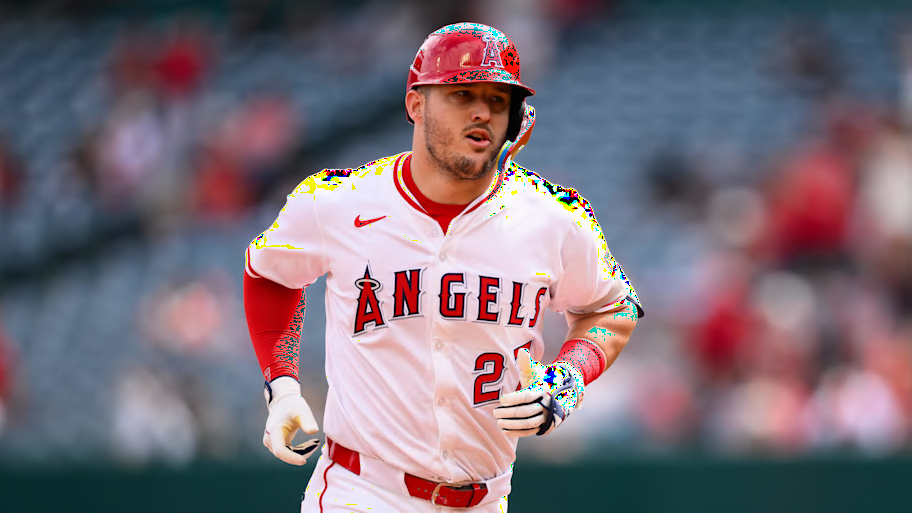
Mike Trout, OF/DH, Los Angeles Angels
2025 stats: .232/.359/.439, 26 HR, 2 SB, 1.8 fWAR
First, some positives: for the first time since 2022, Trout ended last season healthy. And for the first time since 2019, he logged at least 500 plate appearances (he finished with 556). Despite that, he still missed a month recovering from a bone bruise, and was relegated to DH-only duties for his final 101 games. While simply keeping Trout on the field represents a massive step forward, the production was very un-Trout like.
The three-time MVP posted full-season career worsts in strikeout rate (32%), OPS+ (121) and slugging percentage (.439). The strikeout rate—which ranked as the third-highest among all qualified hitters—is particularly concerning, as players in their mid-30s can expect a steep uptick in strikeouts for the rest of their careers. Trout, for his part, told Jeff Fletcher of The Orange County Register during the final week of the regular season that he believed he had solved the mechanical issue that had been causing his surge in strikeouts. He subsequently hit four homers with just three strikeouts over the Angels’ final four games—a microscopically small sample size, sure, but with this team, you’ll take all the positive signs you can find.
In support of Trout’s assertion that his issues were mechanical and not some erosion of tools, he maintained his elite command of the strike zone, posting a chase rate of just 20.7%—right in line with his career average and well below the league mark of 28.4%. With his first healthy offseason in years and proof that his body can withstand everyday playing time (at least as a DH), Trout’s inclusion here is a bet that one of the best players of all time can return to All-Star level production at the plate.
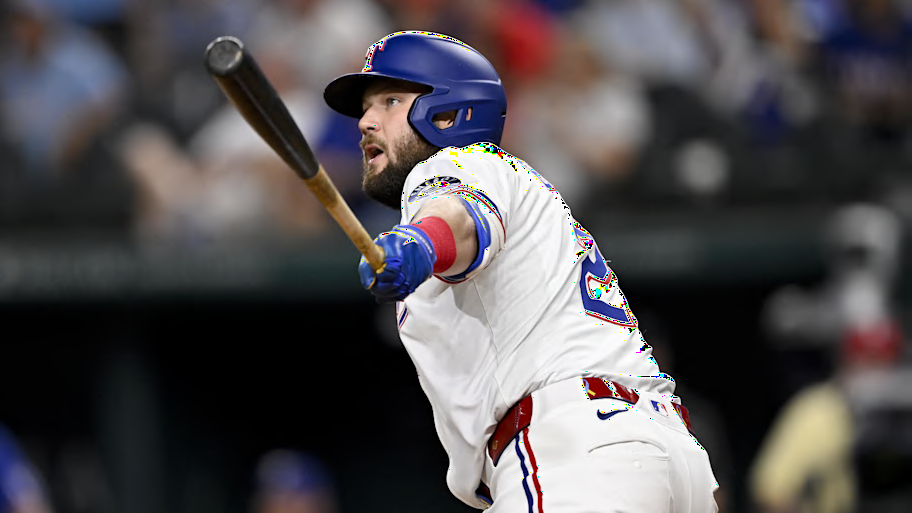
Jake Burger, 1B, Texas Rangers
2025 stats: .238/.269/.419, 16 HR, 53 RBI, -0.1 fWAR
A 2017 first-round pick by the White Sox, Burger enjoyed a banner year in ‘23, launching 34 home runs with a 119 OPS+. He followed that up with a 29-homer campaign the next year, but his production cratered in his first season with Texas. While he maintained his bat speed and hard contact that helped him break out in the first place, his results did not keep pace.
Part of what helped Burger succeed two years ago was an uptick in pulling the ball. Nearly half (49%) of his batted balls went to the pull side in 2023, but last year, that number dropped to 34.6%—well below the league average of 41%. In ‘23, Burger’s average intercept point—where the bat makes contact with the ball—was 11.5 inches in front of home plate. Last season, he let the ball travel more, with an average intercept point of 7.9 inches.
Making it a point to go get the ball earlier and take advantage of his pull side power seems to be the key to getting Burger back to producing like a middle-of-the-order bat his profile suggests he is.
Teoscar Hernández, OF, Los Angeles Dodgers
2025 stats: .247/.284/.454, 25 HR, 89 RBI, 0.5 fWAR
Hernández managed to put up something close to his typical counting stats in 2025, but they mostly amounted to empty calories. He had the eighth-lowest on-base percentage among qualified hitters, and his lowest OPS+ (103) since his rookie season. Add in his bottom of the barrel defense (he was worth -9 Outs Above Average, per Statcast), and Hernández was barely above replacement level.
This is the type of underperformance that a loaded Dodgers roster can withstand, but that doesn’t mean a resurgent season wouldn’t be a huge boost for the two-time defending champs. Hernández saw his barrel rate drop 11.5%, perhaps in part due to the fact that he swung at pitches in the strike zone less often: his zone swing rate fell to 68.1% in 2025—down from 72.1% in ‘24—despite seeing in-zone pitches at the highest rate (54.8%) of his career. Being a bit more selectively aggressive should lead to higher quality contact, which in turn should force opposing pitchers to be more cautious and issue walks more frequently.
This tweak in strategy could get Hernández back to his All-Star caliber form, giving the Dodgers an even bigger embarrassment of riches.
More MLB on Sports Illustrated
- Picking the Most Logical Destinations for Five Major MLB Trade Candidates
- When MLB Pitchers and Catchers Report for 2026 Spring Training
- NBA Announces Dodgers Star Mookie Betts Will Be Celebrity All-Star Game Coach
- The Nine Best Free Agency and Trade Fits of the MLB Offseason
This article was originally published on www.si.com as Five Potential Bounce-Back Candidates for the 2026 MLB Season.