Five police officers breached their public duty by “massaging” their accounts of a stop and search carried out on a man who later died, a disciplinary hearing has been told.
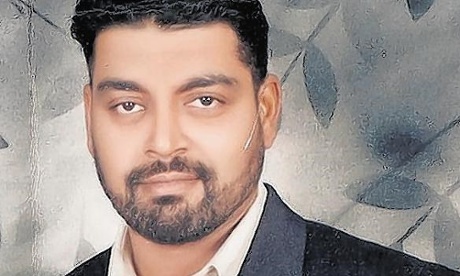
Habib “Paps” Ullah, 39, from Slough, Berkshire, was pronounced dead at Wycombe general hospital on 3 July 2008, about one-and-a-half hours after the car he was travelling in was stopped by Thames Valley police officers in High Wycombe.
The officers – DS Jason Liles, DC Richard Bazeley and PCs Kate Granger, Chris Pomery and Howard Wynne – are accused of gross misconduct in relation to the incident. Liles is also accused of gross misconduct in relation to slapping Ullah, who had three children, on the back.
All the officers admit deleting details which were included in their draft statements from the versions given to the Independent Police Complaints Commission. But they say that they did so on the advice of a Police Federation lawyer and deny all charges against them.
Concluding the case against the officers on Thursday, Gerard Boyle said: “Thames Valley police officers should always demonstrate the highest standards of behaviour and act with honesty and integrity.
“These five police officers … know that their duty as a public servant was to provide an undersigned statement that was a full, detailed, accurate account.”
Instead, they “massaged” their initial statements, said Boyle, listing among the most serious deletions those referring to the use of force, including:
- Bazeley removing his description of the slap on Ullah’s back as being delivered “with some force”.
- Wynne’s deletion of his description of another occupant of the car shouting: “You’re strangling him”.
- Pomery replacing the word “grabbed” in relation to Ullah’s neck with “held”.
Referring to the claim that the amendments had been made on the advice of a lawyer and that the officers had subsequently expressed misgivings about the changes, Boyle said: “They should not have required the benefit of hindsight to realise that deleting relevant material was simply an unacceptable thing to do.”
With respect to the back slap, the three-person panel at Shaw House, Newbury, heard that Liles delivered the blow when Ullah turned his back after bring asked by officers, who believed he had swallowed drugs, to spit out or show what was in his mouth.
Boyle claimed that, in his evidence to the hearing, Liles added an “embellishment”, not mentioned in his earlier statements, claiming that Ullah had stepped away as he turned his back. The lawyer described this as an attempt “to try to justify a blow which he knew, in the prevailing circumstances, was simply too hasty.
“The officer overreacted too hastily and he didn’t give Mr Ullah an opportunity to comply with the communication.”
In his closing submissions, Kevin Baumber, counsel for the officers, said they had spoken honestly and openly when asked questions about their original statements and that there was no suggestion of a cover-up. He also insisted that they were entitled to rely on legal advice given on the understanding that they were potential suspects.
Baumber said that the strike by Liles was an instinctive act, carried out in a high-pressure situation in a bid to prevent a medical emergency, and that the officer could just as easily have been criticised for not administering it.
“The [presenting officer’s] submission is this: that he acted too quickly to save a life and that is a dangerous premise to endorse,” said Baumber. “You may conclude it would have taken a very poor piece of policing to conclude that the thing in his mouth was not class A drugs.”
Following the closing arguments, the legal adviser to the panel said that the police officers could only be found to have committed gross misconduct if their lawyer’s advice was wrong and even then only if it was unreasonable to rely on her advice. He also said the solicitor was correct in advising the officers as potential suspects.
The sanctions for officers found to have committed gross conduct range from no further action at one end of the spectrum to dismissal without notice at the other.
The panel is expected to give its decision on Monday.