The Guardian Charity Awards have offered much-needed publicity, funding and support to small and medium-sized UK charities since 1993. The winners gain national recognition, which in many cases leads to significant growth and allowed the charities to increase the impact of their work. Five previous winners explain what winning the award did for them.
Jessie’s Fund, UK
Winners in 1998
Jessie’s Fund helps children with additional and complex needs learn, express themselves and communicate through music. Initially a small charity, it’s grown to operate on a national scale. The charity goes into special schools and hospices to teach children musical skills.
Jessie’s Fund was founded by Lesley Schatzberger after the death of her nine-year-old daughter Jessica from a brain tumour in 1994. Jessica passed away before she could be flown to see a specialist and so with the £15,000 that had been raised, Schatzberger bought musical instruments for Martin House children’s hospice. Since then, Jessie’s Fund has installed musical instruments and set up music therapy posts in 36 of the UK’s 46 children’s hospices and over 100 special schools.
Winning the Guardian charity award has had a profound impact on the charity, says Schatzberger. “Jessie’s Fund was in its infancy, we had only been going for three years when we won the award.”
Despite having won the award more than a decade ago, it still has a positive impact on the charity. “Getting out to all the Guardian readers, it was really significant for us and had a big impact,” she says. “We still have supporters now who learned of us through that award.”
Straight Talking, London
Winners in 2008

A charity which uses a peer education approach to tackle teenage pregnancies and teenage parenthood, Straight Talking employs those with the relevant knowledge and experience of teen parenthood – teenage parents themselves – to run secondary school courses to inform and educate young pupils on the realities of being a young parent.
Founded in 1998 by its current chief executive, Hilary Pannack, Straight Talking has delivered almost 2,200 courses and engaged with more than 65,000 school students across Greater London.
At the time of winning the Guardian charity award, one judge commented: “The judges were hugely impressed with this project’s inspirational work.Where conventional methods have failed, Straight Talking is succeeding.”
Winning the award was a major boost for everyone involved with Straight Talking says Pannack. “What it did was to give huge pride to the teenage mothers and fathers who work for us,” she says. “We were able to include it in fundraising applications and call ourselves an award winning charity which was just fantastic. The publicity it gave us really impacted on us as a charity in giving us the respect we were seeking.”
Food Train, Scotland
Winners in 2004
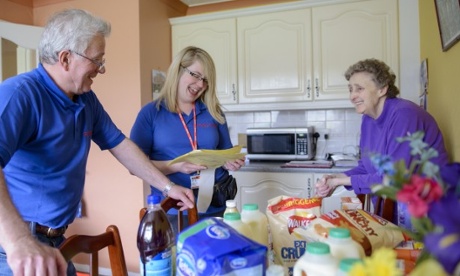
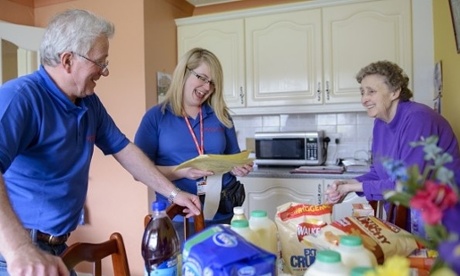
Food Train delivers support and services for older people with the aim of helping them live independently at home for as long as possible. After a community survey of elderly people in 1995 showed many had difficulty with their weekly grocery shop, the idea for Food Train was born and this year marks its 20th anniversary.
It has gone from serving older people in Dumfries to operating in seven local authority areas in Scotland and has ambitions to expand further. Winning the Guardian charity award played a significant role in Food Train’s expansion, says chief executive Michelle McCrindle.
“At the time we were really small, we were just a tiny local charity and now we are very much a national charity. The Guardian award formed part of the step change of the organisation. It was a precursor to us receiving a significant donation from a Christmas appeal. Unrestricted funds, those kinds of sums of money, were huge and life changing for us.”
Shannon Trust, UK
Winners in 2009
“We really were still in the early days of the charity, so receiving the award helped get recognition for our work and gave us great media coverage which was really important to us”, says Angela Cairns, chief executive of the Shannon Trust. The Shannon Trust works with thousands of prisoners to help develop their reading and literary skills, in the hope that by learning important life skills they can contribute to society upon their release.
The charity was founded by Christopher Morgan in 1997 after writing to Tom Shannon, a prisoner sentenced to life, as part of a Prison Reform Trust pen pal scheme. Regular correspondence with Shannon gave Morgan insight into literacy levels among the prison population with almost half unable to read. This gave him the idea that the half of the prison population that could read could help teach the half that could not.
Shannon Trust now works in prisons across England, Wales and Northern Ireland and uses current prisoners as mentors to help deliver the Trust’s reading plan .
Winning the award did an enormous amount for Shannon Trust’s standing, Cairns says. “It is a very well respected and known award, so the kudos made a considerable difference.”
One25, Bristol
Winners in 2010
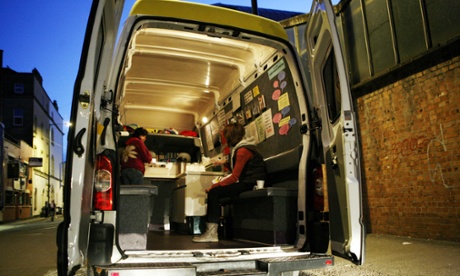
Based in Bristol, One25 works with and reaches out to women who are either caught up in addiction and sex work or who are vulnerable to becoming so. Formed in 1995, it is the only organisation in Bristol and the surrounding counties that supports female sex workers. The charity works to tackle homelessness, poverty, risk from violence, ill-health and offending.
Services include a nightly outreach where clothing, condoms and safety alarms are given to vulnerable women, a drop-in centre for professional support and a night drop-in service offering food, drink, shelter and advice for homeless women who are at risk of prostitution.
This year marks the charity’s 20th birthday and five years since it received the Guardian charity award. “We have gone on to win more awards since [winning the Guardian award],” says Gill Nowland, One25’s chief executive. “I know that with the award we got support with infrastructure which helped to build up our expertise and confidence around what we were doing. The award allows you to invest to help you be even better.”