Here’s my confession. Although I love science, and can never get enough of the latest story – I avidly followed the nail-biting progress of the Rosetta space probe on its way to rendezvous with the romantically named comet 67P/Churyumov-Gerasimenko for months before Philae’s fateful landing – this interest wasn’t inculcated by a childhood of amateur experiments. I didn’t take apart clocks and motors to see how they worked before (unsuccessfully) attempting to piece them back together. No insects were imprisoned in my bedroom to be crossbred in the hope of creating mutants (although I do recall rescuing a pair of woodlice from the garden on a baking summer’s day; despite my efforts to recreate their natural diet the unfortunate crustaceans soon expired).
Unsurprisingly, when I finally got to secondary school some of my experiments did not exactly go to plan. A (smelly) fish dissection filled me with dread. During a calorimetry practical an unnecessarily extravagant gesture sent the glass thermometer onto the floor in pieces. My electric motor failed spectacularly to work. (My Dad used to work in a school; he told me that these motors never worked in his day either, which at least goes to show that the laws of physics are constant.)
Instead, I explored the world of science, from the mysterious recesses of the human body to the furthest reaches of outer space, through reading. As well as virtually the entire Horrible Science series, these five books perhaps more than any others fomented my determination to study at least one science at A-Level.
Crucially, by degrees, these books have trained me to peer deeper into the ‘everyday’, to try and observe patterns and ask questions about the world which surrounds me – much to some adults’ annoyance, since children are meant to grow out of the “Why?” stage when they shed toddlerhood! However, as these books are constantly reminding me, if there weren’t some human beings who retained that childish curiosity about the world, the great discoveries and insights which shape all our lives might remain hidden.
1. Adventures in Human Being by Gavin Francis
Gavin Francis is a doctor who, as a boy, dreamed of being a geographer. Today he sees the human body in terms of landscapes and maps. He a beautiful writer, who can describe with language which is both highly technically precise and memorably poetic, combining scientific insight with lyrical prose:
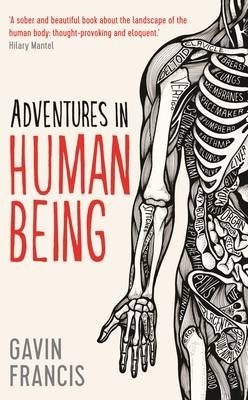
The lungs are light as spirit because their tissue is so thin and delicate; the membranes within them arranged so as to maximise exposure to breath much as the leaves on deciduous trees maximise exposure to air… Listening with a stethoscope you can hear the flow of air across the membranes, like the rustle of leaves in a light breeze.
This book is also a powerful reminder that science can produce results which are more than just intellectually uncomfortable, but emotionally disturbing as well, such as the efficacy of electroconvulsive therapy, which many people today see as barbaric and cruel.
Animals of the World
I still have this book in a prominent position in my room, and have owned it since before I could even read, when I had to enlist parents and grandparents to illuminate its secrets! Every page explodes with photographs and diagrams, and I would stare into these like portals into other worlds, mesmerised by the sheer, breathtaking diversity of life on Earth. As I’ve grown older, many of the science books I’ve read about nature, such as Ocean of Life by Callum Roberts or Here on Earth by Tim Flannery have driven home how destructive and wasteful human behaviour can be. Occasionally, though, I still head back to this panoply of all things which scuttle, swim and soar, to remind myself how beautiful and precious is the natural world we have to protect.
This book also features the earliest mind-popping factoid I can remember in a science book: “The average protest is about 20 times smaller than the dot in this i. A very large protest might fit into this o”.
The Greatest Show on Earth by Richard Dawkins
Richard Dawkins is better known today as a prominent atheist, scathing attacker of religion (most notably in The God Delusion) and perpetrator of caustic and often slightly off the mark comments. However, this book – which sets out the evidence for Darwinian evolution – also happens to be one of the most readable and recommendable popular science tomes I have ever traversed. Dawkins has a real gift for explaining quite complex science in a way which is intuitive, memorable and even humorous without feeling condescending.
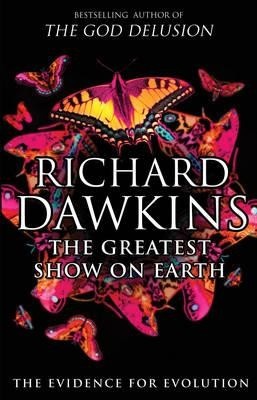
In a chapter on evolutionary arms races – such as occur between predator and prey, parasite and host – he invites us to imagine “If only all the trees in the forest could come to some agreement – like a trades union restrictive practice – to grow no higher than, say, 10 feet, every one would benefit. The entire community – the entire ecosystem – could gain...” He goes on to say that in this hypothetical ‘Forest of Friendship’, a tree which breaks the “embargo on height” and grows to 11 feet would be instantly rewarded with extra photons gathered for photosynthesis; therefore over time more and more trees will strain to be 11 feet tall (there is a selection pressure) until all the trees in the forest are 11 feet tall and “they are all worse off than they were before” since they have to expend more energy to grow taller. In this pithy but ingenious example, Dawkins shows the difference between a designed economy and an evolutionary economy.
While Animals of the World helped teach me the wonder of nature, this book introduced me to the analytical and imaginative thinking which underpins science.
Stuff Matters by Mark Miodownik
You may know Mark Miodownik as the maverick-in-residence from the short-lived BBC 2 programme ‘Dara O’Brian’s Science Club’, but you may not know that:
- he is also a brilliant writer
- he is a chocoholic
- he was slashed by a stranger in an Underground station with a razor blade – which arguably fired his fascination with materials.
This book tells the story of materials which have shaped our world, from the most futuristic and space age (aerogel) to the unloveliest (concrete). It will remind you why we used to name historical eras after types of ‘stuff’ – the Stone Age, Bronze Age, Silicon Age, and so on – and why historical, scientific and cultural progress is often dependent on new ways to manipulate matter: “The transition from an oral culture … to a literate one … was held back for centuries by the lack of suitable writing material”; “the lack of glass technology in the East meant that, despite their technical sophistication, they never invented the telescope nor the microscope”.

Whether he’s describing something utterly everyday (the reason that dark chocolate, despite being 30% sugar – “the equivalent of putting a spoonful of sugar in your mouth” – often doesn’t taste sweet at all, is that bitter and astringent molecules called alkaloids and phenolics are released from the melting cocoa butter simultaneously with the sugar) or other-worldly (lightning strikes, which can heat sand to temperatures of over 10,000⁰C create staffs of glass called fulgurites, which look “uncannily like the images of thunderbolts that … the Norse God Thor was said to hurl in anger” – Tutankhamen was buried with glass formed 26 million years ago, probably the result of a meteor impact) – Mark Miodownik is certain to make you look at the world very differently. You have no choice but to share his childish, awed enthusiasm.
Aside from his personal stories, another way Miodownik enlivens this book is by taking on a diverse range of writing styles; he is almost as diverse as the materials he describes. His history of plastic is in the form of a movie script, while aerogel is turned into the subject of a gripping mystery story, with Miodownik as the intrepid detective. If secondary school science has left you colder than liquid nitrogen, this is the one book I could recommend to rekindle your passion and sense of wonder at human ingenuity and nature’s quirky strangeness. It pops with fascinating facts like hydrogen reacting with oxygen.
Physics of the Impossible by Michio Kaku
This final book is one for science fiction fans. Michio Kaku is a renowned physicist and somebody who is fascinated by the future. He divides his account of the ‘impossible’ into three sections: Class 1 impossibilities, currently impossible technologies which never the less “do not violate the known laws of physics”; Class 2 impossibilities that lie at the boundary of human knowledge, and may not be possible for centuries or even millennia; Class 3 impossibilities which violate the known laws of physics. I for one was astounded that such concepts as parallel universes and time travel are only treated as Class 2, while telepathy and teleportation might, in Kaku’s view, be available within the next century.
One of the things which makes this book so enjoyable is the author’s potted history of each idea at the beginning of every chapter, and his nods to well-known and popular science fiction and fantasy, which he uses to compare how we might imagine the future will work to how it actually will in practice. For example, within a few decades Kaku imagines being able to teleport organic molecules, but the wholesale dematerialisation and re-materialisation of human beings may be centuries away.
To read this book is to constantly remind yourself of the dictum: “Nature is not only stranger than we suppose, it is stranger than we can suppose”. As Kaku points out, many mind-bending ideas at the cutting edge of science (in particular theoretical physics) are often criticised by the scientific establishment because they are just that, theoretical and “untestable”; yet it took “two thousand years to prove the existence of atoms after they were first proposed by Democritus” and, while the father of the concept of tiny particles called neutrinos, Pauli, lamented the fact that they could “never be observed”, today scientists are capable of producing beams of neutrinos.
Even if you never intend to study physics again in your life, this odyssey of ideas is well worth a read – it will stretch and contort your mind in unexpected and wonderful directions.