Introducing conservation agriculture, integrated pest management, agroforestry systems and agro-ecology, these five stories feature FAO initiatives uniting sustainable agriculture practices and use of natural resources. Founded on an ecosystem approach to intensifying crop production, they provide evidence that increasing yield and the incomes of the poorest and most vulnerable does not need to come at the expense of the planet.
Conservation Agriculture in Azerbaijan
Smallholder farms dominate the rural landscape in Azerbaijan. But despite a heavy emphasis on grain production, the central Asian country still imports 40 percent of its wheat for domestic consumption. A FAO-Turkey partnership project promoting conservation agriculture aims to change that. Applying techniques such as growing crops on raised beds, zero tillage and crop diversification, the project has contributed to an increase in winter yields, from 3.5 to 4.3 tonnes per hectare in Tartar, and from 4 to 5.5 tonnes per hectare in Barda, districts in Azerbaijan. Piloted since 2011, the project, which includes training for farmers in conservation agriculture, also covers areas of Kazakhstan and Uzbekistan.
The Kihamba agroforestry system in East Africa
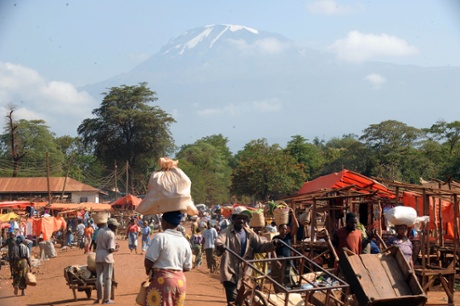
The cultivation of coffee had allowed the Kihamba agroforestry system to adapt successfully to the late 20th century’s cash economy. Covering 120,000 hectares of Mount Kilimanjaro’s southern slopes, the 800 year-old system is composed of four vegetation tiers: sparsely spaced trees, banana plants, coffee shrubs and vegetables. It provides for the livelihoods of a million people, producing water for the region and a variety of food all year round. But when coffee prices on the world market began to plummet in the 1990s, productivity and profitability slumped.
A FAO project, under the Globally Important Agricultural Heritage Systems Initiative, is attempting to enhance farmers’ cash income while preserving the integrity of the Kihamba system. Formulated with the community and piloted in 660 households, the new approach includes conversion to certified organic coffee farming, the introduction of vanilla as a high value additional cash crop, and the introduction of trout aquaculture along the canals of the irrigation system. Farm cash income is set to increase by 25 percent in the next three years.
Ecosystem approaches to Fisheries and Aquaculture in Nicaragua
Located along the North Pacific coast of Nicaragua, the tropical mangrove estuary Estero Real was recognised as an area of international interest in 2003. A little over a decade later, this natural landscape risks degradation due to urban waste, mining and deforestation. Heavy sedimentation, use of pesticides and the loss of mangrove forests are threatening coastal aquaculture, fisheries and biodiversity in the ecosystem.
The perilous situation of the estuary has brought together the Nicaraguan government and local fisheries and aquaculture institutions around an ecosystem approach to fisheries and aquaculture. With FAO support, the approach allows fisherfolk to maintain and increase food and income from fish products in the Estero Real, while preserving ecosystem services and increasing community resilience to climate change.
Farmer field schools in South East Asia
Rice has been the staple of South-east Asian cuisine for more than 4,000 years and, today, provides almost half the calorie intake for its population. But despite its long heritage, rice yields are under threat from a sharp increase in flash floods, devastating cyclones and periods of drought. Modern farming practices, including the overuse of chemicals, have led to a decline in water, soil and land resources, and an increase in pest outbreaks.
Pioneered in South East Asia in the late 1980s as part of an FAO regional programme on Integrated Pest Management for rice, Farmer Field Schools allow farmers to come together, share knowledge and work out their own solutions, a departure from traditional top-down advice.
In eight major rice and vegetable growing provinces of Laos, Field School graduates adopting the Integrated Pest Management approach returned higher yields and made better profits compared to conventional farmers. The technique, which combines regular field monitoring and expert agro-ecosystem analysis with a reduction in the use of pesticides, is set to become Cambodia’s standard approach to crop management.
From the Andes to the world, promoting Quinoa’s agro-ecology model
Two years ago quinoa was well and truly thrust into the international limelight after enjoying all the promotional opportunities that comes with being afforded its very own international year. The crop, grown in the Andes for more than 5,000 years, was deterred during Latin America’s Spanish Conquest from the 16th century, but re-emerged during the second half of the 20th century. Its nutritional properties, easy adaptability to different agro-ecological conditions and extraordinary genetic diversity mark it out to be an extra-special crop. Once an exclusive foodstuff of the Andean indigenous people, the number of countries growing quinoa has risen quickly from eight in 1980 to 44 in 2010 and to 75 in 2013. Another 20 countries are planning to sow quinoa for the first time this year.
Greater demand for the crop has contributed to improved incomes, greater access to credit, informal trade and to additional labour and machinery. FAO is now carrying out research to make sure the commercialisation of quinoa translates into long-term food security.
Content on this page is paid for and provided by FAO, a sponsor of the Guardian Global Development Professionals Network.