Get all your news in one place.
100’s of premium titles.
One app.
Start reading
The Guardian - UK
The Guardian - UK
World
Guardian readers

First world war: your letters and photographs

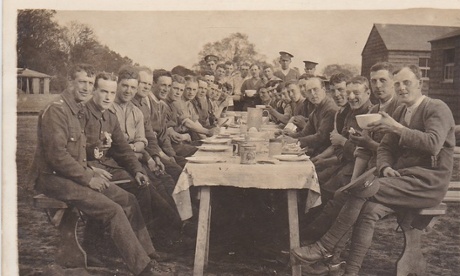
Cheshire Yeomany-Shropshire Light Infantry: My grandfather, Harry Beech (3rd from left), was in the Cheshire Yeomanry in France early in the war, I guess this would have been taken in 1914 or 15 as he also fought in Egypt and Belgium later in the war.
Cheshire Yeomanry-Shropshire Light Infantry: ‘My grandfather, Harry Beech (3rd from left), was in the Cheshire Yeomanry in France early in the war, I guess this would have been taken in 1914 or 15 as he also fought in Egypt and Belgium later in the war.’ Photograph: ID475270/GuardianWitness
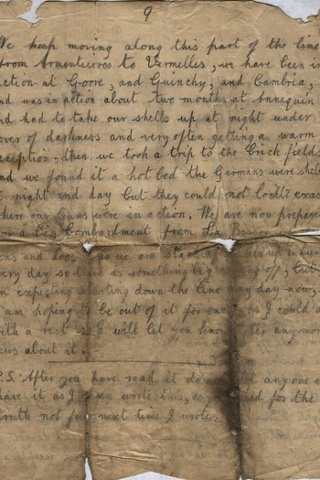
Smuggled letter from the Front. France, 1914: This is a letter, smuggled back by my great grandfather to his family, illegally (to avoid the censors) at the beginning of the First World War, to give a realistic account of his time in France. The picture is of the final page, and I've shown it for the last quote at the end...
Smuggled letter from the Front, France, 1914:
‘The picture is of the final page, and I’ve shown it for the last quote at the end... “P.S. After you have read it do not let anyone else have it, as I have wrote this as you asked for the truth not lies next time I wrote.” Photograph: Mark Eatherington/GuardianWitness
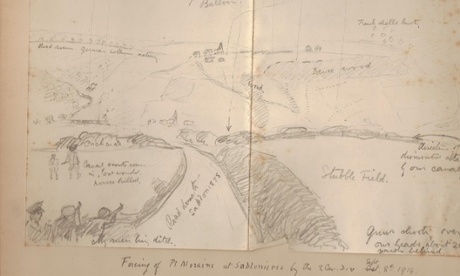
A sketch of the trenches, WW1
A sketch by Captain Nigel Worthington, of the battle at Sablonnieres: ‘My grandfather served in the 3rd Dragoon Guards in the British Expeditionary Force in 1914. On September 8th 1914 he took part in a ferocious successful attack on the Germans at Sablonnieres, forcing them back.’ Photograph: CrispinKeith/GuardianWitness
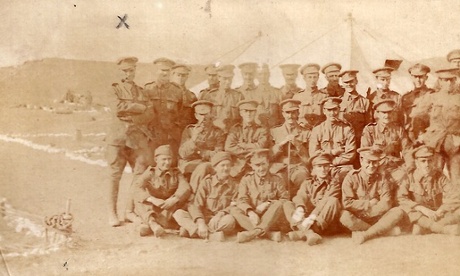
Soldiers having survived Gallipoli
After Gallipoli: Lemnos, Greece, December 1915. My great-uncle Tom Squire after evacuation from Gallipoli. This represents the whole of D Squadron, City of London Yeomanry or all that was left of 160 men after action on the peninsula. Sergeant Squire died near Ramallah in Nov 1917 during the Palestine campaign. Photograph: ID296894/GuardianWitness
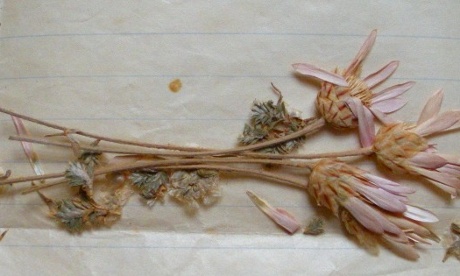
Flowers sent by POW in Turkey to the baby daughter he had yet to meet: My grandfather, John Still, was captured at Gallipoli in September 1915. While a prisoner of war he received news of the birth of his daughter, Eileen, my mother. These flowers were picked on the hillside at Afyonkarahisar.
Flowers sent by POW in Turkey to the baby daughter he had yet to meet: ‘My grandfather, John Still, was captured at Gallipoli in September 1915. While a prisoner of war he received news of the birth of his daughter, Eileen, my mother. These flowers were picked on the hillside at Afyonkarahisar.’ Photograph: Smyrna/GuardianWitness
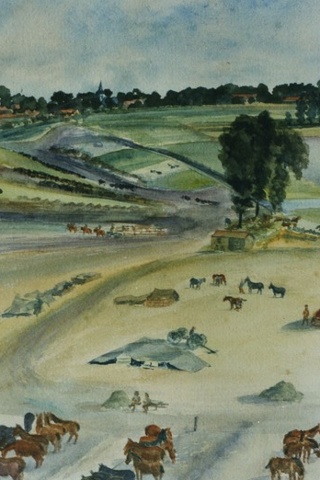
The Somme, August 1915: Reginald Hanson Fawcett served in the Royal Engineers in France and Belgium. He travelled with a small artist's pad and watercolour paints and my family are fortunate to have his unique record of the first world war.
The Somme, August 1915: ‘Reginald Hanson Fawcett served in the Royal Engineers in France and Belgium. He travelled with a small artist’s pad and watercolour paints and my family are fortunate to have his unique record of the first world war.’ Photograph: Tim Brown/GuardianWitness

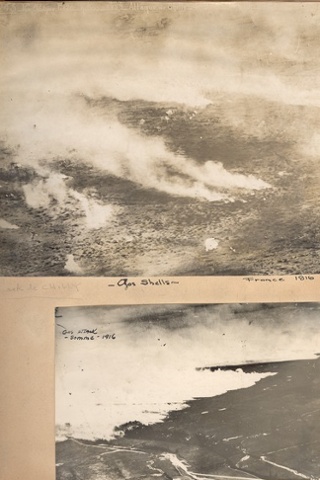
Somme Gas Attack France 1916: My Grandfather was in the air on that day with the RAF. This is page one of an album of aerial photos he collected while in action there. 2nd Lieutenant E.J.Watkins.
Somme Gas Attack France 1916: ‘My Grandfather was in the air on that day with the RAF. This is page one of an album of aerial photos he collected while in action there. 2nd Lieutenant E.J.Watkins. “B” Flight.’ Photograph: Jim Watkins/GuardianWitness

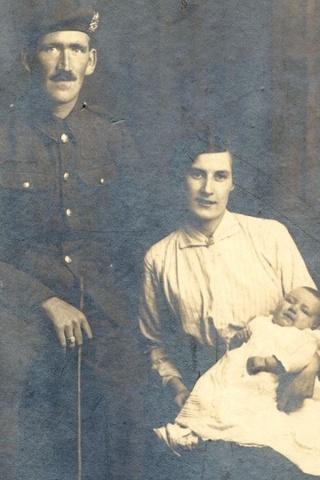
Richard Dale was killed in Mash Valley on the first day of the Somme 1 July 1916: My maternal grandfather Richard Albert Dale, CSM. 1st Bn Tyneside Scottish (Northumberland Fusiliers) with his wife Elizabeth and my mother Muriel (born on 10 Feb 1916.This brief, 'compassionate leave', was the only opportunity he had to see his daughter.
Richard Dale was killed in Mash Valley on the first day of the Somme 1 July 1916: ‘My grandfather Richard Albert Dale, CSM. 1st Bn Tyneside Scottish with his wife Elizabeth and my mother Muriel (born on 10 Feb 1916. This brief, ‘compassionate leave’, was the only opportunity he had to see his daughter.’ Photograph: ID9694510/GuardianWitness
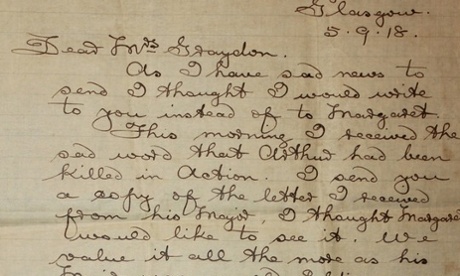
How do you break the news after four years of love letters: A father writing to another father... Dear Mr. Graydon, As I have sad news to send I thought I would write you instead of to Margaret. This morning I received the sad word that Arthur had been killed in Action.
How do you break the news after four years of love letters: ‘A father writing to another father... Dear Mr. Graydon, As I have sad news to send I thought I would write you instead of to Margaret. This morning I received the sad word that Arthur had been killed in Action.’ Photograph: impossibledream/GuardianWitness
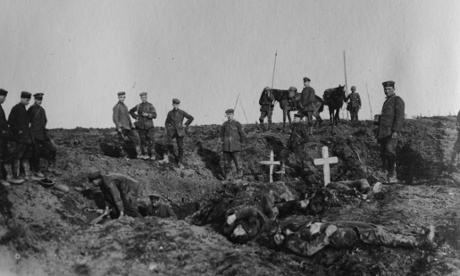
Death: Madness of war. Image taken at the German front by my Grandfather.
Death: ‘Madness of war. Image taken at the German front by my Grandfather.’ Photograph: Jens Darup/GuardianWitness

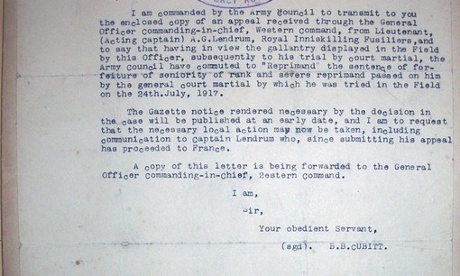
My Great Uncle was ordered to execute one of his own men. He refused: Because of this, Captain Alan Lendrum of the Royal Inniskilling Fusiliers was courtmartialed and demoted.
My Great Uncle was ordered to execute one of his own men. He refused: ‘Because of this, Captain Alan Lendrum of the Royal Inniskilling Fusiliers was courtmartialed and demoted. I found out that the soldier was called Robert Hope, serving under the alias ‘James Hepple’ and was executed on 5th July 1917.’ Photograph: ID6210596/GuardianWitness
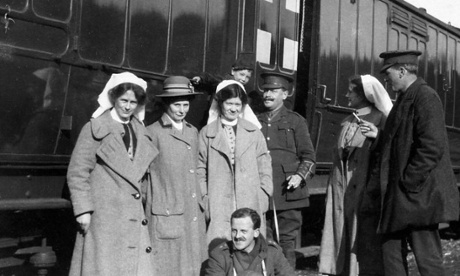
No 16 ambulance train: RAMC (Royal Army Medical Corps) doctors and nurses relaxing during a break from working on No 16 ambulance train which went to and from the front. My grandmother worked here as a British Red Cross Service nurse in 1916 when she took the photo.
No 16 ambulance train: ‘RAMC (Royal Army Medical Corps) doctors and nurses relaxing during a break from working on No 16 ambulance train which went to and from the front. My grandmother worked here as a British Red Cross Service nurse in 1916 when she took the photo.’ Photograph: RosBro/GuardianWitness
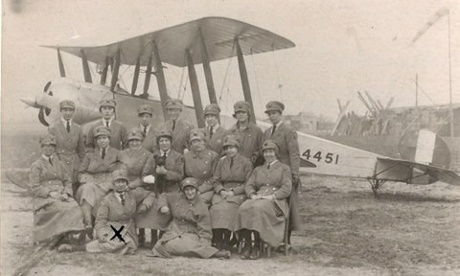
My great Aunt Annie: Annie looks to have been a pilot, but according to her discharge papers she was a rigger (she is the one marked with a cross) She eventually emigrated to America. The plane we think is a Sopwith Pup. Anne was based in RAF Uxbridge and discharged 'exemplary' 08.08.1919.
My great Aunt Annie: ‘Annie looks to have been a pilot, but according to her discharge papers she was a rigger (she is the one marked with a cross) She eventually emigrated to America. The plane we think is a Sopwith Pup. Anne was based in RAF Uxbridge and discharged ‘exemplary’ 08.08.1919.’ Photograph: Wordtaster/GuardianWitness
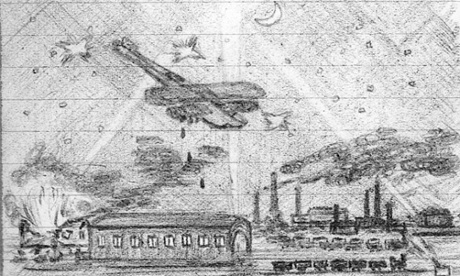
Sketch of plane, WW1.
Jack Chalklin’s war diaries: One of these – September to December 1918, is a notebook purchased while he was a prisoner of war in Germany, he describes how his plane came down during a night bombing raid, how he and his two crew members hid in woods and were eventually captured just over the lines near Metz. Photograph: EleanorBowen/GuardianWitness
George Frederick Kennedy Millar & brother William meet at Suez Canal: My grand father sailed with the Mediterranean Expeditionary Force in March 1915 to Alexandria. His brother William also ended up in the Middle East and the two met at the Suez Canal, an event captured in this photograph.
George Frederick Kennedy Millar & brother William meet at Suez Canal: My grand father sailed with the Mediterranean Expeditionary Force in March 1915 to Alexandria. His brother, William also ended up in the Middle East and the two met at the Suez Canal, an event captured in this photograph. Photograph: andyporter07/GuardianWitness
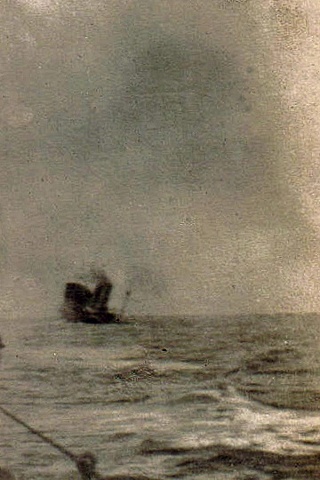
Last scene of SS Cameronia: My paternal Grandfather kept a diary of 1917 and this entry is about the troopship he was on, HMT Cameronia, being torpedoed and sunk off Malta on April 15th 1917. He took this picture from the rescue ship.
Last scene of SS Cameronia: ‘My paternal Grandfather kept a diary of 1917 and this entry is about the troopship he was on, SS Cameronia, being torpedoed and sunk off Malta on April 15th 1917. He took this picture from the rescue ship.’ Photograph: RPGIBBS/GuardianWitness

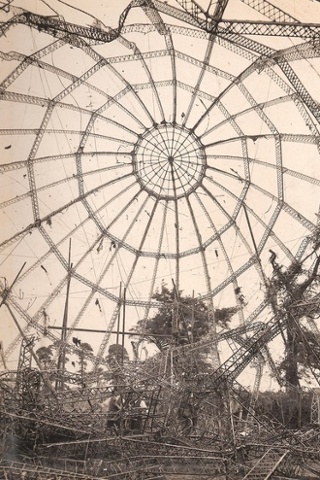
Downed Zeppelin, WW1
Theberton Zeppelin: ‘The remains of the downed Zeppelin L48 at Theberton. Our relative, a photographer with the Royal Flying Corps, kept a private album of his war.’ Photograph: Ubabamkhulu/GuardianWitness

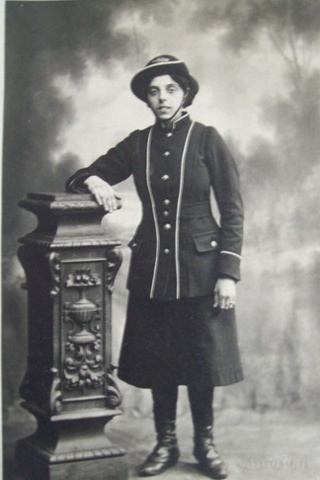
Ruby Vears: This is my Nan who signed up to be a London bus conductress in 1916. This is their winter uniform. Her usual work was as an embroiderer machinist.
Ruby Vears: ‘This is my Nan who signed up to be a London bus conductress in 1916. This is their winter uniform. Her usual work was as an embroiderer machinist.’ Photograph: CllrIanRathbone/Guardi
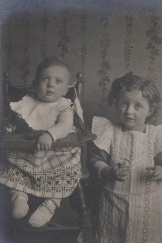
Photo of young German children WW1
My Dad was a German civilian child: ‘Helmut was born in 1910. His father set aside some of their small potato ration in case of emergency, and the officials found them and confiscated them. Later they were near starvation and his school lunch was a sandwich made from acorn flour and wheat chaff.’ Photograph: JuliaFrikGalvin/GuardianWitness
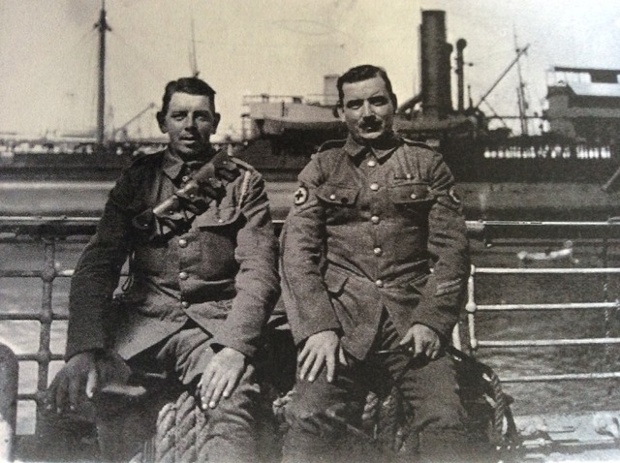
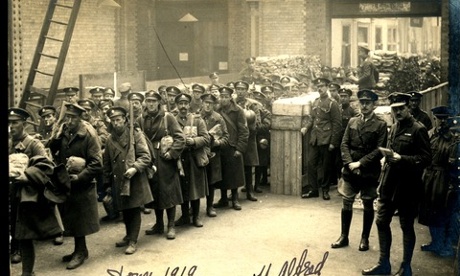
Home at last 1919: My Grandfather Lt Alfred Farnan, who served with the 5th Btln Machine Gun Corps returning to Dover early 1919. He is the officer on the right with a cigarette.
Home at last 1919: My Grandfather Lt Alfred Farnan, who served with the 5th Btln Machine Gun Corps returning to Dover early 1919. He is the officer on the right with a cigarette. Photograph: bsears/GuardianWitness
Sign up to read this article
Read news from 100’s of titles, curated specifically for you.
Already a member? Sign in here
Related Stories
Top stories on inkl right now
Our Picks
Fourteen days free
Download the app
One app. One membership.
100+ trusted global sources.