Good morning.
Joe Biden suffered a painful blow on Tuesday as a crucial vote on his For the People Act – one of his administration’s top priorities – ended in a bruising defeat in Congress.
The vice-president, Kamala Harris, presided over a Senate procedural vote on whether to debate a set of changes to protect voting rights, which resulted in an expected 50/50 deadlock along party lines. Biden would have needed 60 votes to overcome the Republicans’ use of the filibuster – a procedural maneuver that effectively killed the bill. It is not clear what the path forward might look like, Sam Levine writes.
“Every single Senate Republican just voted against starting debate – starting debate! – on legislation to protect Americans’ voting rights,” Chuck Schumer, the Democratic majority leader, vented after the vote. “Once again, the Senate Republican minority has launched a partisan blockade of a pressing issue here in the United States Senate.”
It had been hoped that hundreds of Republican voting measures that would make it harder for Black people, young people and poor people to vote would be offset by Biden’s bill, David Smith writes.
How California plans to pay off $5.2bn in unpaid rent accrued during the pandemic

California is coming to the rescue of hundreds of thousands of tenants who are in rent arrears: it plans to pay off the entirety of outstanding rent from low-income tenants who fell behind during the pandemic, in what could be the largest ever rent relief program in the US.
An estimated 900,000 renters in the state owe an average of $4,600 in unpaid rent, according to a recent analysis.
The state governor, Gavin Newsom, said the $5.2bn plan would pay landlords all of what they are owed while giving renters a clean slate, and is negotiating with legislators.
Experts say the largest state in the US would experience a tsunami of evictions and a dramatic worsening of its homelessness crisis if aggressive protections and relief efforts do not materialise.
Ex-police captain Eric Adams takes early lead in New York mayoral primary

Eric Adams, Brooklyn’s borough president, appeared to take a small lead in New York’s Democratic mayoral primary on Tuesday, but it could be July before it becomes clear who is on top in the first citywide election to use ranked choice voting.
In the early stages of what could be many weeks of ballot counting, it emerged that more Democrats had ranked Adams, a former police captain who co-founded a leadership group for Black officers, as their first choice in the race than any other candidate, although 207,500 absentee ballots are yet to be counted, Adam Gabbatt writes.
In the Republican primary, the Guardian Angels founder, Curtis Sliwa, defeated the businessman Fernando Mateo. Ranked choice voting was not a factor because there were only two candidates in the race.
Britney Spears will speak in a Los Angeles court on controversial conservatorship

Britney Spears will directly address a Los Angeles courtroom on Wednesday, offering rare testimony in her battle against her father’s control over her affairs.
The legal guardianship has governed the pop star’s life for 13 years and sparked a campaign under the hashtag #FreeBritney to protest against the unusual arrangement that has stripped the singer of her independence since 2008, when her father, Jamie Spears, was given control over her estate, career and other aspects of her personal life.
Spears, 39, has for years strongly objected to the conservatorship, it emerged yesterday in a New York Times report on confidential documents revealing the star’s opposition to her father’s grip on her life.
In other news …

Hong Kong’s pro-democracy tabloid Apple Daily has announced it will publish its final issue on Thursday. The paper and its now-jailed founder, Jimmy Lai, , had become powerful symbols of the pro-democracy movement and a thorn in the side of Hong Kong’s government and police. Last week, five editors and executives were arrested and it had $2.3m in assets frozen under the city’s sweeping new national security law.
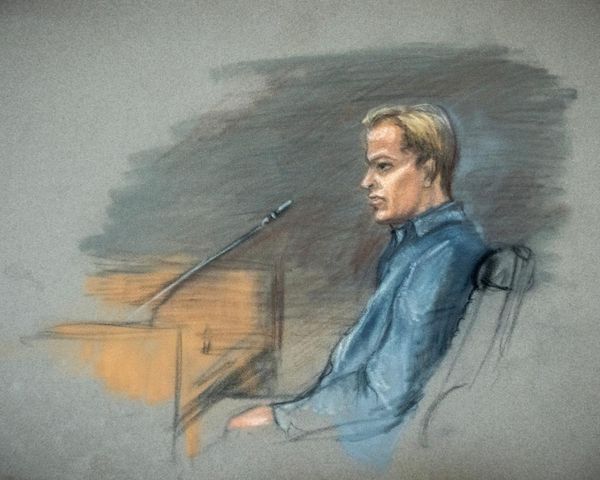
Also on Wednesday, the first trial under the law began without a jury – two watershed moments for the financial hub’s legal system. The trial of Tong Ying-kit, 24, who was arrested the day after the law came into effect on 1 July last year, will be seen as a key legal test for whether the slogan “Liberate Hong Kong, revolution of our times” is now illegal.
China has issued a furious response after Canada condemned the country’s human rights record. In an exchange at the UN human rights council on Tuesday, Canada led more than 40 countries in expressing serious concerns over Beijing’s repressive actions in Xinjiang, Hong Kong and Tibet, prompting a seething response from Beijing over Canada’s colonial history.
The Texas governor, Greg Abbott, has vetoed a bill aimed at protecting dogs from abuse, in a decision that surprised lawmakers after it passed with bipartisan support, Sarah Betancourt writes.
Stat of the day: by 1926, more than 80% of America’s Indigenous school-age children had been forced into assimilation boarding schools

For more than 150 years since the Indian Civilization Act of 1819, hundreds of thousands of Indigenous children in the US were taken from their communities and sent to boarding schools that focused on assimilation, while in Canada, more than 150,000 First Nations children were forced to convert to Christianity in state-funded schools and never speak their languages.
Don’t miss this: meet the people trying to sell their memes for millions

Previously, people who owned viral photos made little money from them. Now the owners of the “original” snaps can potentially sell them for eye-watering sums. But are buyers savvy investors – or unwitting dupes? Sirin Kale takes a dive into the world of non-fungible tokens generating fortunes.
Last Thing: not all is fish that comes to the net it seems, as lab analysis of Subway tuna subs fails to find species’ DNA

Fancy that: a lab test commissioned by the New York Times has failed to identify any tuna DNA in a series of Subway tuna sandwiches. “There’s two conclusions,” a lab spokesperson told the newspaper. “One, it’s so heavily processed that whatever we could pull out, we couldn’t make an identification. Or we got some and there’s just nothing there that’s tuna.” Whether this report will get Subway to change its tuna remains to be seen, after the restaurant chain earlier this year dismissed a customer lawsuit claiming the product was “made from anything but tuna” as “baseless”, and offered a 15% discount on tuna subs under the promo code “ITSREAL”.
Sign up
First Thing is delivered to thousands of inboxes every weekday. If you’re not already signed up, subscribe now.
Get in touch
If you have any questions or comments about any of our newsletters please email newsletters@theguardian.com