Good morning.
The film director Chloé Zhao made history at the Oscars last night, becoming the first woman of colour – and only the second woman ever – to be named best director. Zhao won for Nomadland, starring Frances McDormand as a woman who lives out of her van, as she interacts with real-life nomads. McDormand took home her third best actress Oscar for the role.
Breaking with the tradition set by most ceremonies over the past year, the Oscars banned Zoom dial-ins, instead filming in a series of hubs over the world, where presenters, nominees and their one guest gathered in person.

There was a bit of an upset over the best actor nomination, with many expecting it would posthumously go to Chadwick Boseman for his performance in Ma Rainey’s Black Bottom. Instead, Anthony Hopkins won for his role in The Father – justifiably, according to our film critic Peter Bradshaw – but he wasn’t around to give a speech.
Bradshaw described the night as “a weirdly subdued and anticlimactic affair”, but said Nomadland’s win was a “wonderful coup for a genuinely original and daring film-maker”. Other firsts include:
Youn Yuh-jung became the first Korean actor to win an Oscar, collecting a best supporting actress award for her role in the family drama Minari. This meant Glenn Close was pipped at the last moment, in what has become an Oscars tradition (she has been nominated eight times, and not yet taken one home).
Mia Neal and Jamika Wilson were the first black winners for costume design and best makeup and hairstyling for their work on Ma Rainey’s Black Bottom, with Neal saying: “I know that one day it won’t be unusual or groundbreaking, it will just be normal.”
And guess what? The Guardian won its first Oscar for best documentary short film, Colette, about a French resistance fighter. You can read the full list of winners here.
From Glenn Close twerking to, well, the whole of Youn Yuh-jung’s memorable acceptance speech, you can read about the key moments in the ceremony here. You can also delve into a picture gallery of the most memorable outfits, complete with highly enjoyable commentary from our fashion team.
A congresswoman said the officer who shot Ma’Khia Bryant ‘responded as he was trained to do’
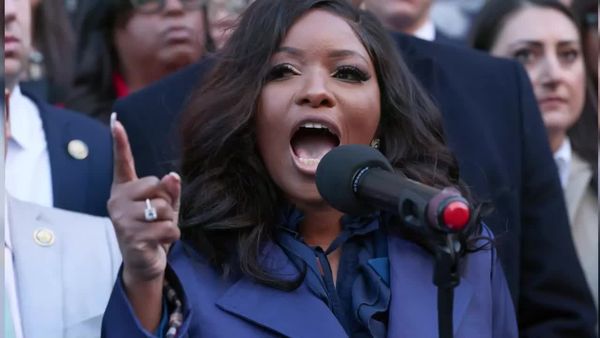
The officer who fatally shot a black teenager in Ohio last week “responded as he was trained to do”, a Democratic congresswoman and former police chief said this weekend. Val Demings
said police had to make split-second decisions, and that the officer acted with “the main thought of preventing a tragedy and a loss of life of the person who was about to be assaulted.”
Ma’Khia Bryant, 16, was shot and killed on Tuesday by police. In body camera footage of the incident, Ma’Khia appears to swing a knife at another person before she is shot by an officer. Her death has led to renewed protests against police killings.
Would the officer’s conduct be banned under the new police reform bill? No. The officer’s actions would still be protected under the George Floyd Justice in Policing Act, which has passed the House. The bill would restrain police from using excessive force unless a third party is in danger and de-escalation was not possible.
Where is police reform at? Democrats and Republicans are in ongoing talks about police reform in the US, but it would not be the first time we have seen bipartisanship fail. Daniel Strauss analyses the political moves, and obstacles, around police reform.
How has Biden handled a turbulent first 100 days?

Joe Biden took office in the midst of a global pandemic and shortly after an insurrection at the Capitol which rocked the foundations of US democracy. Since then, his administration has also seen the landmark trial of Derek Chauvin, and led a monumental change in the US’s approach to the climate crisis.
From the vaccine rollout to his spending plans, Lauren Gambino looks back at the first 100 days of the Biden administration.
Arizona Republicans are still trying to contest the election result, making an unprecedented effort to audit results in the most populous county. The state senate used its subpoena power to seize the ballots, counting machines, and data hard drives. The information was then given to Cyber Ninjas, a Florida company with no experience in elections – but connections to conspiracy theories.
In other news …
![Anthony Fauci, Biden’s chief medical adviser, said the Centers for Disease Control and Prevention and Food and Drug Administration were ‘the gold standard for both safety and the evaluation of [vaccine] efficacy’.](https://media.guim.co.uk/21618f2e6fe46049709303c19bc3958efce050a4/0_0_3318_1990/1000.jpg)
Dr Anthony Fauci said the pause of the Johnson & Johnson coronavirus vaccine should increase confidence in the vaccine rollout, rather than hinder it, as it highlighted the health agencies’ focus on the safety of the inoculations. On Friday, an independent panel voted in favour of resuming the jab after a pause to review rare cases of blood clotting.
A man who has lived alone on a Mediterranean island for 30 years is leaving after pressure from authorities. After discovering by chance the island’s caretaker was about to retire, Mauro Morandi, now 81, ditched the sailing trip he was on and took over. However, authorities have threatened him with eviction, as they want to reclaim the island and turn into a ‘hub for environmental education’.
Greece has been accused of ‘shocking’ levels of violence as it pushed back against the arrival of refuges and migrants, in a court case issued by an NGO at the European court of human rights.
Stat of the day: 3m fewer vaccines were ordered for children during the coronavirus pandemic
With health resources diverted to help hospitals cope with coronavirus, preventive care services such as childhood vaccinations and screenings took a hit, as did testing for sexually transmitted diseases and substance abuse services. Doctors and nurses ordered 3m fewer vaccinations for children, and at least 400,000 children missed screenings for lead, a toxic heavy metal.
Don’t miss this: it’s been 10 years since Gaddafi’s fall. Why don’t we remember it?
The fall of Gadaffi’s brutal police state has often been overshadowed by the devastation in Syria, with the lessons of the regime’s collapse and subsequent conflict largely forgotten, writes Peter Beaumont. Here, he reflects on the events and the violence and instability that followed, and how they impacted the rest of the world.
Last thing: Turkmenistan dedicated a holiday to its enormous national dog breed

Turkmenistan’s leader has already written an ode to the country’s celebrated and extremely large national dog, the Alabai, and erected a gilded moment to it. But now the country has gone further, introducing a new national holiday dedicated to the dog, with the first holiday taking place on Sunday. It featured a contest to find the best Alabai dog, a courage award to a border service dog, and a race.
Sign up
First Thing is delivered to thousands of inboxes every weekday. If you’re not already signed up, subscribe now.