Good morning.
While the daily focus has shifted to other issues, coronavirus continues its steady march across the US and the world. Global confirmed cases of have passed 9 million, with 2.3 million in the US alone. Infections are rising in 29 US states, with several breaking their own daily records. On Monday, Donald Trump reiterated his claim that increased testing is to blame, tweeting:
It makes us look like we have more cases, especially proportionally, than other countries.
In Texas, the governor, Gregg Abbott, insists the state will remain “wide open for business” despite an average 3,200 people a day being admitted to hospital with the disease. In California, officials are imploring people to wear face masks after a record 3,700 hospitalisations on Sunday – higher than the state’s April peak. New York City, by contrast, has moved to the second phase of its reopening after suffering the country’s deadliest outbreak to date.
Nine types of hand-sanitizer could be toxic, the Food and Drug Administration has warned, advising consumers to avoid any such products manufactured by the Mexico-based company Eskbiochem.
The world’s fastest supercomputer is looking for a cure. Fugaku, a Japanese machine that can perform more than 415 quadrillion computations a second, is using its capacity to identify potential treatments for Covid-19.
Trump hopes to relaunch his campaign – again – in Arizona

Donald Trump was reportedly incandescent about his failure to draw a capacity crowd to his comeback rally in Oklahoma at the weekend. On Tuesday, the president heads to Arizona – another state experiencing a spike in coronavirus infections – to try to get his campaign on track with a visit to his beloved border wall.
Meanwhile, Trump and his controversial attorney general, William Barr, appear to be laying the groundwork for claims of election fraud with their continuing false claims about mail-in voting. The department of justice is meant to be the country’s top voting rights enforcer, writes Sam Levine. But expert observers say that, under Barr, it is instead working to advance Trump’s political interests.
Trump extended a ban on foreign worker visas to the end of 2020, in an executive order issued on Monday. The White House suggested the ban would preserve US jobs amid the coronavirus crisis, but technology firms – who make frequent use of H-1B visas – criticised the move as “short-sighted”.
The president insists his China trade deal is ‘fully intact’, contrary to the claims of top White House trade adviser Peter Navarro, who told Fox News the deal was “over” as a result of Beijing’s handling of the pandemic.
Police spend millions to stop overhaul in the biggest US cities

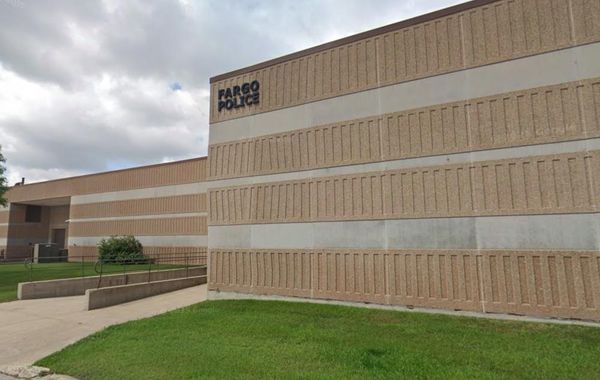
Despite the public outrage generated by high-profile killings of unarmed black men, police unions have succeeded in blocking most recent efforts to reform US law enforcement. A new Guardian analysis of federal campaign finance records may help to explain why: unions and police officers in the US’s three largest cities – New York, Los Angeles and Chicago – spend tens of millions of dollars every year to influence law enforcement policy.
For the Today in Focus podcast, Ankita Rao explains how Newark’s new mayor is leading a drive for change in a city with a long and undistinguished history of police brutality.
Authorities in Seattle plan to dismantle ‘Chaz’, a six-block section of the city vacated by police and occupied by protesters, after a second shooting in the area in less than 48 hours.
US water infrastructure ‘resembles a developing country’

In 2010, the UN declared clean water to be a human right. Yet a decade later, millions of Americans lack basic indoor plumbing, more than 100 million are exposed to toxic chemicals in their drinking water, and water bills have risen by an average of 80% across 12 US cities, in a cascading crisis of water affordability.
The Guardian is tackling the subject of the US water crisis with a landmark series, in partnership with Consumer Reports and others – and we’re asking for our readers’ help to test the water quality in your area. As Bernie Sanders and the Michigan congresswoman Brenda Lawrence argue, it is time clean water ceased to be a source of government profit, and became a basic right:
Unbelievably, when it comes to water infrastructure, America’s challenges resemble those of a developing country. The American Society of Civil Engineers gives our drinking water infrastructure a ‘D’ grade and our wastewater infrastructure a ‘D+’.
In other news…

US cities are experiencing a boom in illegal fireworks, with pyrotechnic-related complaints 236 times higher than usual for the first three weeks of June in New York City alone. Authorities attributed the rise to the boredom of lockdown, and to celebrations over the progress made by recent protests.
An American soldier plotted with British occultist neo-Nazis from a group known as the Order of the Nine Angles (O9A) to attack and kill members of his own US Army unit, according to an indictment unsealed this week by New York prosecutors.
Another botched restoration of a Spanish baroque artwork, this time by a furniture maker who attempted to touch up a copy of The Immaculate Conception by Bartolomé Esteban Murillo, has led to calls from experts for a tightening of the country’s laws on art conservation.
Great reads

How the Salisbury poisoning left Russia’s spies exposed
During the cold war, the Russian GRU spy agency was feared and admired. But the botched 2018 operation to murder one of its former officers in England – and the ease with which the would-be assassins were identified by digital journalists – showed just how far the quality of Russian espionage has fallen. Luke Harding reports.
The search for the Golden State Killer
Just as documentarian Liz Garbus began work on her HBO adaptation of I’ll Be Gone in the Dark – the writer Michelle McNamara’s account of her efforts to identify the serial rapist and murderer known as the Golden State Killer – a suspect was arrested at last, Garbus tells Charles Bramesco.
Are 100 Gecs the world’s strangest band?
100 Gecs’s gonzo sound initially led listeners to believe they were being ironic. But the electronic duo are deadly serious, they tell Hannah Ewens. “We’re not doing this to be ironic. The opposite resonates as really true.”
Opinion: a border clash shows the limits of Modi’s rhetoric
Tensions are high on the border between India and China, where 20 Indian soldiers died in a hand-to-hand skirmish with Chinese troops last week. China’s overwhelming military might exposes the hollowness of the Indian leader’s tough talk, says Mukul Kesavan.
Despite India’s economic progress since it liberalised its economy in the early 90s, the gap between it and China in terms of per capita income, infrastructure, both military and civil, and science and technology has a grown at a rate that embarrasses India’s political elite and demoralises an otherwise bullishly nationalist middle class.
Last Thing: Barcelona opera’s green recovery
The El Liceu opera house in Barcelona reopened on Monday with a performance for an audience of almost 3,000 – 3,000 potted plants, that is. The Spanish artist Eugenio Ampudia, who conceived the concert, said the country’s coronavirus lockdown had inspired him to “relate in a much more intimate way with people and nature”.
Sign up
First Thing is delivered to thousands of inboxes every weekday. If you’re not already signed up, subscribe now.