Canberra's Matilda House and Paul House will join more than 35 artists from around Australia in contributing to the National Gallery of Australia's fourth triennial celebrating First Nations art.
National Gallery of Australia senior curator-at-large Hetti Perkins, an Arrernte and Kalkadoon woman, is collaborating with a team of gallery curators for Ceremony, which opens in November.
The event will showcase the centrality of ceremony in the artist's work and how it connects their community, culture, and country.
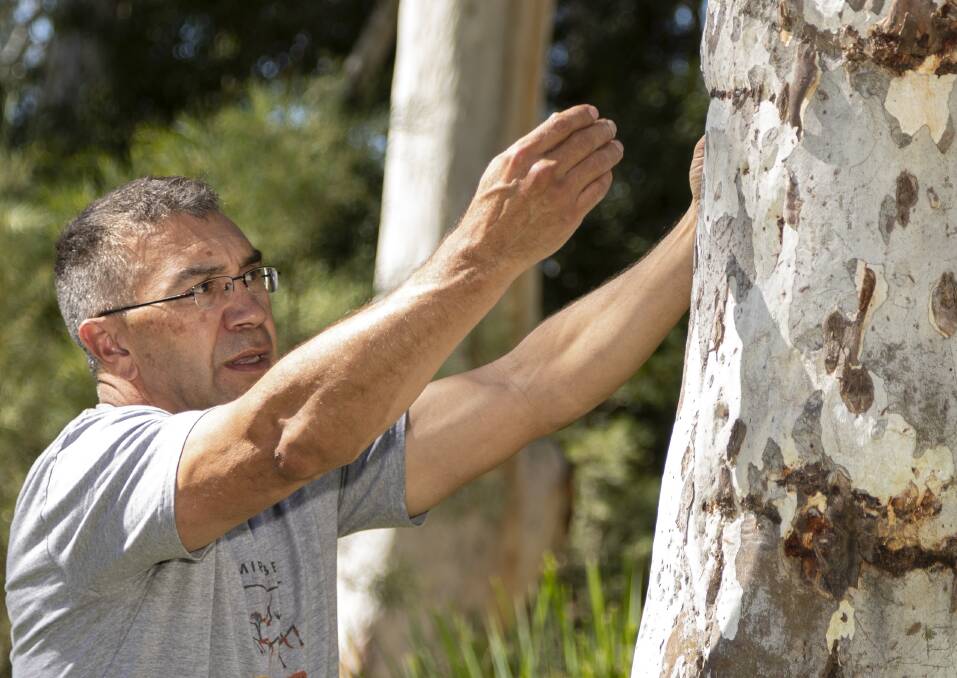
A significant focus for the exhibition will be engagement with regional traditional custodians. Canberra's Ngambri-Ngunnawal elder Dr Matilda House and her son Paul House will inaugurate murruwaygu, a permanent public art installation of traditional Aboriginal tree scarring in the National Gallery Sculpture Garden.
"Australia is home to the world's oldest continuous cultural tradition, and it continues in ways today that are very much connected to what artists have done over millennia," Perkins said.
"Ceremonies are perceived as traditional and historical, yet, in fact, the ceremonial act, whether it be an intimate ritual or public demonstration, is an important part of everyday life.
"Ceremony makes the point that our culture has survived - not only over the many thousands of years but, particularly, the last couple of hundred years - because of its capacity for innovation and adaptability. That is something that distinguishes the work of our artists today."
The exhibition will bring together a diverse range of artists working independently and in collectives in a variety of art forms.
Dancer and choreographer Joel Bray is developing a new screen-based work that explores his embodied relationship to country as a queer Wiradjuri man. In a first for the renowned Papunya Tula art centre, Mantua Nangala is creating a major new triptych depicting a significant ancestral women's site near the salt lake Wilkinkarra (Lake Mackay) in remote Western Australia.
Artists from the Yarrenyty Arltere and Tangentyere Artists collectives - led by Marlene Rubuntja - are collaborating in Mparntwe (Alice Springs) to create a soft sculpture in the form of a Blak Parliament House - an Aboriginal take on Australia's political heartland.
Wiradjuri artist and writer SJ Norman will present his Bone Library performance, where the artist will inscribe cattle and sheep bones with Walgalu words to interrogate the impacts of colonisation on culture and country.
"I'm really interested in the local culture and the local traditions of this place - Canberra is a very contested site. It is a place that is both politically and socially loaded, and we're inviting artists to explore these ideas," Perkins said.
"The idea of artists as 'radical agents' is central to Ceremony; with works that are active, works that are activist, works that activate."