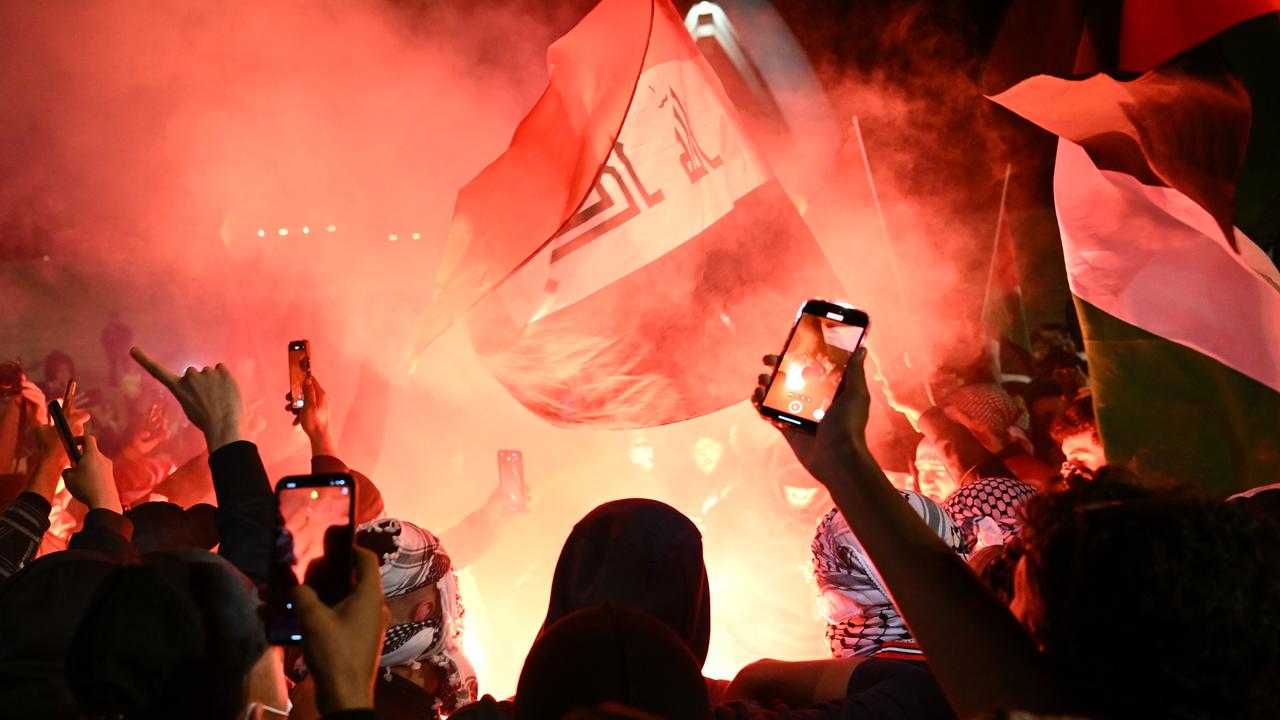
The response to a rally outside the Opera House at which some demonstrators used anti-Semitic slurs was a missed opportunity, an inquiry has been told.
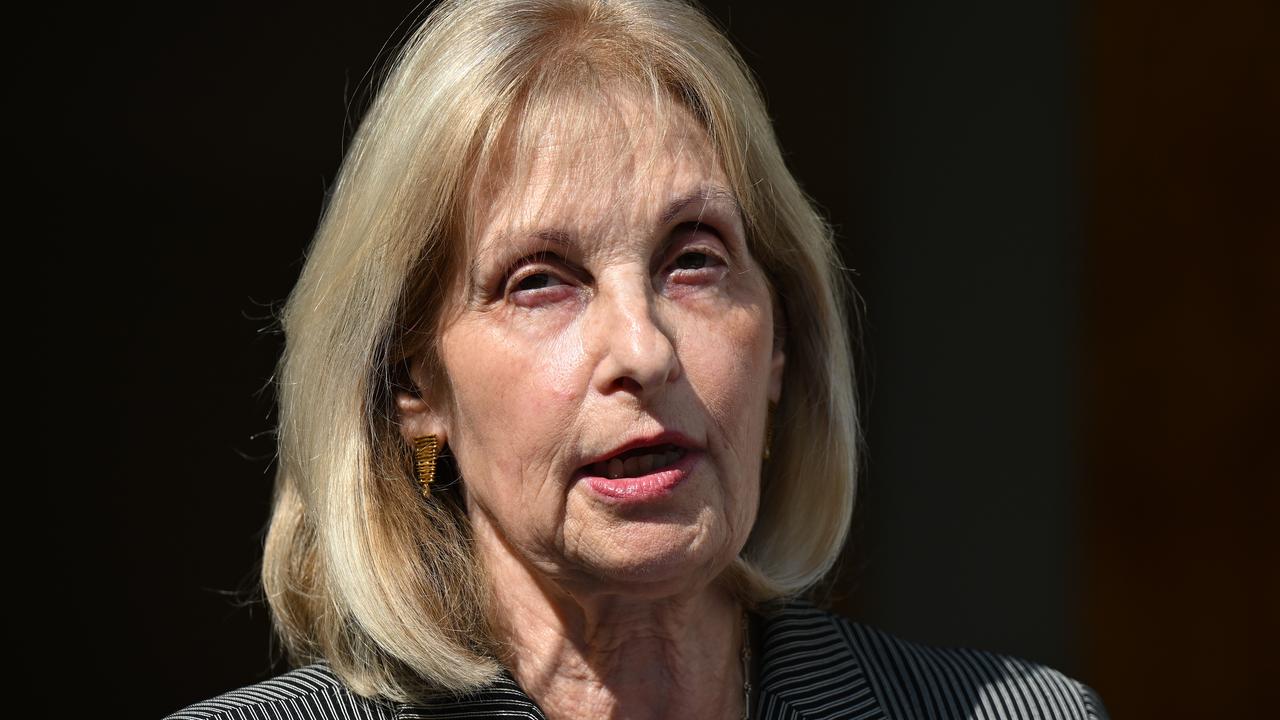
Australia's special envoy to combat anti-Semitism, Jillian Segal, said on Thursday the October 9, 2023, rally - two days after deadly attacks by Hamas on Israel - was a "critical turning point in the development of anti-Semitism in Australia".
The decision by police to allow the rally, during which chants of "f*** the Jews" were used, was criticised by many in the Jewish community, who were warned to avoid the area for their safety.
Others have argued the NSW government's decision to light the sails of the Opera House with the colours of the Israeli flag on that day was a misstep.
The Royal Commission on Anti-Semitism and Social Cohesion is holding two weeks of public hearings into the lived experiences of Australia's Jewish community.
"We saw joy in some places at the outbreak of what we saw at October 7," Ms Segal told the commission on Thursday.
"The response of the authorities was such that it was not stopped, and the community was to now be on watch.
"It was a unique moment that was missed. If that had been dealt with differently, we might have had a different trajectory."
National Council of Jewish Women of Australia president Lynda Ben-Menashe told the inquiry on Thursday the silence that followed the October 7 attack was very upsetting to many Jewish people.
"The silence of many people that I knew; people not asking how we were, how we felt," she said.
Ms Ben-Menashe said relationships with some of her family and friends had suffered because they perceived her as a supporter of genocide in Gaza.
"How could I be a supporter of genocide?" she said.
"I'm a human being. I have Palestinian friends. I have Israeli friends."
Ms Segal said separate from radical Islamic and Neo-Nazi groups, the fastest-growing form of anti-Semitism in Australia was the conflation of the actions of the Israeli government with Jewish people.
"You can criticise the actions of the Israeli government in the way that you could criticise the actions of any government," she said.
"But when you then start criticising the existence of the State of Israel ... or you criticise the Jews, then I think you are stepping into different territory."
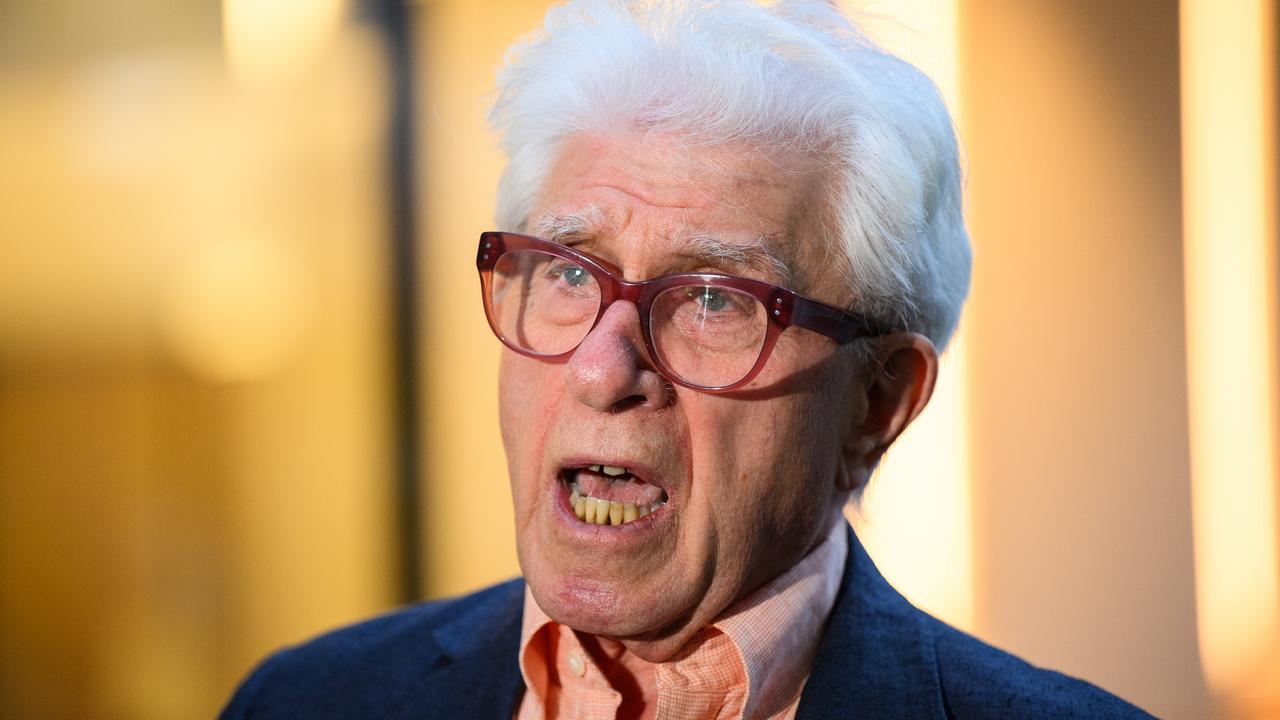
Former newspaper editor Michael Gawenda told the inquiry on Thursday the relative silence on anti-Semitism in Australia was a "failure of journalism".
Mr Gawenda, who was editor of The Age newspaper from 1997 to 2004, accused the Australian media of failing to report on the lived experiences of the Jewish community and instead giving voice to claims anti-Semitism was a concocted notion to try and silence criticism of Israel.