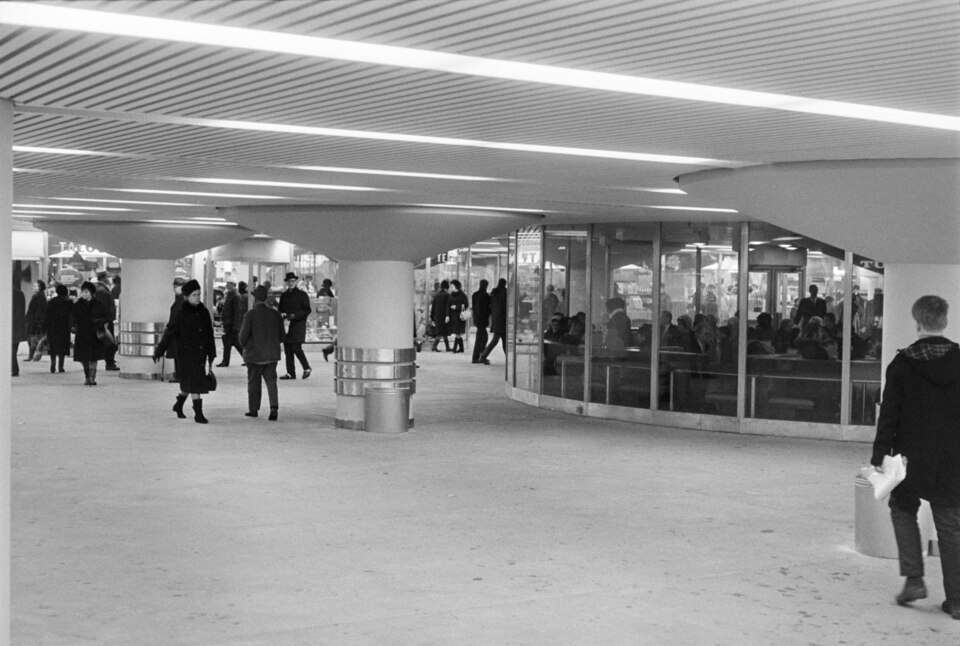
Beneath the streets of Finland's capital lies a vast network of tunnels and facilities carved into solid granite. Hidden below Helsinki is a vast network of underground tunnels, sports centres, swimming pools, parking facilities and utility spaces that serve everyday purposes during peacetime but can rapidly transform into blast-resistant civil defence shelters if war or another major emergency strikes.
Get breaking news anytime, anywhere. Download the TOI app now!
Unlike conventional bunkers, Helsinki's underground facilities serve a dual purpose. People use these facilities for leisure, transport, and parking, while emergency equipment is kept ready to convert them into shelters for hundreds of thousands of people. The underground facilities are built into the city's solid bedrock and are widely regarded as a leading example.
A hidden underground city built for everyday life and national security
Helsinki's underground infrastructure has been developed over decades, taking advantage of Finland's exceptionally strong granite bedrock. Engineers have excavated hundreds of underground facilities that include swimming pools, sports halls, shopping areas, parking garages, utility tunnels, data centres and metro stations, all connected through carefully planned subterranean routes.
The city adopted an Underground Master Plan to coordinate future underground construction while preserving space for essential infrastructure. Rather than viewing underground construction solely as emergency preparedness, planners integrated these facilities into everyday urban life, ensuring they remain economically useful while being ready for crises.
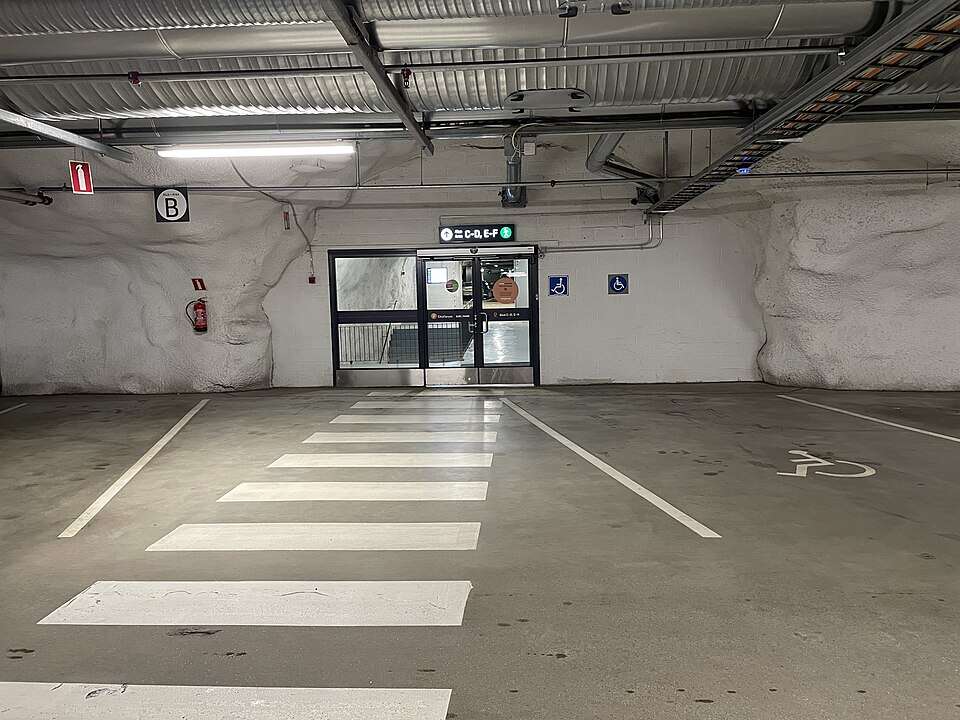
One of the best-known examples is the Itäkeskus underground swimming hall, which normally welcomes around 1,000 visitors at a time. If necessary, it can be converted into a shared civil defence shelter capable of protecting approximately 3,800 people. Similarly, several underground parking facilities, sports arenas, and recreational centres are equipped with reinforced structures, blast doors, emergency ventilation systems, and other protective features that allow them to become shelters within a short period.
Even Helsinki's underground metro stations were designed with emergency use in mind. Stations between Sörnäinen and Ruoholahti are equipped with civil defence systems, allowing them to function as large public shelters during emergencies while serving as normal public transport hubs the rest of the time.
The dual-use approach is what has made the underground construction programme worth the investment. The logic is that facilities with everyday uses are more valuable than bunkers left empty most of the time.
How Finland's civil defence system protects almost an entire city
Finland's commitment to civil defence dates to the years after World War II, when legislation began requiring protective shelters in larger buildings. Today, buildings exceeding certain floor-area thresholds must include civil defence shelters or secure access to a nearby shared shelter.
As noted by Ilkka Vähäaho in his study on Helsinki's underground civil defence system, there are some 5,500 civil defence shelters in Helsinki which provide some 900,000 shelter places – more than sufficient for the city's total number of 675,000 inhabitants. These shelters include communal shelters, multi-building shelters, and property shelters, which are constructed under housing and business buildings.
The shelters are designed to protect civilians from blast waves, building collapse, radiation, and toxic gases. In Finland, there are different protection classes of shelters, and the biggest one is the S6-class rock shelters built deep in rock and capable of withstanding very high explosion pressures.
In peacetime, however, these shelters rarely resemble military installations. Many function as gyms, indoor sports facilities, children's play areas, warehouses, or parking garages. This approach keeps the facilities maintained, economically useful, and familiar to the public instead of leaving them unused for decades.
Property owners are legally responsible for maintaining private shelters, conducting regular inspections, and ensuring emergency equipment remains operational. Public shelters are managed by municipal authorities, while trained volunteers and emergency services regularly prepare for their operation if needed.
defence
A model attracting global attention as security concerns grow
Finland's underground preparedness strategy has gained increasing international attention in recent years as governments reassess civilian resilience in response to modern security threats and geopolitical instability. Foreign delegations from Europe and elsewhere have visited Helsinki to study how the city integrates civil defence into everyday infrastructure. The system has drawn interest not only because of its engineering but also because it demonstrates how emergency preparedness can coexist with normal urban development instead of competing with it.
Research published by Ilkka Vähäaho also highlights that Helsinki's extensive network of rock-carved shelters represents decades of coordinated planning between urban planners, engineers, and emergency authorities. The city's Underground Master Plan ensures that future construction protects valuable underground space while expanding the network to meet the needs of a growing population.
Finland's broader shelter network is equally remarkable. According to Finland's Ministry of the Interior, the country has approximately 50,500 civil defence shelters with a capacity for around 4.8 million people, making it one of the most comprehensive civilian protection systems in the world relative to its population. Shelters are particularly concentrated in urban areas, with the Greater Helsinki region having more shelter spaces than residents.
Beyond military preparedness, the underground network also improves urban resilience by housing essential infrastructure away from harsh weather and surface congestion. Stable underground temperatures reduce energy consumption for certain facilities, while protected utility tunnels simplify maintenance and reduce disruption to city streets.
As cities worldwide confront growing challenges ranging from climate change to infrastructure resilience and geopolitical uncertainty, Helsinki's underground city demonstrates how carefully planned subterranean spaces can serve multiple purposes. By combining sports halls, swimming pools, shopping facilities, transport systems and emergency shelters within the same network, Finland has created an underground city that supports everyday life while remaining ready to protect its citizens should the unthinkable occur.