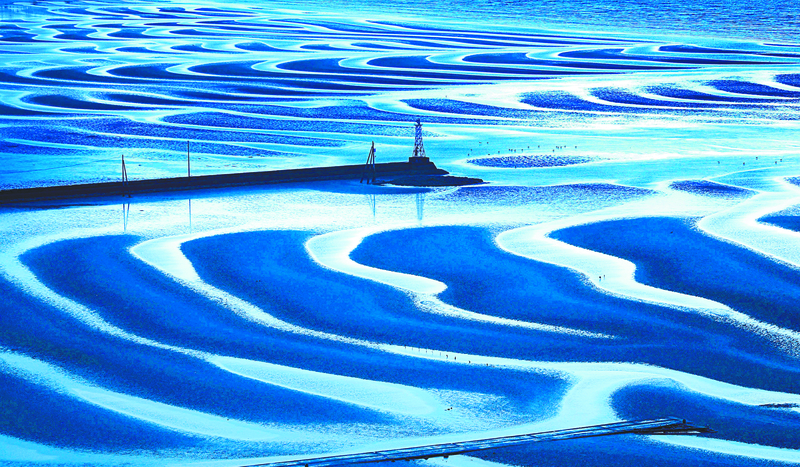
If seen in the right light during the ebbing tide, Okoshiki Beach in Uto, Kumamoto Prefecture, looks like it's covered in shining crescent moons.
These ridged marks in the sand, called samon in Japanese, are the pride of the city situated along the Ariake Sea and are best seen from a spot on a nearby hill. The coast of the Uto Peninsula, which includes Okoshiki Beach, is about eight kilometers long. Tidal flats along the coast can be as vast as 800 meters at low tide and is the largest area for viewing the unique marks. In March, the beach was designated a scenic spot by Kumamoto Prefecture.
The panorama gives the illusion you could reach out and touch distant Shimabara Peninsula and Mt. Unzen.
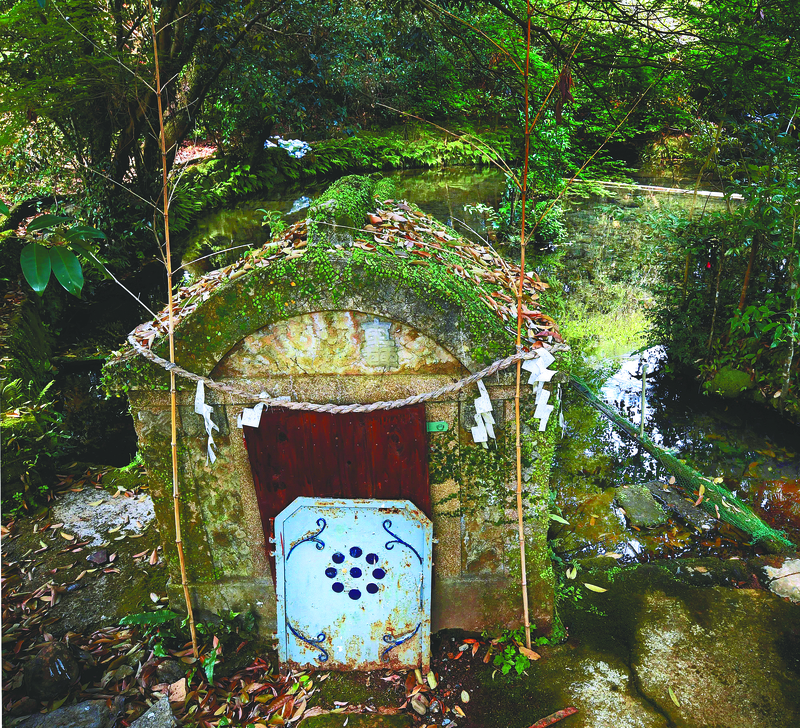
"Scientifically, it's unclear why the crescent shapes form, but it must have something to do with the difference between high and low tides and the inlet," said Toshinobu Kawano, 58, who helps manage the site.
The Ariake Sea is Kyushu's largest bay, offering the greatest difference between high and low tides in Japan of more than six meters.
The tides, waves and geography's effect on the waves all come together to create something not only beautiful to look at, but rich in nutrients for seaweed and shellfish.
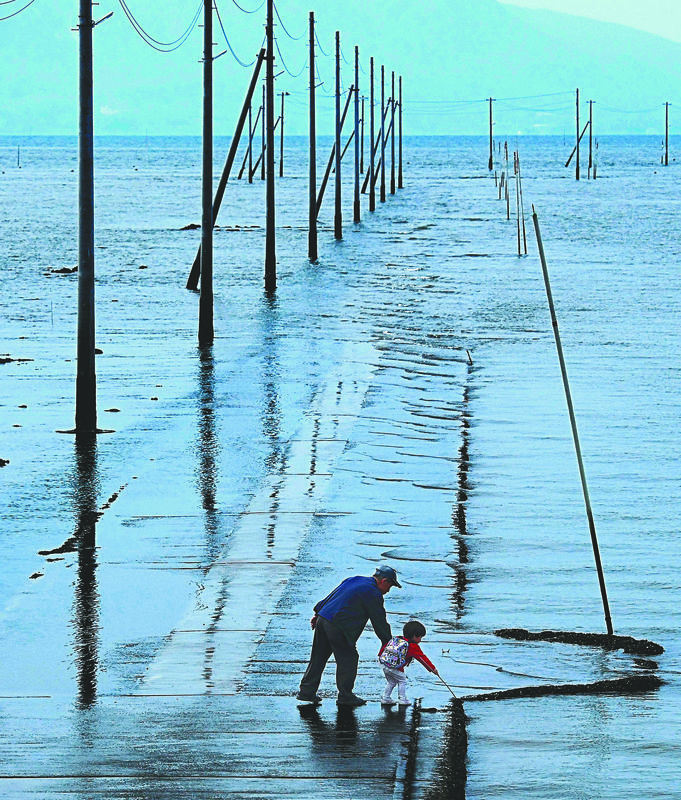
Legend has it when Emperor Keiko visited Kyushu in the fourth century, he stopped here to enjoy the beauty of the coast. This is said to be the origin of the beach's name, which roughly translates as "a pleasant visit."
With the recent popularity of viewing the setting sun over the rippled marks on a beach, locals have worked to make Okoshiki a scenic destination, especially on days in February to May when low tides coincide with sunset.
"We were a big producer of mikan in the late 1960s and early 1970s, but there weren't enough people to take over the farms, and the orchards became overgrown," said Kawano, who lives nearby.
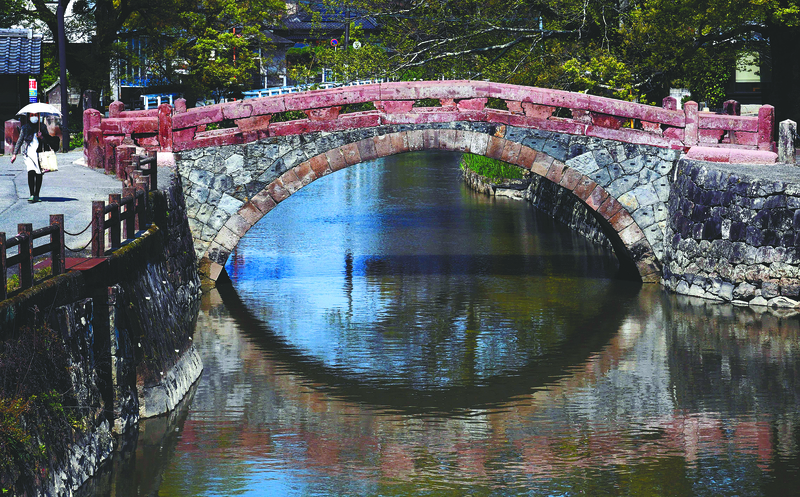
Kawano could not stand to let a local senior citizens' club take care of the fields, so he began cutting the grass about 10 years ago. He had been working a delivery job but had to take time off because of a lung illness.
When more people started visiting the site, he asked the mayor to build a toilet and fence. Four years ago the city hired him to manage the area and guide visitors.
He uses social media to post pictures, parking information and other information about the site.
"I'm happy when people are happy to visit. My body's also gotten stronger," he laughed. "Some people come and go not knowing about the tides. The scenery is different if you're in the know."
UTOMESHI is an initiative for locals to share what they love about Uto. For the past four years, the group has been holding breakfast events with meals made using local ingredients.
"There were three of us when we started, and it's kept growing. Our goal is to build connections between people," said Koji Hijikuro, 41, who represents the group. "Untouched nature is great, but in addition to the visual aspect, I think scenery that people helped make can be beautiful as well."
Sometimes people get too close to nature, as evidenced in the tidal flats lost to development around the country.
Ridged tidal scenery, representing a balance between humans and nature, is nothing short of a miracle.
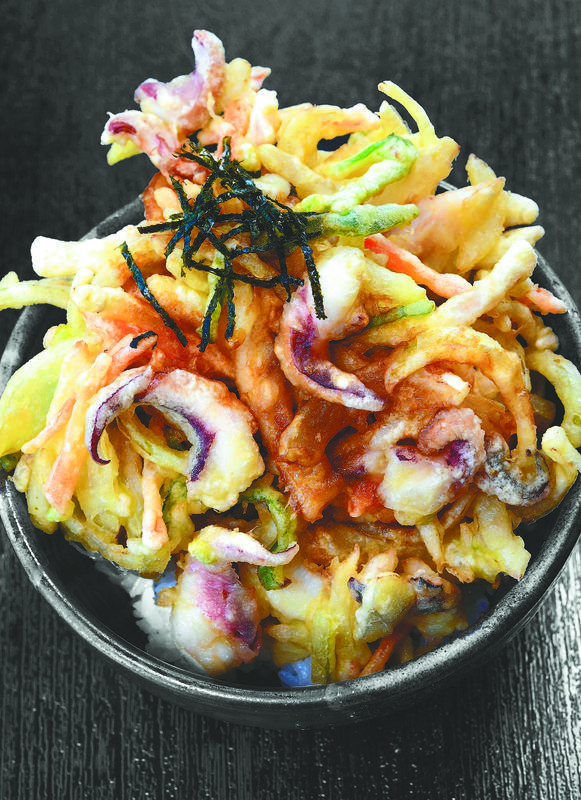
Koika, or cuttlefish, are one of many treasures found in the Airake Sea. They can be eaten fried with other vegetables on rice at the newly renovated Uto Marina Okoshikikan roadside station.
Thinly sliced cuttlefish, onions, carrots and other ingredients are fried and drenched in a sweet and savory sauce.
The chewiness of the cuttlefish compliments the sweetness of the vegetables.
"Cuttlefish are in season from spring to before the rainy season," said Hayato Muramatsu, 47, who runs the station. "It's my top pick if you want to eat local products."
A meal of cuttlefish on rice with a small bowl of asari clam broth soup costs 900 yen. Cuttlefish can also be enjoyed raw, in champon noodles and in other dishes.
Along with selling fresh fish, vegetables and a wide selection of local citrus, the roadside station has a tank filled with scuttling cuttlefish.
Read more from The Japan News at https://japannews.yomiuri.co.jp/