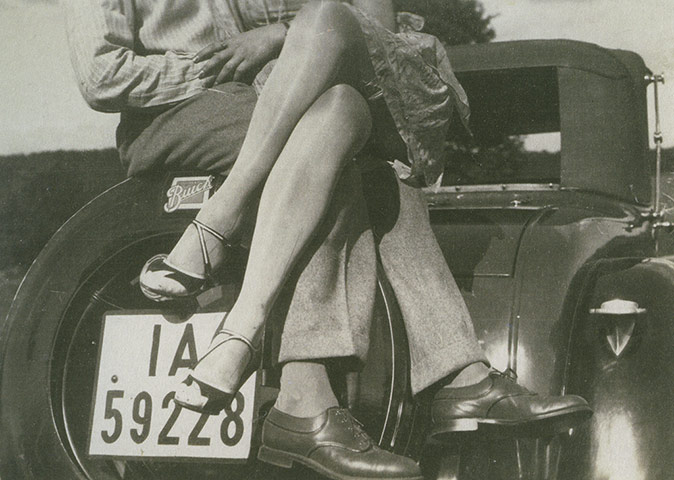
When I took over the lease on our gallery in Chelsea in 1984, I was clearing out a cupboard and came across a group of photographs that could have been used to illustrate Christopher Isherwood's Goodbye to Berlin. They were by Zoltan Grass, a German photographer from the 30s who settled in London when the second world war broke out. The National Media Museum in Bradford has most of his collection. This comes from a series about two couples on a weekend in the country with their Buick cars and outrageous behaviour. It has hung in my home for 28 years Photograph: Zoltan Glass

This is a phototype postcard. In the early years of the 20th century, photography was the principal means of providing evidence of extraordinary events, places or people, just as the internet is today. This beard, nearly 11.5 feet (3.5m) long, belonged to Louis Coulon, who was nearly 80 when this picture was taken. It must have been a lifetime’s growth. The current world record is held by Hans Nilsen Langseth, whose beard measured over 17 feet in 1926 Photograph: Courtesy of Michael Hoppen Gallery
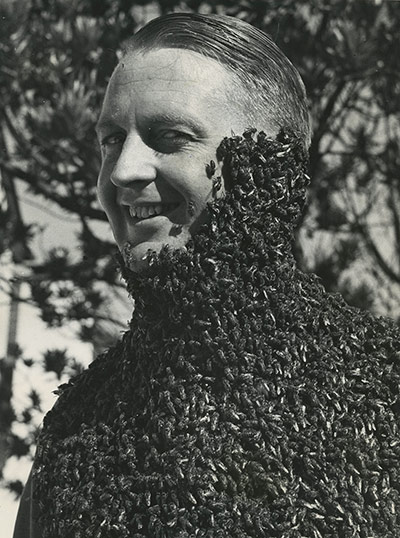
A press print I found of a brave man. There is no caption on the back, which is a shame. There are people who act almost as bee-whisperers, persuading unwelcome swarms to return to the hive. Richard Avedon’s amazing portrait of a bald man covered in bees comes to mind. This gentleman looks at ease, with the large bee colony seeming equally so. Press photographers are still asked to photograph the more bizarre sides of life. Archives can contain many wonderful pictures, possibly unused when they were taken, that now sit there in folders, waiting to be rediscovered Photograph: Courtesy of Michael Hoppen Gallery
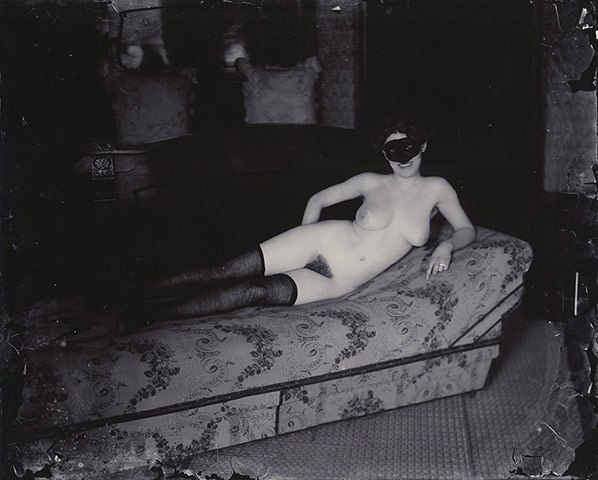
The history of Bellocq’s Storyville portraits is full of myth and legend. We do know he was a professional photographer, and we also know that he took personal photographs of the opium dens in Chinatown and the prostitutes of Storyville, the red-light district of New Orleans. Some 20 years after his death, a trunk belonging to Bellocq with 89 10×8 inch negatives of nudes taken in a French Quarter brothel were by chance discovered and acquired by the young photographer, Lee Friedlander. They were immediately acclaimed for their unique poignancy and beauty Photograph: Estate of E J Bellocq
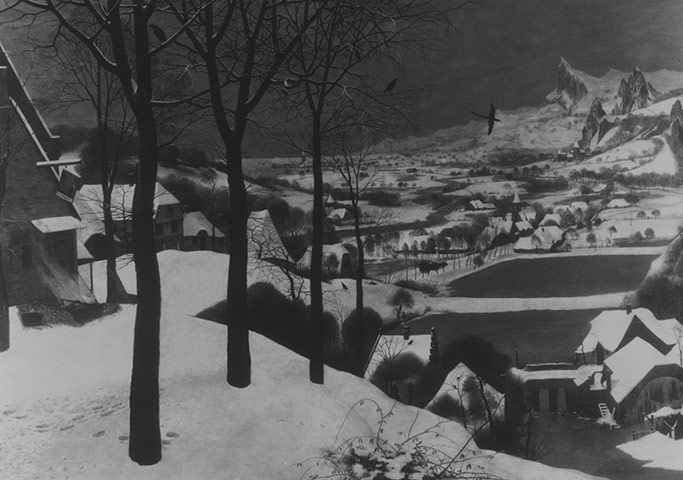
In 2001 I visited the Royal College of Art and met Nicky Coutts, who had made a series in which she used early Photoshop to remove elements from paintings by well- known artists. She then converted the files into black and white to further remove the images from their original medium. In this case she has taken a painting by Pieter Bruegel the Elder. All the people have been delicately removed, but their footprints in the snow are left as the telltale sign of human activity. Here Coutts has used Photoshop to its fullest conceptual potential Photograph: Nicky Coutts
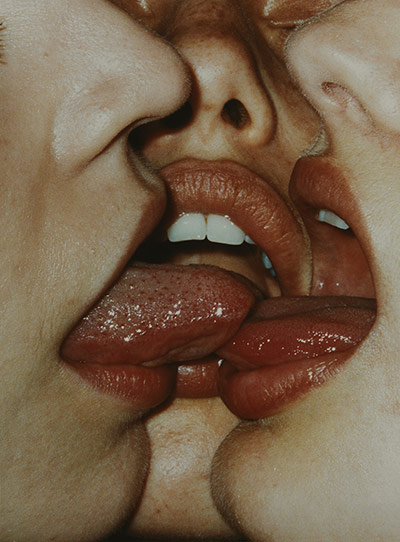
Terry Richardson and I have worked together since 2000. This is an outtake from a fashion shoot. He always used a simple Yashica camera with built-in flash and shot on negative film, which he would then print from. The hard and direct flash exaggerates his subject in a provocative way. Many who have tried to copy him have quickly learned that it is hard to be bad and be this good at the same time. Creating iconic images with a style that is immediately recognisable is one of the most difficult thing a photographer can do Photograph: Terry Richardson/Courtesy of Michael Hoppen Gallery
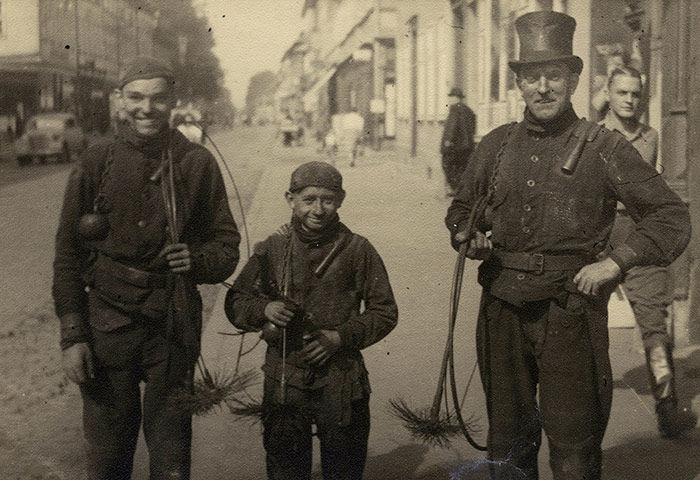
I found this small carte postale in a bric-a-brac market in Rye. To me, the monetary value of an anonymous image is irrelevant. What drives my passion is the search for images that tell a story. The chimney sweeps could have inhabited a novel by Dickens, but it is the background that drives the story forward. The booted figure striding to the right heralds the rise of Nazism in Germany. I like street photographs that suggest more than they show, and this is a fine example of vernacular photography capturing an apparently insignificant moment in history that might otherwise have gone unrecorded Photograph: Courtesy of Michael Hoppen Gallery
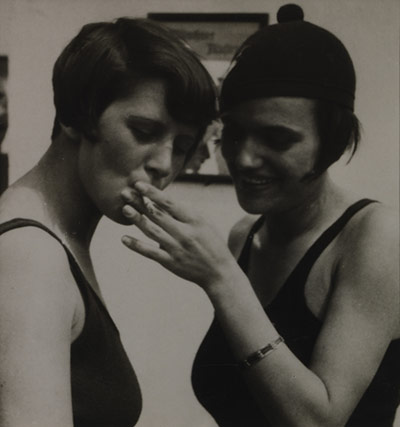
I first saw this photograph in a show called All Human Life at the Barbican in 1994, curated by Bruce Bernard, a mentor of mine. The selection of some 350 prints he made for All Human Life came from the Hulton collection and changed my opinions about photography forever. I remember this picture having a great effect on me then, some years later, I was offered this small vintage print. It was taken in Berlin in the 1930s but could almost have been made yesterday. Photograph: Henry Guttmann/Hulton Getty
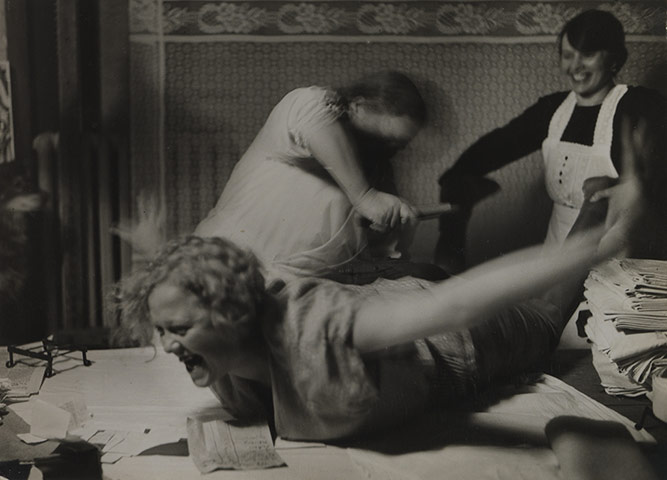
I have several books by this important Berlin press photographer, who made countless atmospheric shots of everyday life in Berlin during the Weimar republic, but this image is not in any of them. His substantial output often exhibits the sense of humour he was able to find in the everyday. Here, he shows a woman having her skirt ironed while still wearing it. The fact that everybody in the picture is laughing makes me think that this was some kind of joke, or possibly theatre. One would have to assume that the iron was not hot Photograph: Estate of Friedrich Seidenstücker
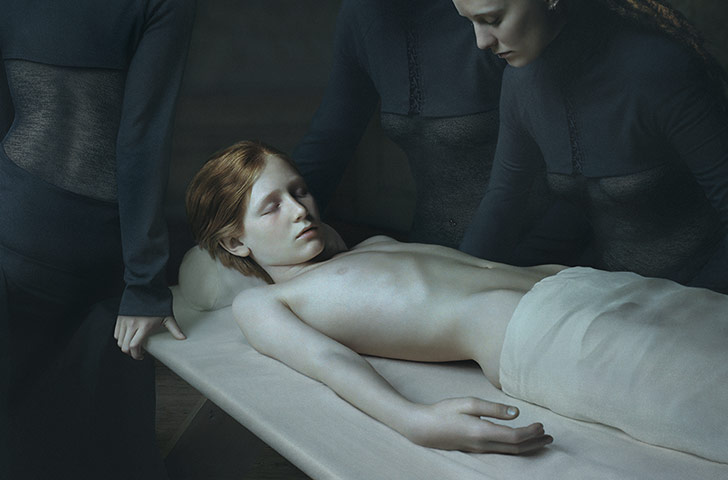
I first met Desiree at the Rencontres d’Arles in 2002. I had seen her small beautiful show in an old church off Place du Forum and I immediately bought one of her works. Her painstaking work on each image is legendary, and this one took her nearly a year to complete. Using the painter Vilhelm Hammershøi as the key reference, it was created using many elements, which she shot in her studio and then digitally sewed together. Every time I see it, I am entranced by its luminous beauty Photograph: Desiree Dolron
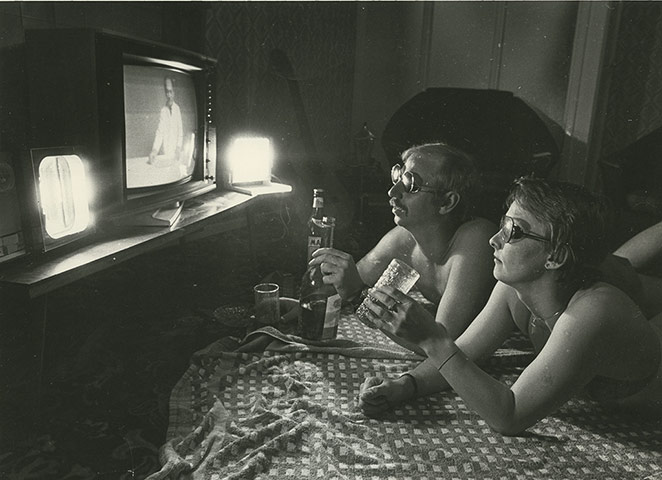
The press caption on the back reads: ‘Car salesman Norman Webster was browned off because he couldn’t afford a holiday in the sun. So ... he told his pals he was taking his girlfriend Lynda on a two-week trip to a Spanish sunspot. Instead, the couple locked themselves in their flat in Walton, Liverpool, with two sun lamps and a fortnight’s supply of food ... They were spotted by a friend when they sneaked out for a drink one night ... Lynda, a telephonist, said: “It was a fantastic holiday while it lasted. There was no travelling to do, no greasy foreign food to cope with and we had guaranteed sun.”’ Photograph: Courtesy of Michael Hoppen Gallery
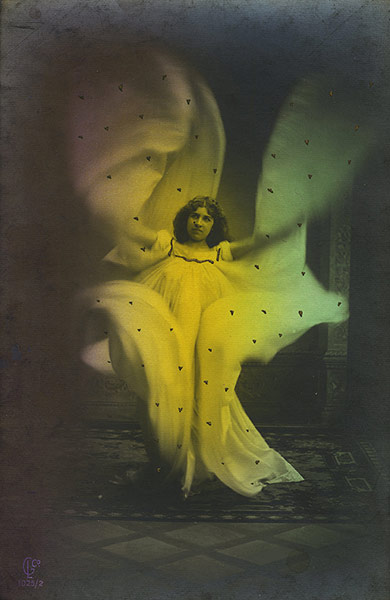
Loie Fuller found fame as a dancer in Paris, where she was admired by countless French artists and intellectuals. While visiting Notre Dame, she became enthralled by the kaleidoscopic light from the stained glass windows. Lost in reverie, she caught the colours on a white handkerchief that she waved through the air. She was promptly escorted out of the building. Fuller then persuaded the Lumière brothers to make a film of her dancing and to hand-colour each frame. This small vintage hand-coloured print is a still, a reminder of how art and science can work so beautifully together Photograph: Courtesy of Michael Hoppen Gallery
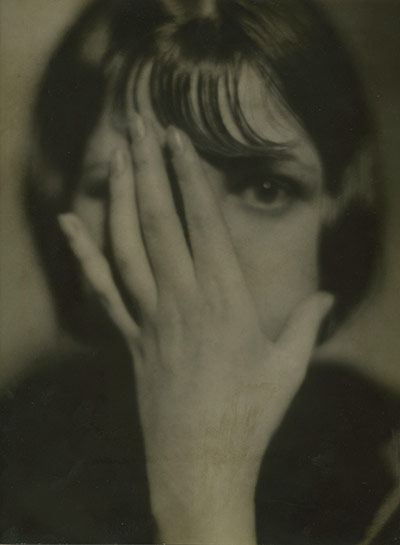
Ida Fuchs was a famous dancer in Germany in the 1930s. When I found this print it had heavy silver tarnishing over it, having been left in a damp environment for a long period. Once the image was treated, a wonderful portrait was uncovered. It does remind me of a Steichen portrait and contains a wonderfully subtle and gentle emotion. Praise indeed, but I am captivated by her hidden face and the beauty that only a great photograph can convey Photograph: Baron Wolff von Gudenburg
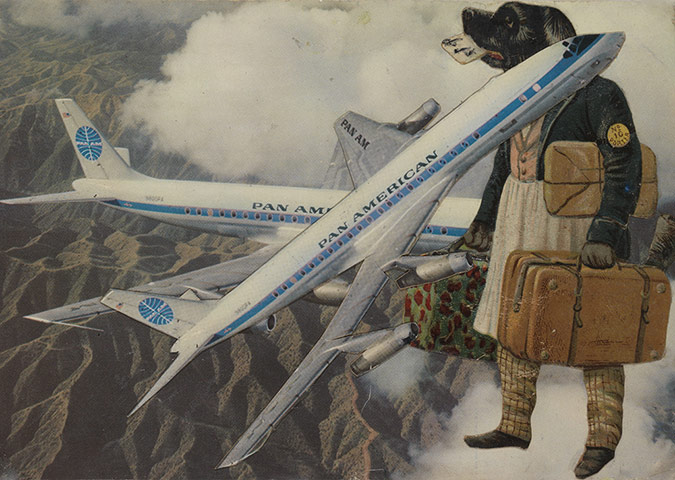
Best known as a poet and the screenwriter of Les Enfants du Paradis, Prévert also produced art collages during the late 1950s and early 1960s. ‘They were surreal, comic and beautiful, scathingly anti-church, anti-corporation, anti-hypocrisy,’ wrote a reviewer at the time. He only exhibited twice and both shows sold out immediately. He also collaborated with the photographers Brassaï, Villers and Izis. I found this small unique collage in Paris and it is the only piece by Prévert in the collection. Obtuse and surreal, it delights with its sense of the ridiculous Photograph: Estate of Jacques Prévert
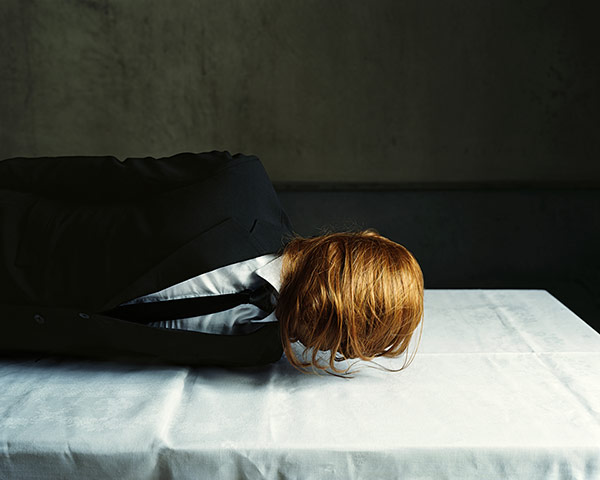
I have admired this Swedish photographer’s work for some time and acquired this large photograph for the collection. Surrealism and photography work well together and I am reminded of the works of René Magritte when I look at this image. It is from Grünstein’s 2009 series Figure Out, which was inspired by a dream that she had and resulted in an outstanding group of pictures. The rich copper of her model’s hair contrasts perfectly with the dark background. Unusually, the figure is posed horizontally on the table, which adds a beautiful awkwardness to an already strange picture
Photograph: Denise Grünstein. Courtesy of Charlotte Lund Gallery