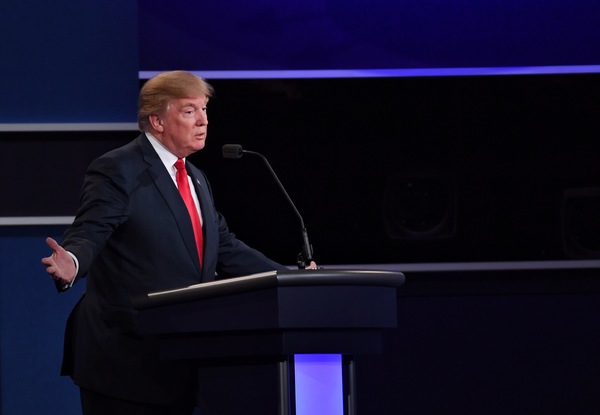
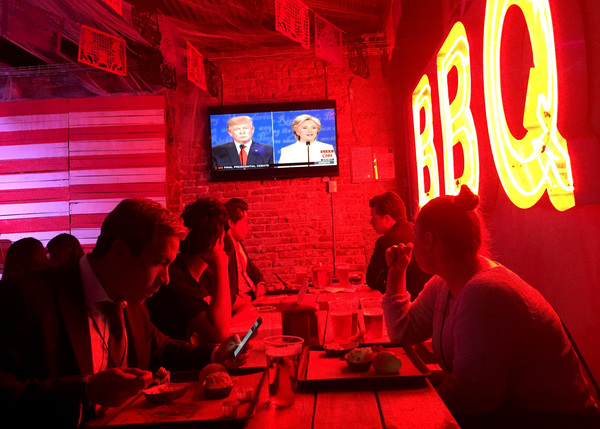
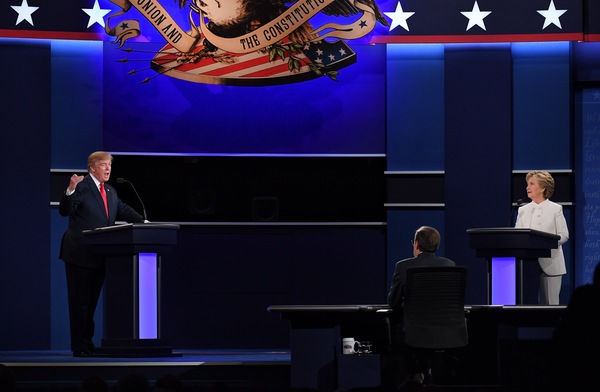
LAS VEGAS _ Trailing in polls and abandoned by many in his party, Donald Trump faced his last, best chance to stop his slide and keep the White House in reach as he prepared to confront Hillary Clinton on Wednesday night in their third and final presidential debate.
The designated topics were conventional enough; they included immigration, foreign policy and the economy.
But Trump has shown a penchant _ on the debate stage and, especially, at his boisterous rallies _ for straying far afield from policy and typical campaign discourse. He has accused Clinton, for instance, of being on drugs during their last debate and suggested fellow Republicans were rigging the election against him.
With an expected audience in the tens of millions, the 90-minute session at the University of Nevada-Las Vegas afforded Trump the opportunity to amplify his attacks _ or show a more disciplined side aimed at reassuring the large number of voters concerned about his steadiness and temperament.
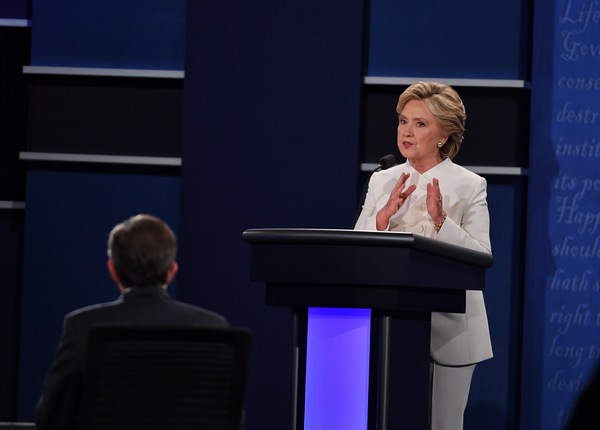
His Democratic rival, by contrast, simply hoped to avoid a major blunder, though Clinton faced the prospect of still more uncomfortable questions about her use of a private email server as secretary of state.
The first two debates have proved to be pivot points in the contest, turning a race that favored Clinton into a potential blowout. Her lead in polls has grown, both nationally and in key battleground states. Even some traditionally Republican states, such as Arizona, Georgia and Utah, have grown competitive in the final weeks of the campaign.
Trump's response has been to assert, without proof, that a collection of conspirators _ Clinton, the media, international financiers and fellow Republicans, including House Speaker Paul D. Ryan _ are trying to steal the election.
His earlier performances on the debate stage have contributed greatly to his implosion.
An ill-prepared Trump was tetchy and erratic in last month's first session, then he compounded his troubles by spending days on a body-shaming campaign against a former Miss Universe whom Clinton had defended.
Subsequent revelations _ that Trump may have avoided federal income taxes for close to two decades and bragged of sexually assaulting women during a 2005 videotaped conversation _ dominated the second debate.
At that time, Trump brushed aside his boasting as "locker room talk" and insisted he never acted inappropriately. That, in turn, led several women to step forward and accuse him of unwanted sexual advances. Trump has denied their allegations.
The result has been a downward spiral, as leading Republicans urged Trump to quit his candidacy or, in the case of Ryan, announced they would no longer defend the GOP standard-bearer or campaign on his behalf.
Trump's difficulties have overshadowed developments that could have been harmful to Clinton, including a series of hacked private emails of her campaign chairman that portray the candidate in less-than-flattering ways and revealed new details concerning her private email server.
Documents released Monday revealed alleged negotiations between the FBI and State Department over the classification of a single email. A State Department official reportedly sought to pressure the FBI into changing the classification of the email's contents in exchange for placing more agents in Iraq, where they are restricted.
An FBI official referred to the proposed deal as a "quid pro quo." No deal was ever reached, however, and the disputed contents remain classified. There is no evidence Clinton or members of her campaign were aware of the discussion.
Under the planned format, Wednesday night's debate was to be sectioned off in 15-minute intervals devoted to topics chosen by the moderator, Fox News anchor Chris Wallace. Along with immigration, the economy and foreign policy, the designated topics were entitlements and debt, the Supreme Court and each candidate's fitness to serve as president.
Before the debate, both campaigns engaged in a bit of psychological gamesmanship.
Trump announced his guests would include the mother of an American killed in the 2012 attacks on the U.S. diplomatic outpost in Benghazi, Libya, as well as President Barack Obama's Kenyan half brother, Malik. Clinton's guests included billionaire Mark Cuban, a longtime Trump detractor, and Hewlett Packard Enterprise Chief Executive Meg Whitman, the 2010 GOP nominee for California governor.
Trump and Clinton may share a stage one more time before Election Day on Nov. 8. The antagonists were both scheduled to attend the 71st annual Alfred E. Smith memorial dinner Thursday night in Manhattan, a traditionally lighthearted affair that raises funds for Catholic charities.