How can you fix a quarterback?
That is the dilemma facing Sean Payton, as he looks to resurrect the career of Jameis Winston. The former Tampa Bay Buccaneer is coming off a season where he threw 30 interceptions, and was left on the outside looking in when the organization added arguably the greatest quarterback of all time in Tom Brady.
As with any potential medical diagnosis, the first step is to figure out the problem, and then to come up with a solution. Here is the two-step process facing the New Orleans Saints over the next few months.
Diagnosing the Problem

We often look at quarterbacks, particularly when evaluating them, and wonder about their processing speed. How quickly do they make the right read and decision? Watching Winston, however, I wonder if there is another “speed” issue: Play speed. Take, for example, this interception against the Houston Texans:
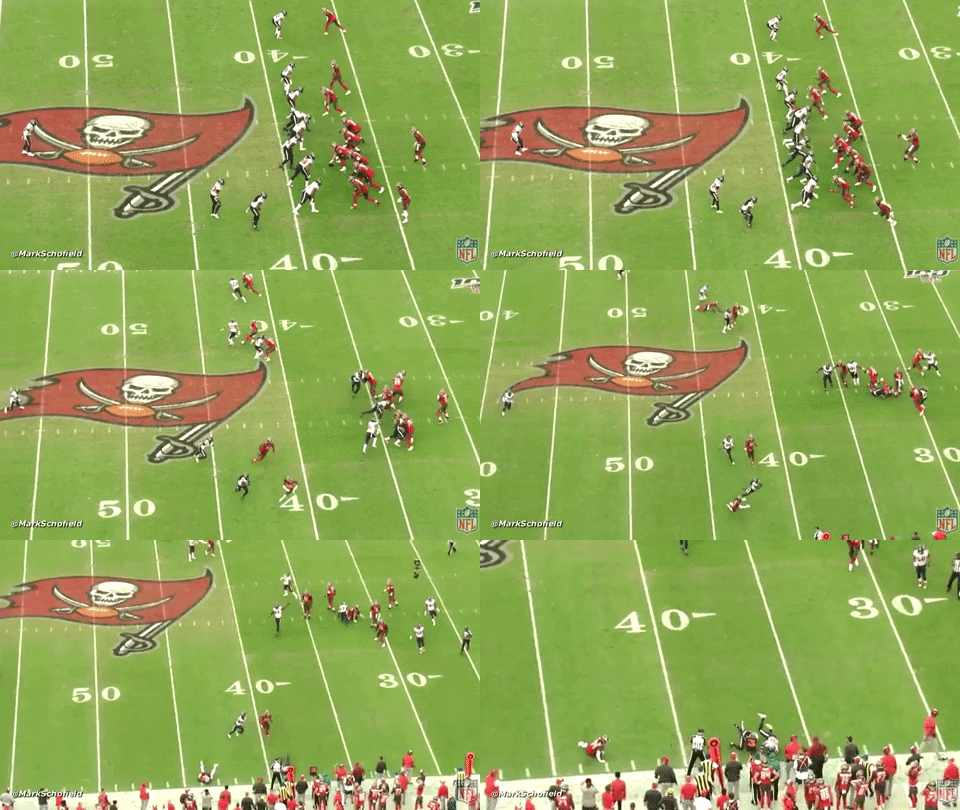
This play comes on a 3rd and 1 situation. Winston knows pre-snap exactly where he is going to go with the football. But even with that, watch how slow the football comes out of his hand. He sets himself, stares at the route, gives it a chop with his feet to reset himself, and then the ball comes out, far, far too late on this route. The cornerback is already driving down on the route.
The issue isn’t with his processing speed, as he’s made up his mind where to go with the ball before the snap. It is with the play speed, or how long he takes to get the ball out.
Look at this play, a Pick Six against the Atlanta Falcons:
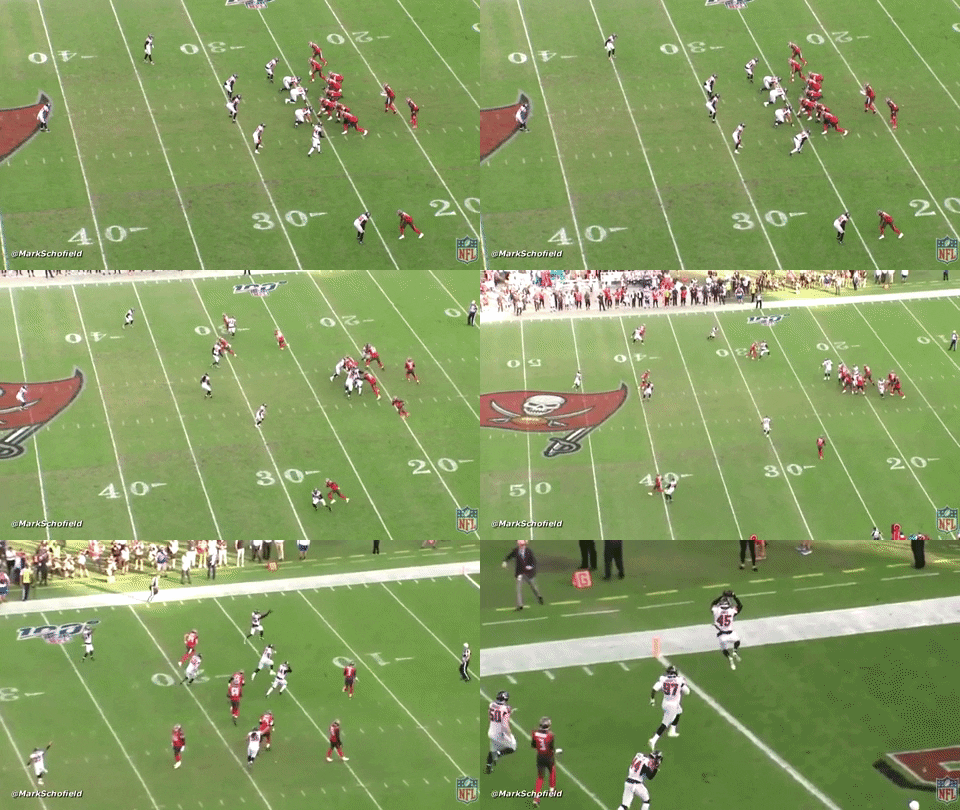
This is a relatively easy curl/spacing concept to the three-receiver side of the formation, with a backside go route. Very similar to some of the concepts broken down earlier. With the Falcons dropping into a soft zone coverage over the concept, Winston knows almost immediately after the snap that he will come to the wing tight end. But he again pauses after hitting his drop depth, and that extra second allows the linebacker to undercut this route for the interception.
The end zone angle illustrates in detail the delay in Winston getting the ball out of his hands:
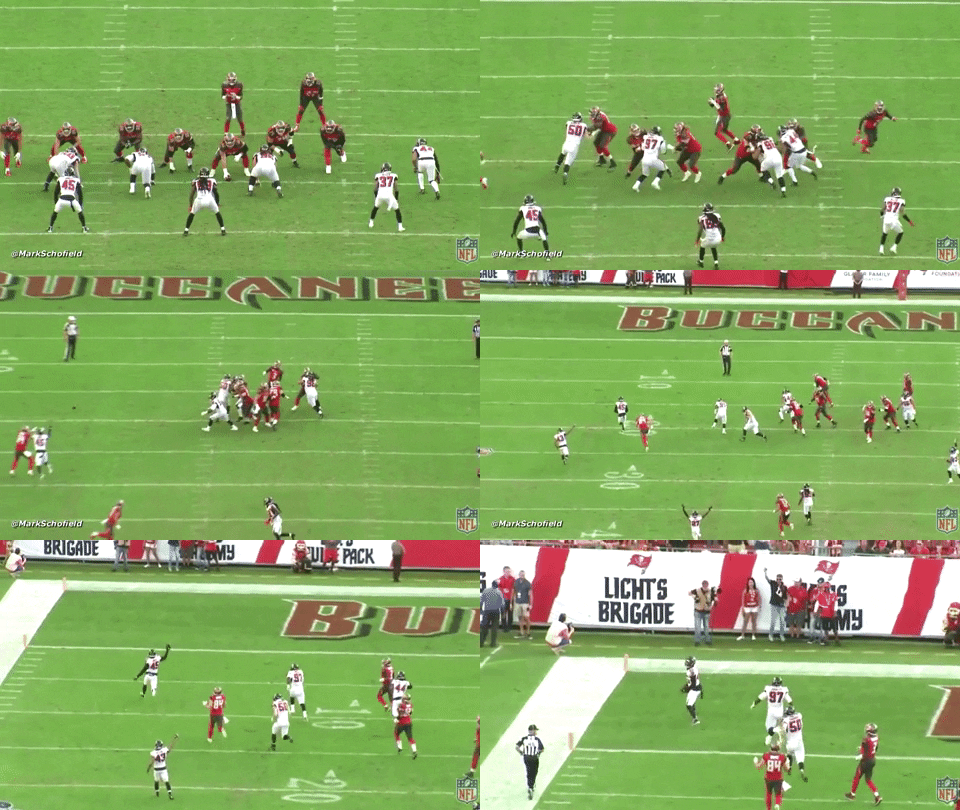
Again, the issue is not the time it makes Winston to make up his mind, but rather the time it takes to get the ball out of his hands once he does. Look at this end zone angle. Winston knows by the first step in his drop that he is throwing the sit route to his tight end. But…he still throws this with a three-step drop and a hitch. Now, the pass gets slightly deflected at the line of scrimmage, which takes a little bit of velocity off the throw, but the play speed is the biggest issue here.
Next let’s break down an interception against the Los Angeles Rams. This turnover comes in the fourth quarter of an 11-point game, with the Buccaneers trailing. Before the snap, this is what Winston sees:

Now, put yourself in his mind for a second. You see one safety deep in the middle of the field, shaded to the trips side of the offensive formation. You see one cornerback off, nearly ten yards from the line of scrimmage across from the outside, or #1, receiver on the left. The backside CB is also ten yards off the line of scrimmage. You are thinking this is some variation of Cover 3.
The Buccaneers run a two-receiver concept to the left side of the field, with a vertical route from the outside receiver and an out pattern from the inside receiver:

Now, if Winston is expecting Cover 3 here, he is probably going to read the flat route as his primary target. He will expect the cornerback to drop vertically with the boundary go route, and the inside receiver will have an advantage leverage-wise on his route to the flat.
Now, this route combination, termed Ohio for you Madden players, is a perfect way to attack a Cover 2 scheme. Say the defense were to rotate into a Cover 2 scheme, then Winston would have a chance for a big play. If the cornerback squats on the flat route you can throw the vertical route behind him, provided you get the ball into that window before the safety rotates over. If the cornerback sinks under the vertical, you take the flat route. This route design was created to attack exactly that defense, and it spurred the creation of trap coverage, where the cornerback shows that he will drop under the vertical route on the outside but reads the inside receiver and breaks on any release to the flat. But that is a nerdy football discussion for another time.
As luck would have it, the Rams do rotate into Cover 2. Here, the cornerback starts with off technique but eventually sits on the flat route. Now, here is how Steve Axman, who coached Troy Aikman in college, describes this read in his book “Attacking Coverages with the Passing Game:”
The quick-game inside-receiver speed-out-route combination is a quick, high-low fade/speed-out isolation on a cover-2 cornerback. The widest receiver must outside release in an effort to get the cornerback to turn his back to the inside receiver’s speed-out route. If the cornerback runs with the fade route, the quarterback quickly throws low to the inside receiver’s speed-out route. If the cornerback stays squatted waiting on the speed-out route, the throw is made over the cornerback’s head in the hole to the fade route. If in doubt, the quarterback should throw the ball “low” to the inside receiver’s speed-out route quickly to give the speed-out route receiver the ability to make the catch and knife upfield quickly before he gets to the cornerback. Attacking Coverage with the Passing Game pg. 88
Here, everything happens too slowly from Winston. He waits and does see the cornerback squat for a split second, but the ball comes out a step too late and when combined with some pressure in the pocket, the pass arrives too late for the receiver and the CB recovers to make the interception:
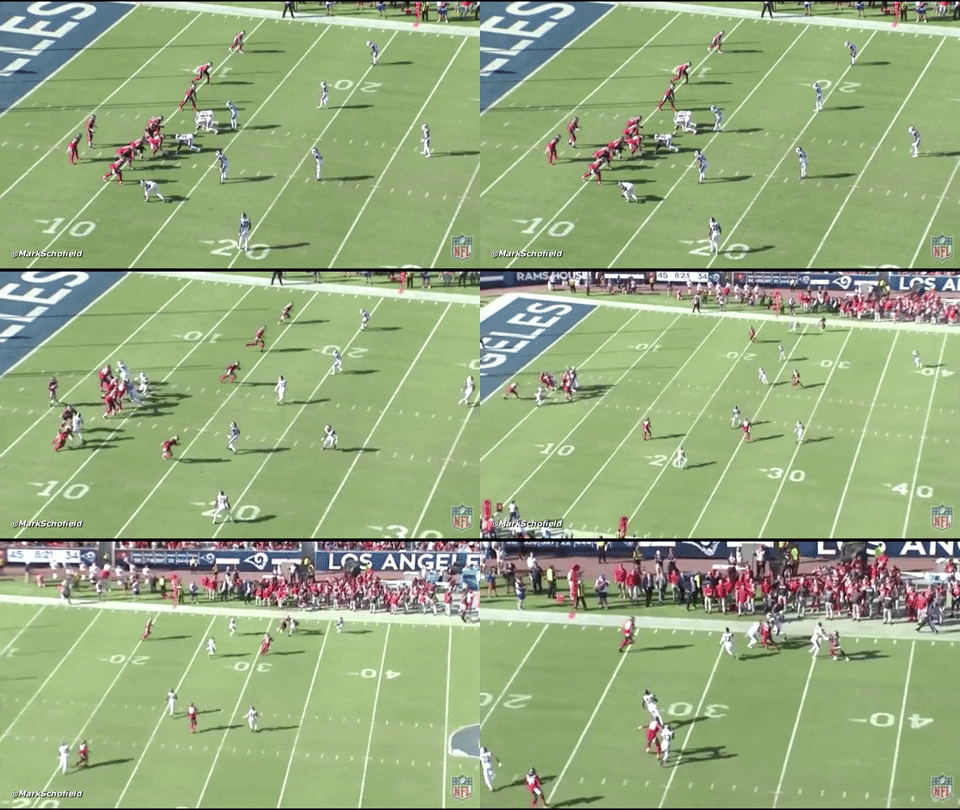
If Winston pulls the trigger a step quicker he avoids the late pressure at his feet and likely completes this. Or, if he heeds the advice of Axman and just takes the flat route – the option when there is doubt – he avoids the turnover. Instead, the Rams are going the other way.
Next is this interception against the Carolina Panthers. This comes on the opening play of the game:
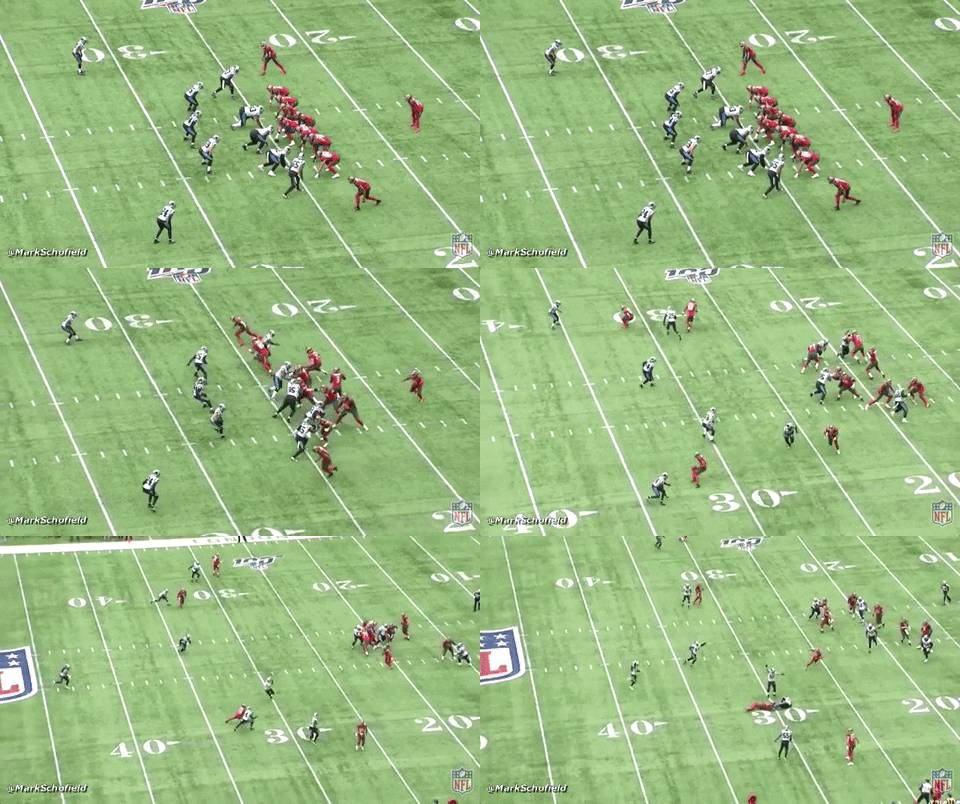
The Buccaneers run a mirrored curl/flat design on the play, with Evans running a curl on the left and the tight end releasing to the flat. The Panthers run a Cover 3 scheme here (you see the free safety come into the picture late in the middle of the field) and the underneath defender matches the tight end’s release to the flat. Winston’s read is the right one, to throw the curl route against and outside-leveraged cornerback who needs to respect potential vertical threats (you see James Bradberry jump to the outside for a second, wary of a potential out-and-up). But Winston gets the ball out too late again, using an extra hitch step in the pocket. That allows Bradberry time to recover, and when the throw is a step too far to the outside, the CB is in position to make the interception.
Prescribing the Solution

So what, if anything, can Sean Payton do to fix what ails Jameis?
You might say that Payton has a tall task ahead of him, given the turnover rate from Winston a season ago and the simple fact that Winston’s willingness to take risks with the football, which dates back to his time at Florida State, might be a permanent trait. Sometimes quarterbacks just are who they are, and Winston’s aggression and willingness to push the envelope with the football is what allowed for some spectacular plays in college. But it has hamstrung him in the NFL.
But if play speed is another issue for him – linked to the turnovers – how can Payton fix that? Especially in an offense that is predicated upon the quarterback making quick decisions with the football. Let’s not forget, while he never worked for him, Payton is fully a branch off the Bill Walsh coaching tree. His West Coast system, which has morphed over his time in the NFL, can be traced directly back to Walsh and his offense.
Consider how San Francisco 49ers quarterbacks coach Sam Wyche described Walsh’s quarterback during the 1981 season. “Joe [Montana] understands the total concept of our intricate system incredibly well for a young quarterback. He makes quick, intelligent decisions during a play when he has to pick and choose his receivers. He knows precisely what is right or wrong with a play as soon as it happens.” Joe Montana’s Art and Magic of Quarterbacking, pg 135.
Does that description sound like Winston at all?
But that is the offense he is stepping into, and that is what will be demanded of him in the season ahead. How can a quarterback with his current play style, and his flaws, improve in this kind of environment?
Because Payton has done it before.
Coming out of Purdue University, Drew Brees was not exactly a perfect prospect. There were questions about the spread offense he ran under Joe Tiller, as well as the 45 interceptions he threw in college, including 20 his first year as a starter. There were questions about him having a slow release. There were also questions about his height – or lack thereof – and those questions saw him fall into the second round and the San Diego Chargers.
During his time in San Diego, he played under Marty Schottenheimer, in an offensive system that married a power running game with the vertical elements of the Coryell downfield system. This might not have been the best stylistic fit for Brees, and during his time in San Diego he threw 53 interceptions, including 16 in 2002 (his first year as a starter), 15 in 2003 (over just 11 games) and 15 his final year with the Chargers. If you look throughout his career at his highest interception percentages by season, three of the top four occurred while in San Diego.
When he agreed to terms with the New Orleans Saints as a free agent for the 2006 season – in the wake of a brutal shoulder injury that saw the Miami Dolphins pass on him as a free agent for Dante Culpepper – his slow release was mentioned right at the top by John Clayton.
But Payton took Brees and helped craft him into the player we see today, a player destined for Canton. In Payton’s West Coast system, Brees was able to tap into some of the elements that made him a second-round pick to begin with: The speed and quickness of the Tiller offense dating back to his days at Purdue. Brees might not have been an ideal fit for what San Diego was running, but he was perfect for the lightning-fast decision-making required in a Payton offense rooted in West Coast concepts.
Winston might not have that same background, but he comes to a coach that has done this before, taking a quarterback with question marks about how he will fit into an offense and getting him up to speed in record time. His task with Winston is just that: Getting him up to speed. Making his thought process faster, making the ball come out quicker. Increasing the play speed.
Can Winston do it? There are examples of him executing designs with the requisite processing and play speed that will be required of him in the Payton system. On this completion against the Panthers you can see him working a speed out route with anticipation, timing and rhythm:
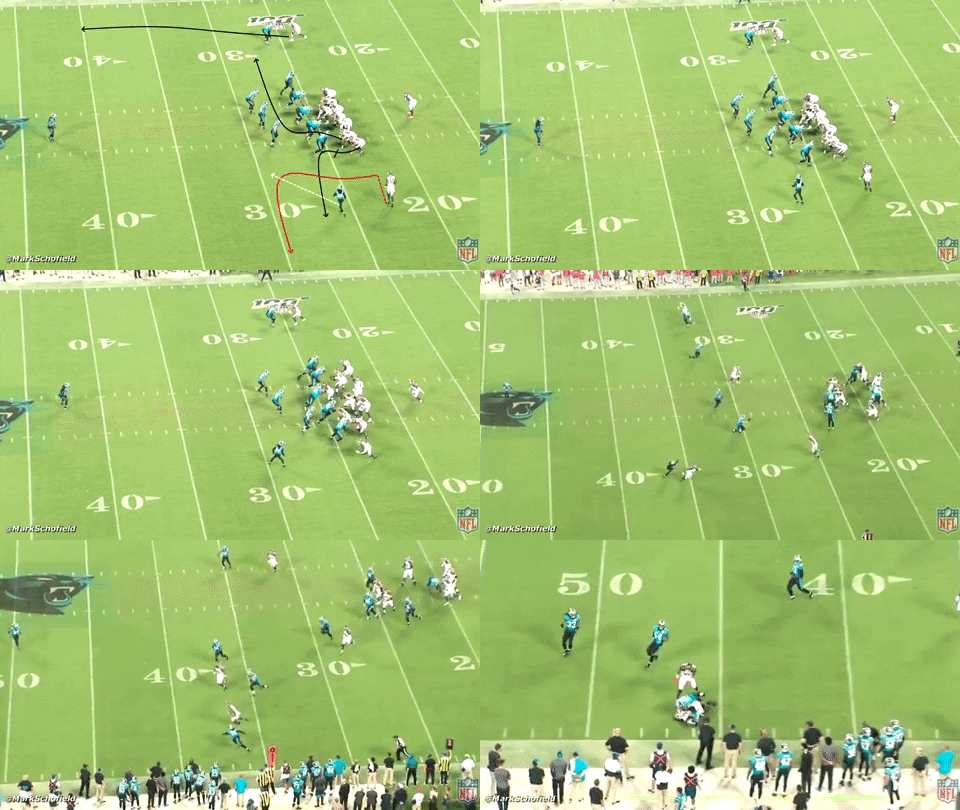
Remember the curl/flat design we broke down earlier? Here is an example of Winston doing it the right way:
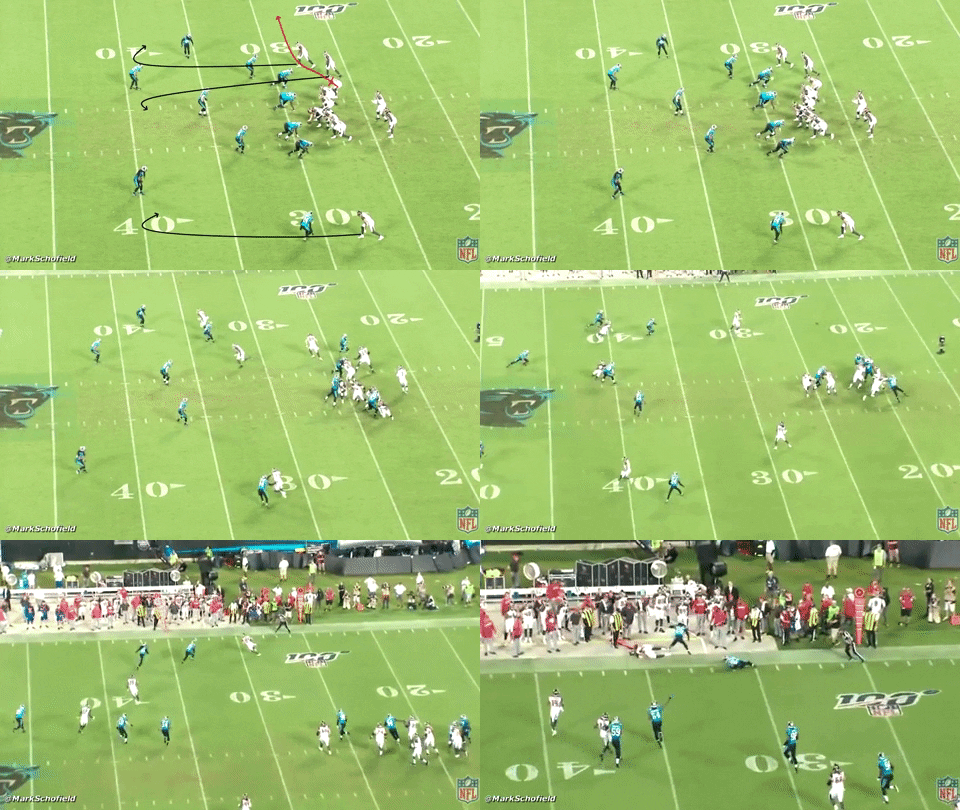
There is enough talent here for Payton to work with, and evidence that Winston can function in such a system. To his credit, Winston seems to understand the challenges facing him and is embracing the idea of joining a “Harvard of quarterbacking.” He’ll be learning from a coach who has done this before as well as the quarterback his new coach helped groom into a Hall of Famer. If there was a perfect environment for Winston to grow as a passer, New Orleans is the place.