The film "Kiku to Guillotine" (The Chrysanthemum and the Guillotine), released on July 7, depicts the lives of young female sumo wrestlers and a group of anarchists in Japan in the later years of the Taisho era (1912-26), just after the 1923 Great Kanto Earthquake.
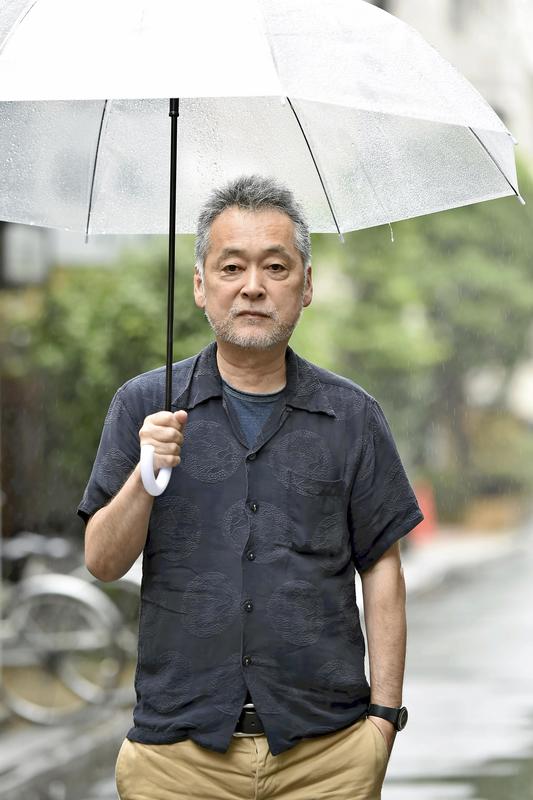
The film's director, Takahisa Zeze, depicted the two kinds of young people as struggling to be able to live in a world that is free, and had them encounter each other in the film.
Zeze has produced various films. He is active in the production of commercial movies distributed by leading distributors, such as "64 -- Rokuyon," while enthusiastically making independent films, too. His "Heaven's Story," which was highly rated at home and abroad, and "Kiku to Guillotine" fall in the latter category. "It's good to have various kinds of films. It's not interesting without freedom," Zeze said.
Zeze set his sights on becoming a film director when he was a high school student. He saw young directors who had made their debuts with independent films become famous. "I thought such directors would change films and society, and so I wanted to make films, too," Zeze said. "I think I was able to make a film that's closest to my initial motivation."
The film, though fictional, features a female sumo wrestler group that gives sumo performances in various parts of the country and young men belonging to the Guillotine-sha, an anarchist group that really existed in the past.
In the mid-1980s, when Zeze worked as an assistant director, he increasingly became interested in the Guillotine-sha.
"Their approach was wrong. Even so, I wanted to describe the minds of young people trying to fulfill their dream of changing society," he said. He sought to combine their story with another story of female sumo wrestlers who tried to live on their own in the same era, thinking it would make it possible to appeal to people from a broader view of the world.
However, movie companies did not accept his proposal because the plot was too tough. "I wanted to make such a film someday," he said.
After the 2011 Great East Japan Earthquake, his long-cherished desire turned into a determination that the film must be made now, because Zeze felt that modern society is headed in a direction similar to that of the times he tried to describe. So, he began making the film without closely examining its feasibility. "Young actors enthusiastically joined me," he said.
Female sumo wrestlers in the film were played by Mai Kiryu, who played the heroine "Hanagiku," Hanae Kan, Maho Yamada and others. Masahiro Higashide played Tetsu Nakahama, leader of the Guillotine-sha and a poet.
"I wanted to make a movie that conveys the emotions of young people trying to destroy an age when people could not live freely," Zeze said.
"Entertainment has strength and power in that it directly moves people's minds," he said. So, he shows genuine female sumo wrestling. Actresses received instructions at a university's sumo club for about two months to learn their respective parts. A coach looked at the characteristics of each individual actress and helped them acquire techniques best suited for them.
"The coach said that the most important thing was to help them find their favorite sumo performance. I thought it was very interesting," Zeze recalled.
In the film, people take actions, get connected and head for the future.
"It is a movie of premonition," he said. "The film's ending suggests a possibility of a future that is different from actual history, because I probably wanted to make viewers have such a premonition after watching it. I hope such a feeling will be directly linked to the modern age."
Visit kiku-guillo.com for more information.
Read more from The Japan News at https://japannews.yomiuri.co.jp/