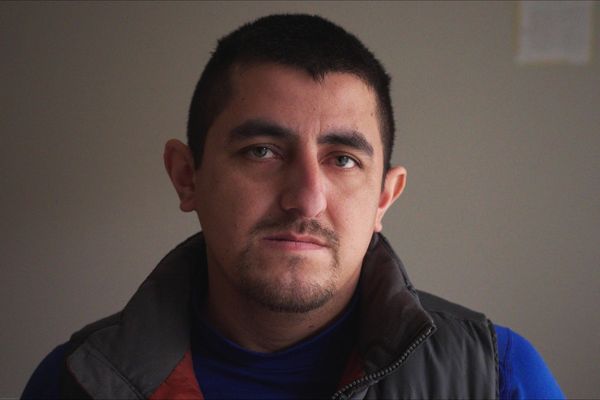
Londoners will always use humour as the ultimate response to terror attacks. Nowhere was this more apparent than with the Millwall supporter, knifed eight times after tackling the London Bridge terrorists, pictured recovering in hospital with a copy of Learn to Run. A gift from friends, the joke being he would have been safer sprinting away.
Neuroscientists would say the choice to run or stay put isn’t that simple. A ‘fight or flight’ response kicks in when our threat-detection systems prepare the body for action with neuronal and hormonal changes. We’re all familiar with these symptoms; a flood of adrenaline, heart pounding and pupils dilating. These will prepare you to stand your ground or beat a hasty retreat, depending on the threat.
Which one you do is based on complex assessments of the situation you’re in, although some responses can be learned and retrained by experience, imitation or drills. So the basic physiology is ancient in evolutionary terms, but our responses can be adapted to meet the horror of modern urban life. Sadly, ‘run, hide, tell’ may become as familiar as ‘mirror, signal, manoeuvre’.
Dr Daniel Glaser is director of Science Gallery at King’s College London