Sandie Peggie, the Fife nurse who was suspended after she complained about sharing a female changing room with a transgender doctor, will appeal against a “hugely problematic” employment tribunal ruling, her solicitor has confirmed.
On Monday, the ruling of a lengthy employment tribunal found that Peggie, who has worked as a nurse for more than 30 years, had been harassed by NHS Fife when she was expected to share the changing room with Dr Beth Upton.
But her other claims, which included victimisation and discrimination under the 2010 Equality Act, were dismissed. The tribunal, before the employment judge Sandy Kemp, also dismissed her claim against Upton, whose evidence was held to be “more reliable and materially more cohesive in nature”.
Telling supporters in Dundee that she would “not be giving up the fight any time soon”, the appeal will be one of four cases that Peggie is pursuing – including actions against NHS Fife’s management, senior medical staff and the Royal College of Nursing, her trade union, claiming it failed to support her when she was suspended, something it denies.
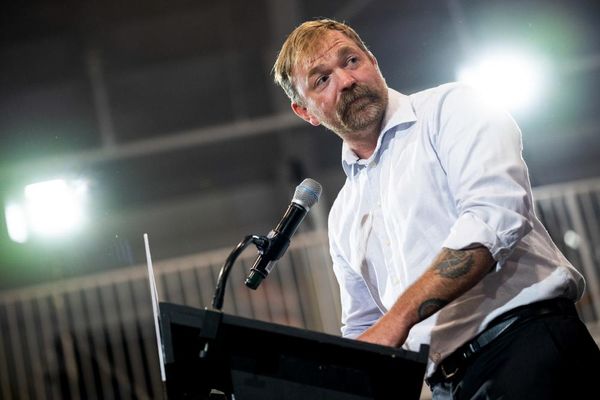
Thanking her family, friends and campaign supporters who had gathered for a press conference in Dundee on Thursday afternoon, Peggie said she had been “overwhelmed by the messages of support” from across the UK and beyond.
The announcement came as questions emerged about misquotations in Monday’s ruling, some of which appear to change the original meaning of legal references.
On Thursday, the tribunal issued a “certificate of correction” stating there had been “clerical mistake(s), error(s)or omissions(s)”, and changed one reference to the judgment in Maya Forstater’s landmark case, which established that gender critical views were protected in law.
The ruling initially quoted Forstater’s case as emphasising that the Equality Act did not create “a hierarchy of protected characteristics”. Forstater, however, pointed out on social media that the judgment did no such thing, and that the quote was “completely made up”. It has now been removed and replaced with an accurate citation.
Forstater, who now heads the campaign group Sex Matters and attended Peggie’s event on Thursday, said she was concerned that no explanation had been given for how the error occurred. She pointed to at least three other instances where the ruling used quotes that “don’t reflect the case law” and consequently “severely undermine people’s confidence in the legal process”.
“Questions about these stark errors need to be answered by the judiciary,” Forstater said.
Margaret Gribbon, Peggie’s solicitor, said work on the appeal was now under way, and that some of the tribunal’s findings were “hugely problematic”.
“For instance, the judgment places responsibility on female employees to raise complaints if they feel uncomfortable about sharing single-sex spaces with men. This ignores industrial realities. When Sandie objected, she was suspended, subjected to an unreasonably lengthy disciplinary investigation and falsely accused of patient care concerns.”
Gribbon continued: “The judgment also places employers in the invidious position of having to make decisions about single-sex workplace facilities based on the physical appearance of transgender employees, and by asking them intrusive questions.”
Reading from her own statement, Peggie said: “I am not a campaigner and had never heard of the phrase ‘gender-critical’ when I first raised complaints over two years ago about my employer’s decision to allow men into female-only changing rooms. I just knew instinctively that it wasn’t right that women were expected to undress in front of men in private spaces and I still believe this to be the case.”